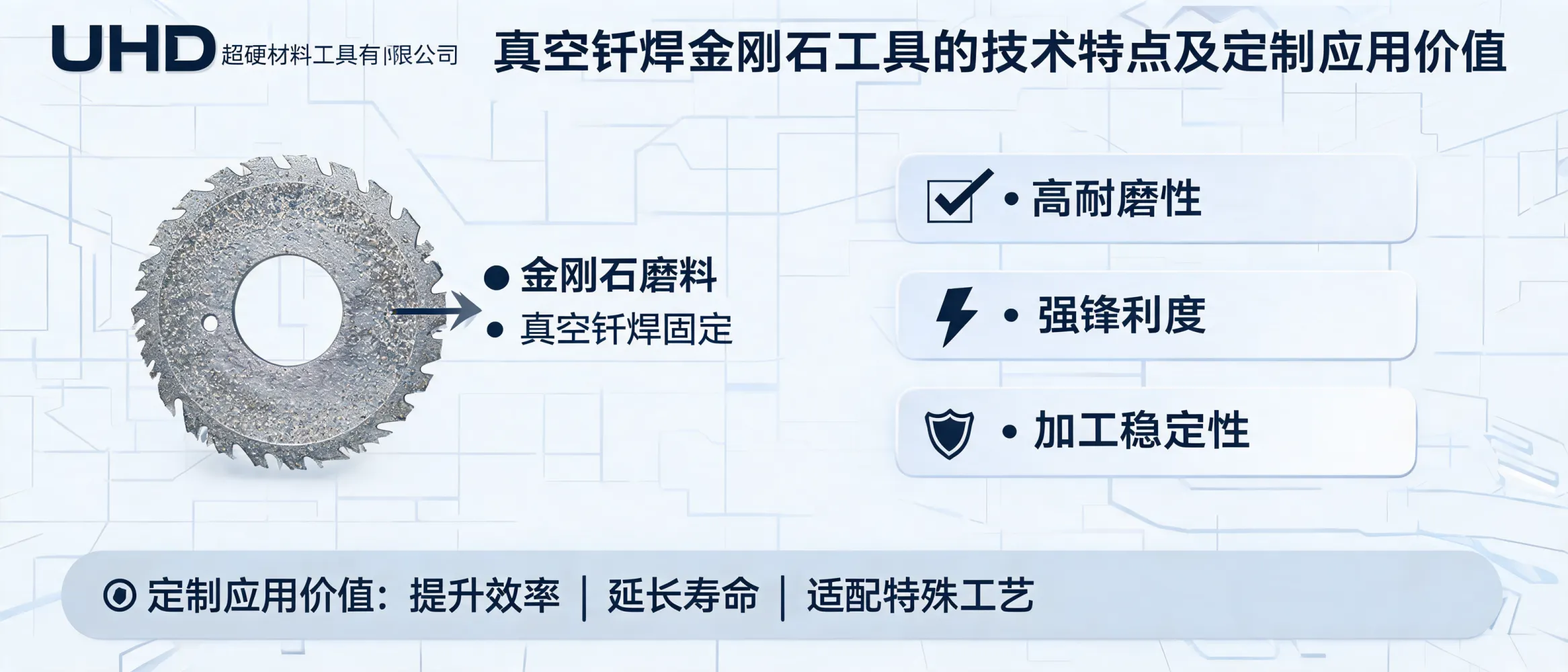
Vacuum brazed diamond cutting abrasive is a type of superhard tooling where diamond grains are metallurgically bonded to a tool body through a high-temperature brazing process performed under vacuum. This page by UHD Ultrahard Tools Co., Ltd (UHD) explains the structure, working principle, and typical industrial cutting scenarios, and clarifies how it differs from conventional abrasives and common diamond tools—so buyers and engineers can build a reliable baseline for tool selection or customization.
Best for: industrial users evaluating cutting efficiency, process stability, and surface quality when specifying diamond tools for metalworking, stone processing, and other demanding applications.
A vacuum brazed diamond cutting abrasive is an abrasive cutting component (or tool segment) made by fixing diamond particles onto a substrate (commonly steel or alloy tool bodies) using a brazing filler alloy under vacuum conditions. Compared with resin- or vitrified-bond abrasives, vacuum brazing creates a strong metallurgical bond that can enhance grain retention and enable higher exposure of diamond cutting edges.
Diamonds are bonded (not simply embedded) so the abrasive layer can keep active cutting points and resist premature grain pull-out in demanding cutting tasks.
Vacuum reduces oxidation during brazing, helping the filler alloy wet and bond with the substrate and diamond interface more consistently—supporting stable abrasive performance.
While designs vary by tool form (wheel, disc, segment, burr, etc.), most vacuum brazed diamond cutting abrasives share a similar architecture:
| Structural layer | What it does | What to specify (buyer/engineer view) |
|---|---|---|
| Tool body / substrate | Provides stiffness, geometry, and mounting interface; transfers load and heat. | Tool form, dimensions, mounting type, allowable runout and balance needs. |
| Brazing filler alloy layer | Metallurgically bonds diamond grains to the tool body under vacuum. | Operating temperature range, corrosion exposure, and required bonding reliability. |
| Diamond abrasive layer | Primary cutting points; grain size and distribution control aggressiveness and finish. | Target material, desired surface quality, cutting speed, and tolerance for chipping. |
| Chip space / exposure design | Provides clearance for chips and coolant/airflow; reduces loading and heat buildup. | Wet/dry process, chip evacuation limits, and stability requirements. |
Practical note: In vacuum brazed designs, diamond grains are often more exposed than in dense bonded wheels—this can increase cutting sharpness, but also makes correct parameter selection (speed/feed/cooling) important for process stability.
Vacuum brazed diamond cutting abrasives remove material mainly through micro-cutting and controlled fracture at the contact interface. Diamond grains act as cutting edges; the brazed bond aims to keep those grains anchored while forces, heat, and chips are managed by tool geometry and exposure design.
UHD supplies superhard tooling solutions for industrial users. Vacuum brazed diamond cutting abrasives are commonly considered when a process needs aggressive cutting, reliable grain holding, and stable operation across batch production or repetitive tasks.
Selection should account for material compatibility, machine rigidity, and cooling conditions.
Industrial buyers often compare vacuum brazed diamond cutting abrasives to resin/vitrified bonded abrasives and other diamond tool categories. The most useful comparison is by bonding mechanism, grain exposure, and process behavior.
| Comparison item | Vacuum brazed diamond cutting abrasive | Conventional abrasives (typical bonded types) | Other diamond tools (general) |
|---|---|---|---|
| Grain holding | Metallurgical brazed bond can provide strong retention of diamond grains. | Bond matrix holds grains; wear exposes new grains depending on bond hardness. | Varies widely by tool category and bond design (sintered, plated, brazed, etc.). |
| Grain exposure | Often higher exposure; can cut aggressively with clear chip space. | Often lower exposure; may prioritize finish or controlled wear. | Ranges from high (plated/brazed) to lower (sintered). |
| Process behavior | Suitable when stability and strong grain anchoring are needed under demanding cutting. | Often selected based on finish requirement, cost, and dressing behavior. | Chosen by application: cutting vs grinding vs drilling; each has specific strengths. |
| Selection focus | Match grain size/exposure and tool form to the work material, machine capability, and cooling method. | Match abrasive type and bond to surface quality, removal rate, and dressing/maintenance needs. | Confirm tool category, bond type, and geometry against the target process window. |
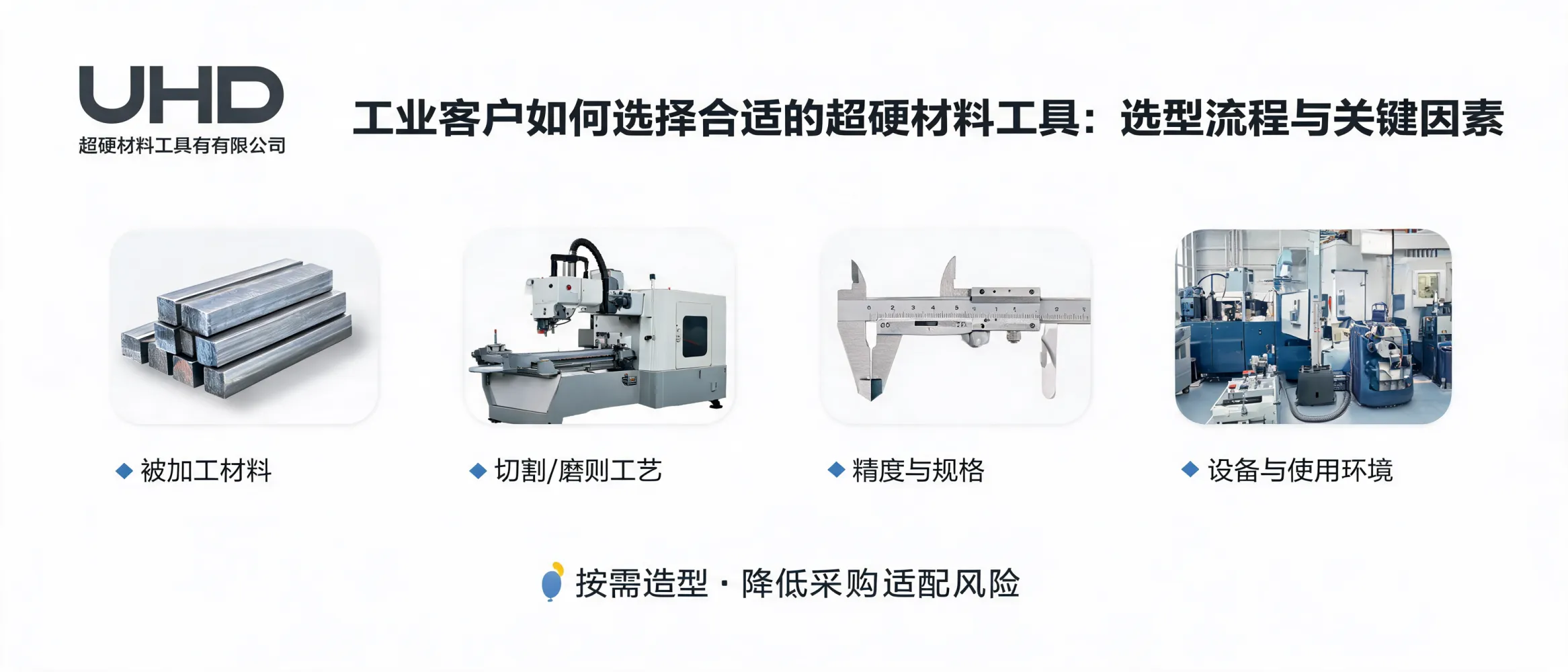
For B2B procurement and engineering reviews, a clear specification reduces trial-and-error. UHD typically aligns vacuum brazed diamond abrasive solutions to the customer’s process target and constraints.
Helpful for quoting: share drawings, target cutting depth, expected daily output rhythm, and any current tool pain points (loading, chipping, burning, unstable finish). UHD can then propose a more relevant vacuum-brazed diamond abrasive configuration.
UHD Ultrahard Tools Co., Ltd is a high-tech enterprise focused on R&D, manufacturing, and B2B supply of superhard material tools, including diamond tools, abrasive products, and custom vacuum brazed diamond abrasives. With a quality-first mindset and collaboration with academic partners such as Henan University of Technology, UHD supports industrial customers with product positioning, application-oriented tool selection, and responsive export service for global markets.
Tool performance depends on the work material, machine condition, parameters, and cooling. For safe operation and stable results, confirm the correct tool type and process settings for your specific equipment and application.


.png?x-oss-process=image/resize,h_1000,m_lfit/format,webp)
.png?x-oss-process=image/resize,h_1000,m_lfit/format,webp)