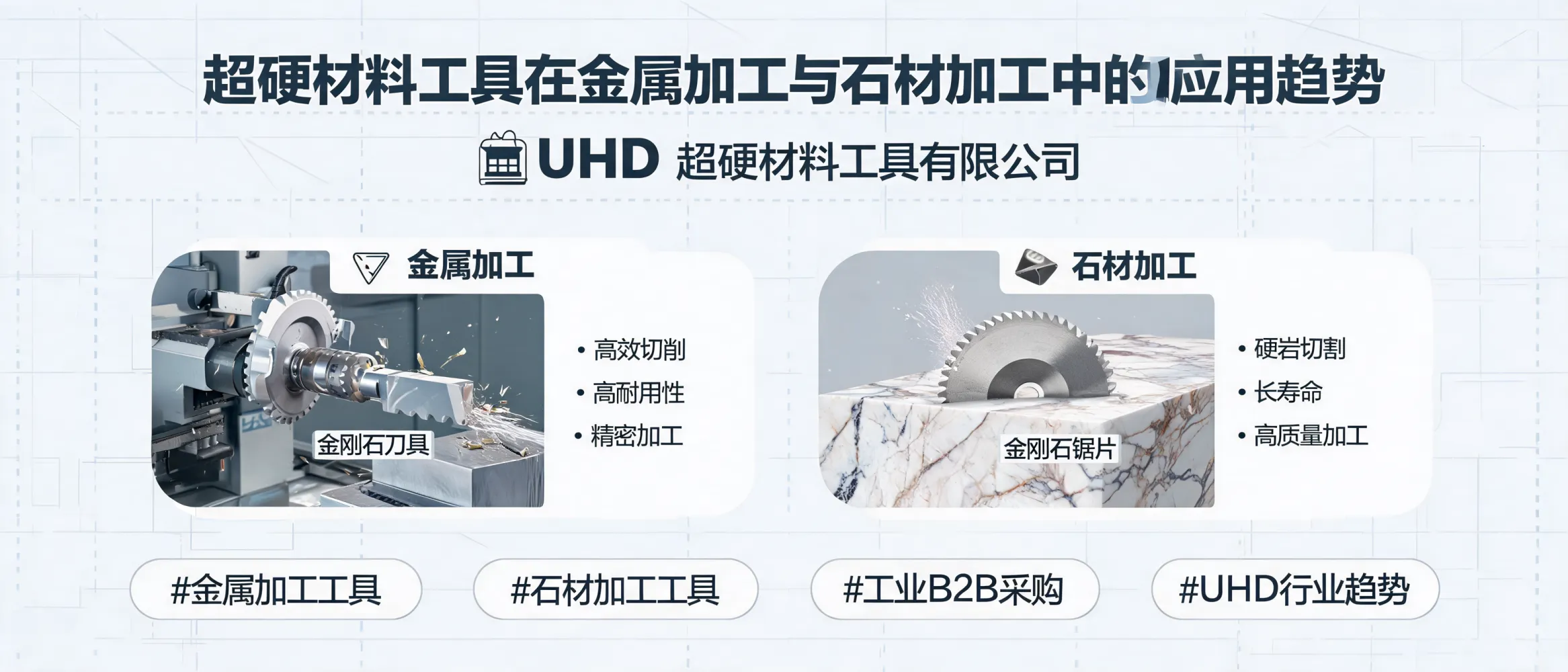
Ultrahard material tools are industrial cutting and grinding solutions designed around superhard materials—most commonly diamond—to achieve stable performance on demanding substrates and processes. In B2B production environments, selecting the right diamond tools, abrasives, and vacuum brazed diamond cutting abrasives is less about “one tool fits all” and more about matching tool structure to the process requirement, the workpiece material, and the target surface/throughput.
This page explains the fundamentals and selection logic commonly used in metalworking and stone processing, and how customization can be applied for industrial procurement.
In manufacturing and fabrication, ultrahard tooling typically refers to tools and consumables that rely on superhard cutting media (e.g., diamond abrasives) to perform cutting, grinding, shaping, and finishing. Compared with conventional abrasives, ultrahard solutions are often chosen when operations require:
Practical takeaway: In B2B procurement, “best tool” usually means the best match between tool design and the actual process window—material, machine, parameters, and quality target.
Diamond tools generally use diamond as the working medium for cutting or grinding. They are widely applied where tool wear and heat management become critical factors in productivity and finish control.
Abrasives and grinding consumables are selected to deliver stable removal rate and surface quality across repeated cycles. In industrial environments, consistency and compatibility with equipment and coolant strategies are key selection drivers.
Vacuum brazed diamond abrasives use a brazing process to bond diamond to the tool body under vacuum conditions. This structure is often evaluated when buyers need a practical balance of cutting aggressiveness, tool stability, and process repeatability for specific industrial tasks.
Across both metalworking and stone processing, the same core principle applies: tooling performance is determined by how effectively the cutting/grinding medium interacts with the workpiece while maintaining stability under heat, load, and vibration.
Selection tip for procurement teams: define the process window first (material + machine + parameters + quality target), then evaluate tool options against measurable acceptance criteria such as stability, finish requirement, and fit with current equipment.
When comparing ultrahard material tools across suppliers, industrial buyers typically focus on performance factors that connect directly to production goals and process risk. Common evaluation dimensions include:
In many industrial lines, standard tooling may not fully match a specific material, machine configuration, or quality target. Customization is typically considered when buyers need more predictable results within a narrow process window—especially for recurring production runs.
A good customization outcome is not a blanket performance claim—it is a clearer alignment between tooling design and your process requirement, enabling more consistent production under your specific conditions.
For vacuum brazed diamond cutting abrasives and related ultrahard tooling, customization discussions often revolve around tool structure and application fit, based on realistic operating parameters.
UHD Ultrahard Tools Co., Ltd (河南优德超硬工具有限公司) focuses on the R&D, manufacturing, and supply of ultrahard material tools for industrial customers. UHD’s offerings include diamond tools, abrasives, and custom vacuum brazed diamond cutting abrasives, serving production needs in metalworking and stone processing.
Guided by the brand positioning “Quality Builds the Brand”, UHD emphasizes product-market fit—supporting buyers in selecting tool specifications that correspond to real process requirements rather than generic claims.
If you are sourcing ultrahard material tools for industrial metalworking or stone processing, prepare the basic process details (material, machine type, operating method, and quality target). This enables a more accurate discussion on whether standard tools are sufficient or whether vacuum brazed diamond cutting abrasives or other diamond tooling should be considered.


.png?x-oss-process=image/resize,h_1000,m_lfit/format,webp)