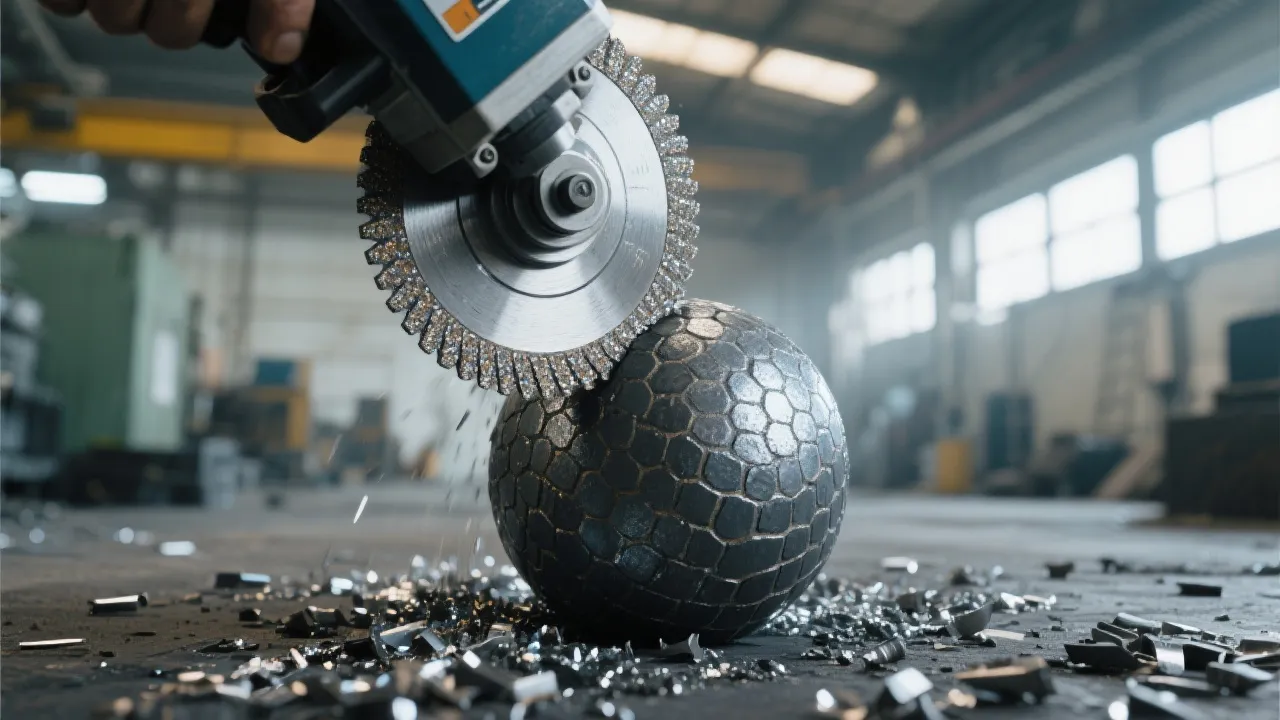
Vacuum brazed diamond tools (often referred to as vacuum brazed diamond cutting abrasives) are widely used in industrial cutting and grinding when stable diamond exposure and efficient material removal are required.
This page, prepared by UHD Ultrahard Tools Co., Ltd, explains the structure, bonding mechanism, and working principles behind vacuum brazed diamond tools, and compares them with electroplated diamond tools and traditional abrasives—so buyers in metalworking and stone processing can evaluate suitability for specific processes.
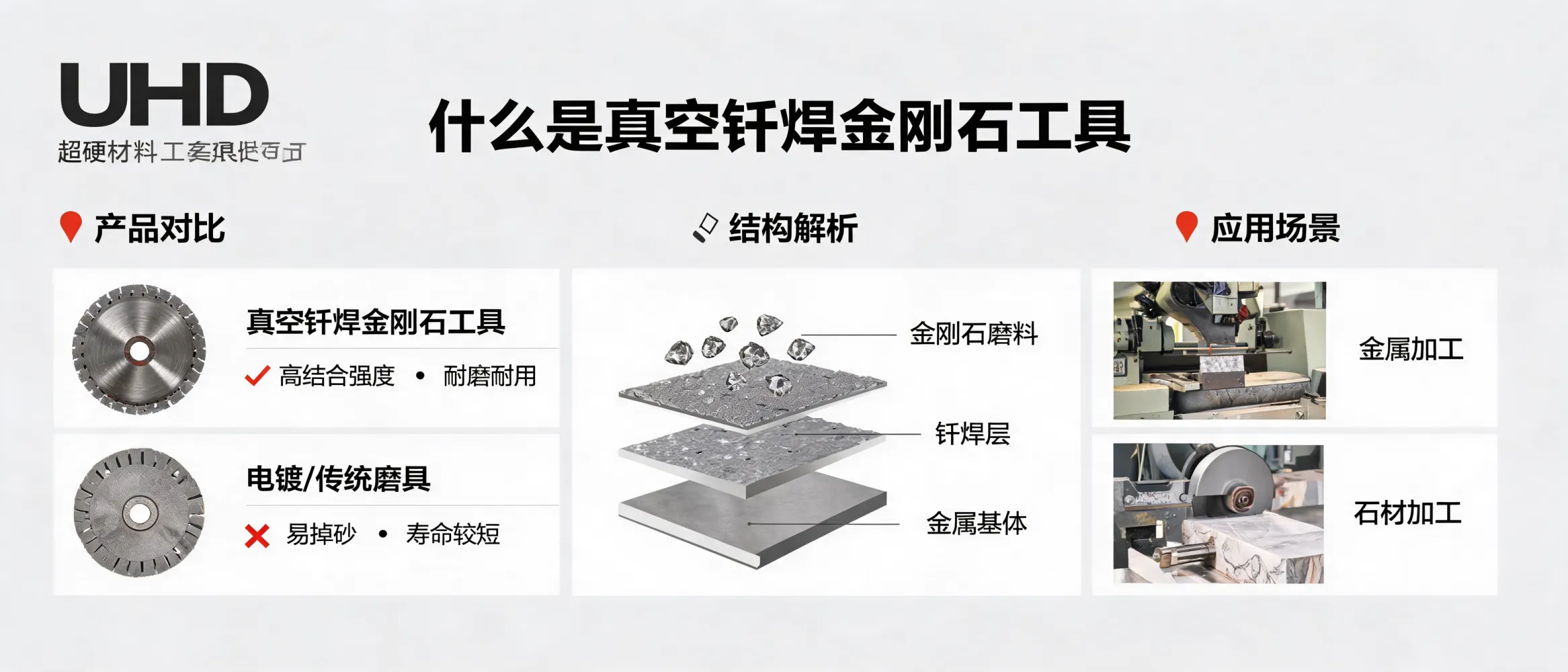
A vacuum brazed diamond tool is a type of superhard material tool where diamond abrasive grains are metallurgically bonded to a tool body through a brazing alloy under a controlled vacuum environment. In practice, vacuum brazing aims to create a secure bond between the diamond grit and the substrate so the abrasive grains can stay anchored during cutting or grinding.
In industrial sourcing, “vacuum brazed diamond tool” and “vacuum brazed diamond cutting abrasive” often describe the same bonding concept: diamond grit is held by a brazed metal layer rather than resin, vitrified bond, or simple surface plating.
During operation, the exposed diamond grit functions as a set of micro-cutters. As the tool contacts the workpiece, the diamond grains engage the surface, producing cutting and micro-fracture effects while the tool body maintains geometry and stability. The brazed metal layer keeps the diamond grains anchored so they can continue to cut until wear reaches a point where performance declines and the tool is replaced or reconditioned (depending on tool design).
Industrial buyers often compare electroplated diamond tools and vacuum brazed diamond tools when selecting diamond cutting abrasives. The key differences are typically found in the bonding method, resulting grit exposure, and how the abrasive layer behaves over time.
| Comparison point | Vacuum brazed diamond tool | Electroplated diamond tool | Traditional abrasives (non-diamond / conventional bonds) |
|---|---|---|---|
| Bonding approach | Brazed metal layer formed in vacuum; focuses on strong retention | Diamond grit held by electroplated metal deposition on the surface | Often resin/vitrified/other bonds; material depends on abrasive type |
| Typical selection focus | Process stability and retention for demanding cutting/grinding tasks | Precision surface layer use cases where electroplating is preferred | General-purpose applications where diamond is not required or not suitable |
| Buyer evaluation items | Tool geometry, diamond grit size, brazing quality consistency, intended material | Plating thickness, grit distribution, substrate quality, intended material | Abrasive type, bond type, wheel/tool spec, heat and wear behavior |
Note: Actual performance varies by tool design, specification, and operating parameters. For procurement decisions, align the tool type with the workpiece material, required surface finish, and machine conditions.
If you are unsure whether vacuum brazed or electroplated is more suitable, prepare your workpiece material, machine type, operation (cutting/grinding), target finish, and current tool specification for a faster selection discussion.
UHD Ultrahard Tools Co., Ltd focuses on superhard material tools including vacuum brazed diamond cutting abrasives. With an engineering-driven approach and a quality-first mindset, UHD supports industrial buyers in choosing tool structures and specifications that match their process needs in metalworking and stone processing.
For an efficient quotation and tool type recommendation, please share the following information with UHD: workpiece material, operation (cutting/grinding), machine model, current tool type (if any), required size/shape, and target surface finish.
UHD will respond based on your provided requirements and applicable tool specifications—without assuming universal results across different materials and process parameters.


.png?x-oss-process=image/resize,h_1000,m_lfit/format,webp)
.png?x-oss-process=image/resize,h_1000,m_lfit/format,webp)