Vacuum Brazed Diamond Tools: Applications and Selection for Industrial Processing
01 09,2026
UHD Ultrahard Tools Co., Ltd
Industry Guide
UHD Ultrahard Tools Co., Ltd explains how vacuum brazed diamond tools and diamond cutting abrasives are applied in industrial processing, and provides a practical selection framework linking workpiece material, process requirements, tool performance, and customization needs.
Vacuum brazed diamond tools are widely used in industrial processing where operators need stable cutting / grinding performance, controlled wear, and predictable tool life across batches. This page provides a practical selection framework for vacuum brazed diamond tools and diamond cutting abrasives—linking workpiece material, process requirements, performance targets, and customization needs.
Who this guide is for
- Sourcing managers comparing tool options across suppliers
- Process engineers optimizing cycle time, finish, and stability
- Production teams needing repeatability and simpler tool changes
Brand context
UHD Ultrahard Tools Co., Ltd (UHD) develops and manufactures ultrahard tooling solutions for B2B customers. UHD focuses on R&D and production of diamond tools and related abrasives for metal and industrial applications, with an emphasis on quality-driven, process-matched solutions.
Where vacuum brazed diamond tools fit in industrial processing
In production environments, vacuum brazed diamond tools are chosen when users want a combination of strong diamond retention, sharp cutting/grinding action, and consistent precision. They are often evaluated against the actual workflow constraints—machine power, coolant/air conditions, allowable dust, target tolerance, and tool-change downtime.
Typical evaluation dimensions (usable across most RFQs)
- Workpiece material: e.g., cast iron, steels, or other metals requiring stable abrasive action
- Process: grinding, cutting, deburring, shaping, finishing
- Quality targets: dimensional stability, consistency, surface condition requirements
- Operations targets: tool life, changeover frequency, dust and safety controls
- Compatibility: wheel diameter and machine fit, required balance/runout control, production rhythm
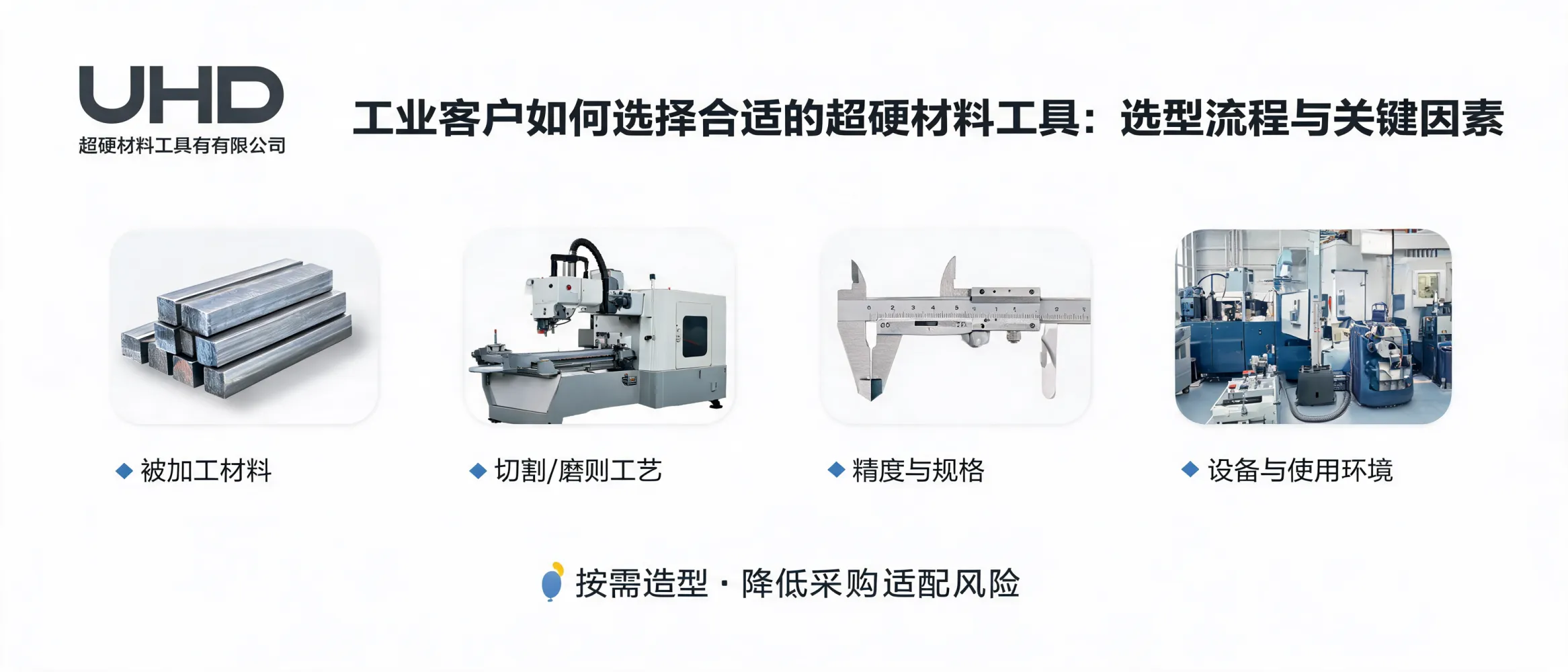
Selection framework: match material → process → performance → customization
1) Start from the workpiece material
Define the base material (for example, cast iron) and the variability you see in production. Material differences drive diamond exposure behavior, wheel loading tendency, and achievable finish stability—so material clarity makes supplier recommendations more accurate.
2) Define the process and contact conditions
- Operation type: roughing vs. finishing; continuous vs. intermittent contact
- Machine parameters: spindle speed range, power, rigidity, and fixture stability
- Cooling/dust control: dry or wet operation requirements; dust management expectations
3) Set performance targets that can be verified
Keep targets measurable and aligned with your shop KPIs, for example: fewer wheel changes, stable precision over a batch, and improved production stability. Avoid ambiguous targets; instead, specify what “good” looks like in your process.
Practical tip for RFQs: provide workpiece photos, current tool specification, machine model, and the process step where performance bottlenecks occur. This reduces back-and-forth and helps suppliers propose suitable wheel structures and dimensions.
4) Confirm the customization scope
Industrial buyers often require a tool that fits existing equipment and SOPs. Confirm what needs to be tailored early (e.g., diameter range, mounting compatibility, and application focus) and what can remain standard.
- Required diameter range and machine compatibility
- Application focus such as cast iron grinding vs. general metal processing
- Consistency controls needed for stable production
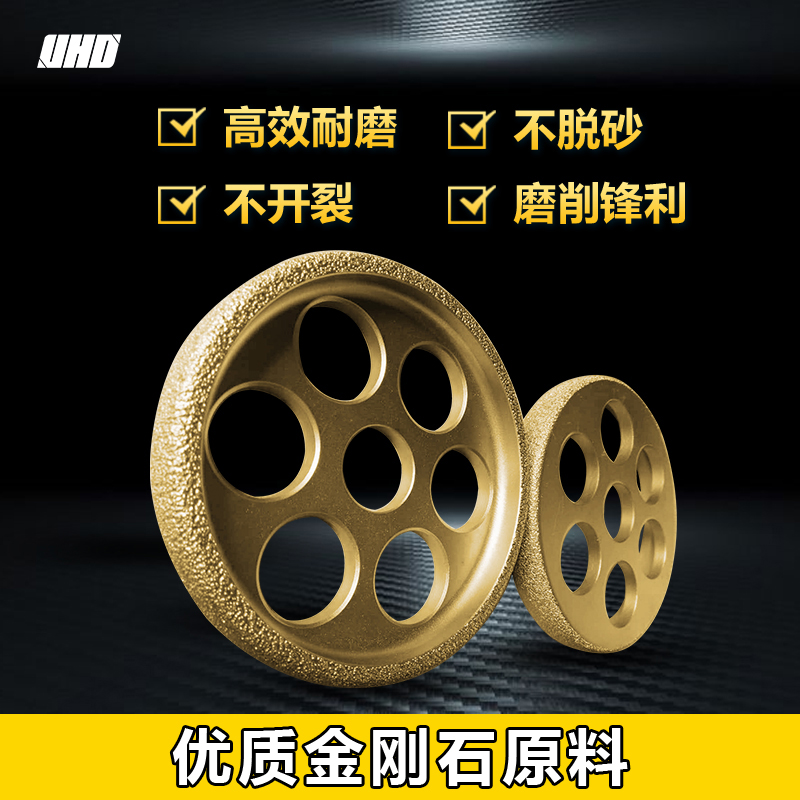
Related product reference: UHD Vacuum Brazed Diamond Grinding Wheel 400
Vacuum Brazed Diamond Grinding Wheel 400
Designed for cast iron grinding, using monocrystalline diamond with a vacuum brazing process to support stable retention and consistent grinding action.
Product series: Diamond Grinding Wheels
HS Code: 6804211000
Key characteristics (as specified)
- Vacuum brazed structure: helps secure diamond grit in the base and reduce grit shedding risk
- Long service life orientation: aims to reduce replacement frequency and downtime
- Precision forming: supports consistency and stable grinding accuracy
- Lower dust profile: designed to reduce dust emission for safer, more compliant operation
- Diameter range: 300–405 mm to fit multiple equipment needs
- Compliance: manufactured to meet CE requirements as stated
How to decide if this wheel matches your process
| Your input |
What it helps validate |
| Workpiece: cast iron grade & condition (skin, hardness variation) |
Fit for cast iron grinding and expected stability across batch variability |
| Machine model, spindle speed range, and fixture rigidity |
Diameter and operating window compatibility (300–405 mm range consideration) |
| Target: accuracy consistency & wheel-change frequency |
Whether long-life orientation and precision forming align with your KPI |
| Dry/wet grinding requirements and dust-control expectations |
How the lower-dust design fits your EHS and production environment |
Applications and industries (based on stated scope)
For industrial processing, the UHD Vacuum Brazed Diamond Grinding Wheel 400 is positioned for metalworking scenarios—especially cast iron—and is stated to be used in:
- Metal processing
- Machinery manufacturing
- Automotive parts manufacturing
UHD supports B2B customers with product selection aligned to
workpiece material and
process requirements, and provides technical support and after-sales service for global buyers as stated in the product introduction.
Information to share for faster, more accurate selection
To recommend the right vacuum brazed diamond tool configuration for your line, UHD typically benefits from receiving the following engineering inputs:
- Workpiece material and the specific operation step (grinding/cutting/finishing)
- Current tool type/specification and the pain point (life, finish, accuracy, dust)
- Machine and mounting information (including diameter constraints)
- Quality targets and acceptance criteria relevant to your process
- Expected consumption and delivery expectations for B2B supply planning
If you are evaluating a vacuum brazed diamond grinding wheel for cast iron, you can reference the UHD Vacuum Brazed Diamond Grinding Wheel 400 (diameter 300–405 mm) as a starting point and align the final selection to your equipment and process requirements.

.png?x-oss-process=image/resize,h_1000,m_lfit/format,webp)


.png?x-oss-process=image/resize,h_1000,m_lfit/format,webp)