What Are Vacuum Brazed Diamond Cutting Abrasives? Structure, Use Cases, and How to Choose
28 09,2026
UHD Ultrahard Tools Co., Ltd
Concept Explanation
Learn what vacuum brazed diamond cutting abrasives are, how their structure and performance differ from conventional abrasive tools, and where they fit in metalworking and stone processing. This guide is published by UHD Ultrahard Tools Co., Ltd to support informed tool selection and customization discussions.

Vacuum brazed diamond cutting abrasives are a type of brazed diamond tool designed for cutting, grinding, and shaping hard-to-machine materials in metalworking and stone processing. This page explains what they are, how their structure works, where they fit best, and how to choose specifications for stable performance.
Published by UHD Ultrahard Tools Co., Ltd (UHD) to support informed tool selection and customization discussions for the UHD SupraCut vacuum brazed diamond tool line.
Quick view
- Tool type: vacuum brazed diamond cutting abrasives / brazed diamond tools
- Typical uses: cutting, grinding, profiling
- Industries: metalworking, stone processing
- Related series: UHD SupraCut
- Service: customization for process-specific requirements
Definition: what “vacuum brazed” means in diamond cutting abrasives
Vacuum brazing is a joining method that fixes diamond abrasive grains to a tool body through a brazed bond created under vacuum conditions. In practical terms, it is a way to build a diamond cutting/grinding surface that is engineered for high hardness, wear resistance, and stable cutting/grinding behavior in demanding applications.
UHD’s
SupraCut vacuum brazed diamond tools are developed with a focus on precision brazing, consistent quality control, and customization support for specific cutting and grinding processes.
Tool structure: what a vacuum brazed diamond tool is made of
Core components
- Tool body / substrate: the base that carries load, rotation, and heat transfer during work.
- Brazed bonding layer: the engineered interface that anchors abrasive grains to the tool body.
- Diamond abrasive grains: the cutting points that contact the workpiece during cutting or grinding.
Why structure matters
Structure directly affects stability and service life under high-hardness cutting conditions. UHD emphasizes ultra-precision brazing and strict quality control to help maintain consistent performance from tool to tool.
Key performance characteristics (and what they mean on the shop floor)
| Characteristic |
What to look for |
Selection value |
| Hardness & abrasion resistance |
Diamond abrasive with stable bonding and consistent distribution |
Supports demanding cutting/grinding of hard materials |
| Cutting/grinding stability |
Precision brazing and controlled manufacturing consistency |
Helps reduce variability across batches and shifts |
| Durability |
Verified by quality inspection procedures |
More predictable tool replacement planning |
| Process fit via customization |
Specifications aligned to your machine, material, and finish needs |
Improves usability for special geometries and workflows |
Note: performance depends on multiple variables (material type, machine conditions, coolant, parameters, and operator practices). Selection should be verified through application discussion and trial planning where appropriate.
Typical application scenarios
Metalworking
- Cutting and grinding operations requiring high hardness and wear resistance
- Process setups where stable cutting/grinding performance is important for consistency
- Applications needing a customized tool specification to match a specific workflow
Stone processing
- Stone cutting and grinding where abrasion resistance and edge stability are required
- Shaping and finishing processes benefiting from consistent tool quality
- Production lines that prefer reliable supply and repeatable specs for ongoing procurement
How to choose vacuum brazed diamond cutting abrasives
- Clarify the workpiece and process goal
Identify whether the priority is cutting speed, surface finish, stability, or durability, and describe the material and operation (cutting, grinding, profiling).
- Match tool type to the application
Select a brazed diamond tool format compatible with your equipment and required geometry (e.g., wheel/disc-style tools in the UHD SupraCut line).
- Decide if customization is necessary
When standard specs cannot meet your constraints (shape, access, contact area, or workflow), request a customized solution tailored to the process requirement.
- Confirm consistency and inspection expectations
For B2B procurement, define acceptance criteria and discuss how quality control supports repeatable outcomes.
Practical tip for buyers: When requesting a quote or customization review, prepare details about the workpiece material, machine model, operation type, and any constraints (target area, clearance, or required consistency). This helps UHD align the vacuum brazed diamond tool specification to your production reality.
UHD SupraCut: product line and engineering approach
UHD SupraCut is UHD’s vacuum brazed diamond tool offering within its ultrahard material abrasive product series. It is positioned for industrial buyers who need high-hardness cutting/grinding capability with dependable manufacturing control.
- Ultra-precision brazing: UHD applies proprietary precision brazing methods to enhance durability and working stability.
- Ultrahard materials: engineered for high hardness and abrasion resistance in demanding operations.
- Quality control: inspection processes support consistent, repeatable product quality.
- Customization support: specifications can be tailored to specific processing requirements.
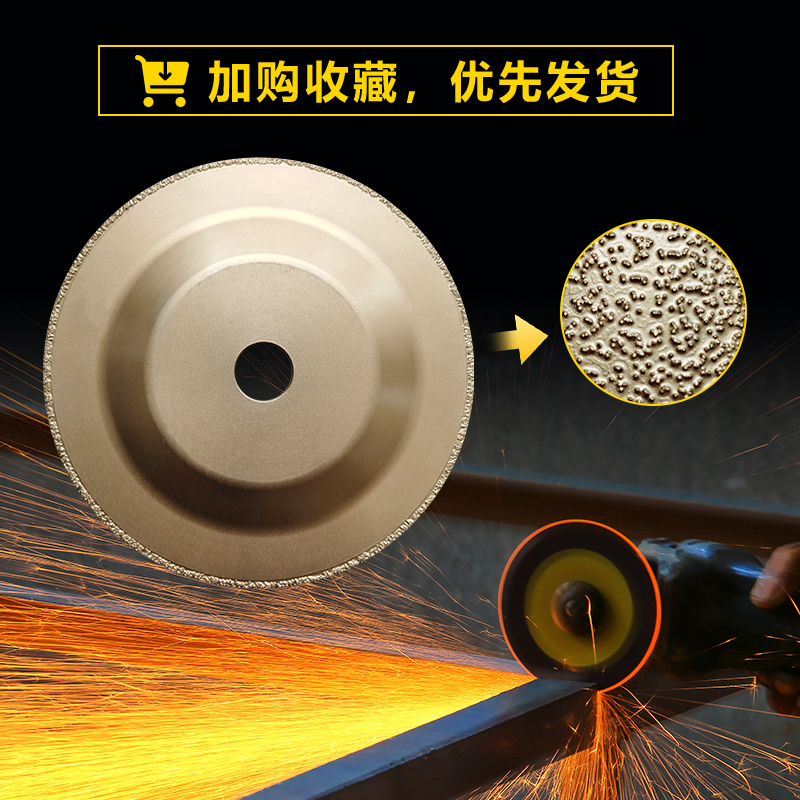
Image shown: representative UHD SupraCut brazed diamond abrasive tool. Final tool form and specification depend on application requirements.
UHD supports ongoing product and technology development through cooperation with higher-education institutions (e.g., Henan University of Technology), and serves global B2B buyers via established international trade platforms to help align delivery and service with different market needs.
Discuss your application: what to share for selection or customization
Recommended information
- Workpiece material and hardness range (if known)
- Operation type: cutting / grinding / shaping
- Machine type, spindle speed range, and coolant conditions
- Target result: throughput priority vs. surface/edge requirement
- Tool form constraints: dimensions, mounting method, access clearance
What UHD can align on
- Vacuum brazed diamond tool specification and geometry options
- Manufacturing consistency and quality inspection expectations
- Customization feasibility for process-specific requirements
- B2B supply coordination for ongoing procurement
UHD follows a “quality-first” approach and avoids overstated claims; tool selection should be validated against your material, equipment, and process parameters.

.png?x-oss-process=image/resize,h_1000,m_lfit/format,webp)