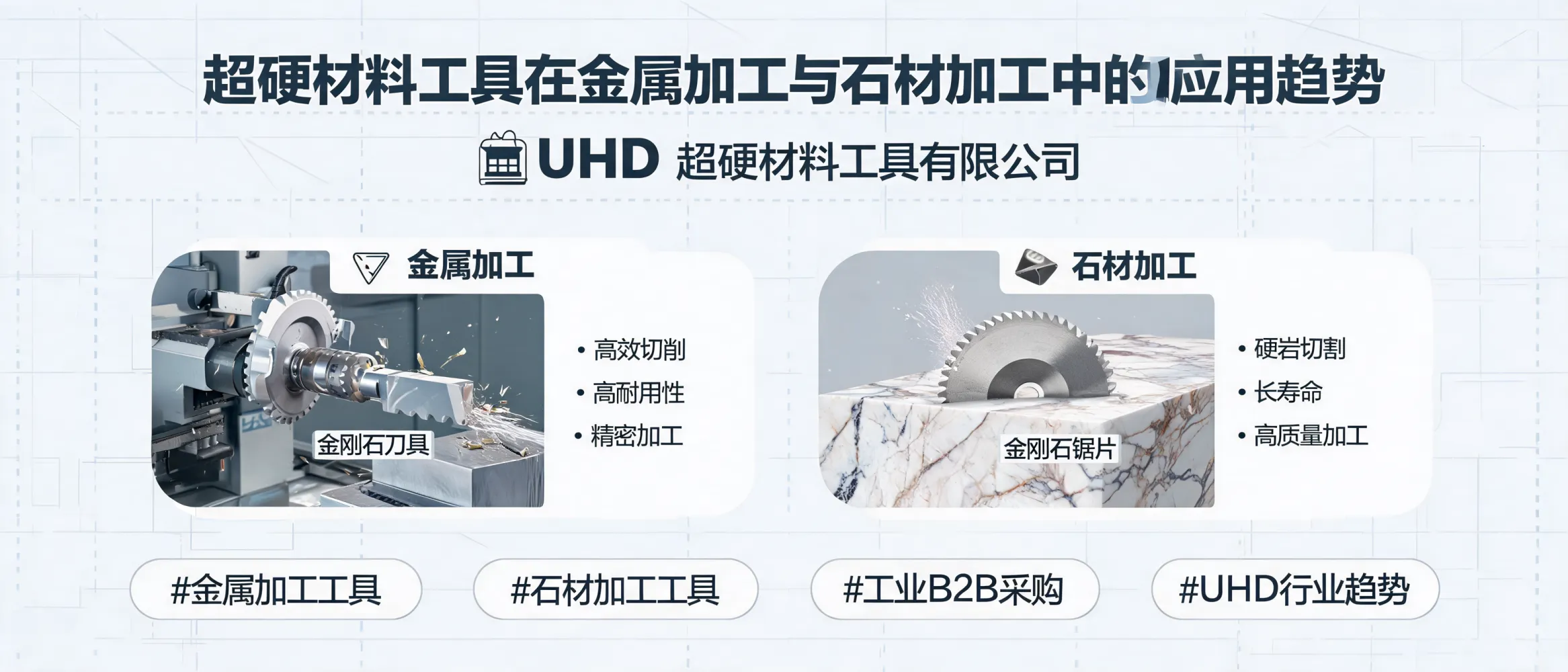
Vacuum brazed diamond cutting abrasives (also called vacuum brazed diamond cutting & grinding parts) are industrial tools designed to perform cutting and grinding in demanding workloads. They are widely used across metal processing and stone processing, where stable efficiency, edge control, and durability are essential.
This page from UHD Ultrahard Tools Co., Ltd (UHD) explains what the product is, how it is built, what performance features matter, and how B2B buyers can evaluate specifications for their production scenarios.
Product focus
HS Code: 82079000
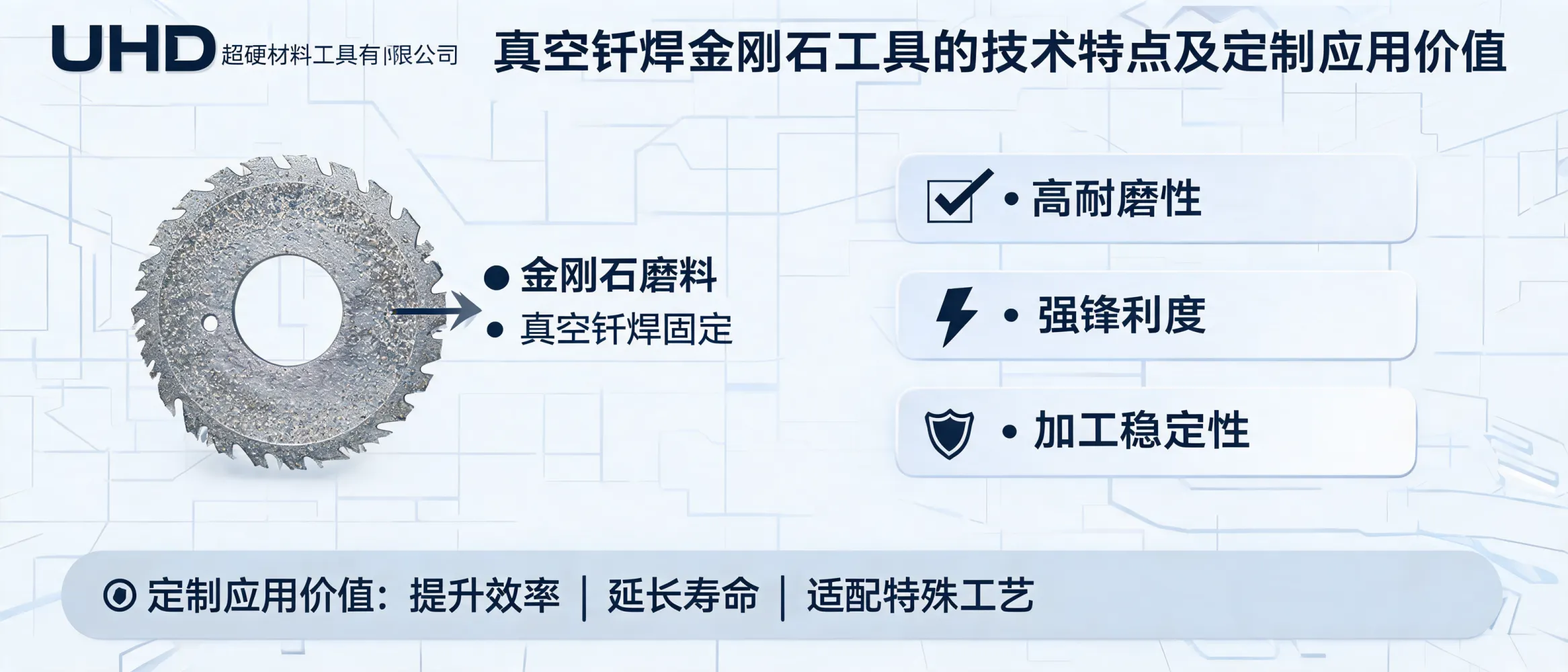
A vacuum brazed diamond abrasive is a diamond tool where diamond grit is metallurgically bonded to a metal/steel substrate through a vacuum brazing process. Compared with loosely attached abrasive structures, vacuum brazing forms a strong bond between the diamond particles and the tool body, supporting consistent performance under high-load industrial cutting and grinding.
In practical terms: diamond grit is brazed onto a steel body, creating a robust working layer for cutting and grinding hard materials in production environments.
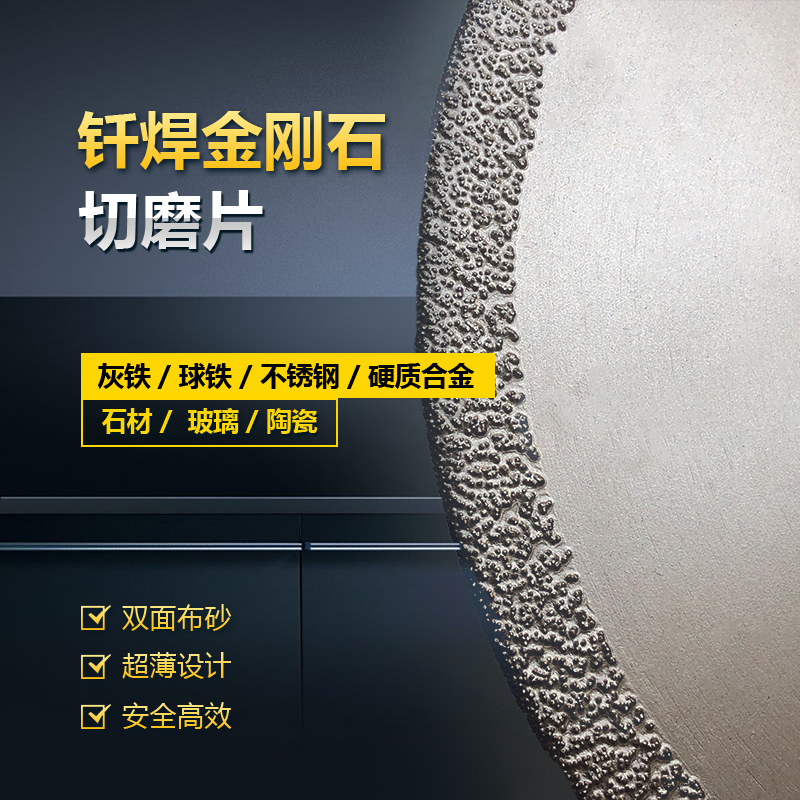
The same part supports cutting and grinding, helping operators switch tasks faster in changing job conditions and improving workflow efficiency without frequent tool changes.
Vacuum brazing creates a strong bond between diamond grit and the substrate, contributing to stability in demanding cutting/grinding operations and supporting long service life under industrial loads.
A thinner structure can reduce material loss while maintaining clean, sharp cuts—useful where kerf width and surface finish consistency matter.
A high-strength steel body supports durability and safer operation during high-speed cutting and grinding, especially when processing hard-to-machine materials.
Suitable for a wide range of workpieces including grey cast iron, ductile iron, stainless steel, carbide, stone, glass, and ceramics, supporting mixed-material production and maintenance tasks.
Note: performance depends on machine type, RPM, coolant strategy, feed rate, and the specific material grade. UHD can support specification alignment for B2B procurement.
| Selection factor | Why it matters | Info to prepare for inquiry |
|---|---|---|
| Diamond grit size | Affects cutting aggressiveness, finish quality, and wear behavior. | Workpiece material and desired surface/kerf requirements. |
| Bond strength (brazed layer) | Supports durability and stability under industrial load. | Duty cycle, batch size, and operating conditions. |
| Cutting / grinding efficiency | Impacts throughput and operator time per part. | Target cycle time, machine power, typical feed rate. |
| Heat resistance | Important for dry cutting or high-speed operation. | Wet/dry operation, coolant availability, RPM range. |
| Expected tool life | Helps evaluate total cost of ownership for procurement. | Current tool type, failure mode, and required consistency. |
UHD provides vacuum brazed diamond cutting and grinding parts in multiple sizes to match different diameter and bore requirements. Example sizes include 230 mm and 100 mm diameters, supporting compatibility with a variety of machines and setups.
Practical reminder: all specifications should be confirmed based on the actual workpiece and equipment requirements. Measurements are taken from real objects; for procurement, please share your machine model and target application to align the most suitable configuration.
Typical order info: material type, operation (cut/grind), diameter & bore, preferred grit size range, and whether the process is wet or dry.
UHD is a high-tech enterprise dedicated to the R&D, manufacturing, and sales of ultrahard material tools, following a “quality builds the brand” philosophy.
UHD cooperates with research partners such as Henan University of Technology to support continuous development in ultrahard cutting tool technology.
With an established B2B foreign trade service system, UHD supports global buyers with product communication, specification confirmation, and application-oriented recommendations for metal and stone processing.
If you are sourcing vacuum brazed diamond cutting abrasives for industrial production, UHD can help align grit size, bond requirements, and tool geometry with your material and process conditions—especially when you need a reliable diamond cutting and grinding part for mixed cutting/grinding tasks.
Contact UHD Ultrahard Tools Co., Ltd to share your workpiece material, machine parameters, and target operation, and receive product options and technical suggestions suitable for B2B procurement.


.png?x-oss-process=image/resize,h_1000,m_lfit/format,webp)
.png?x-oss-process=image/resize,h_1000,m_lfit/format,webp)