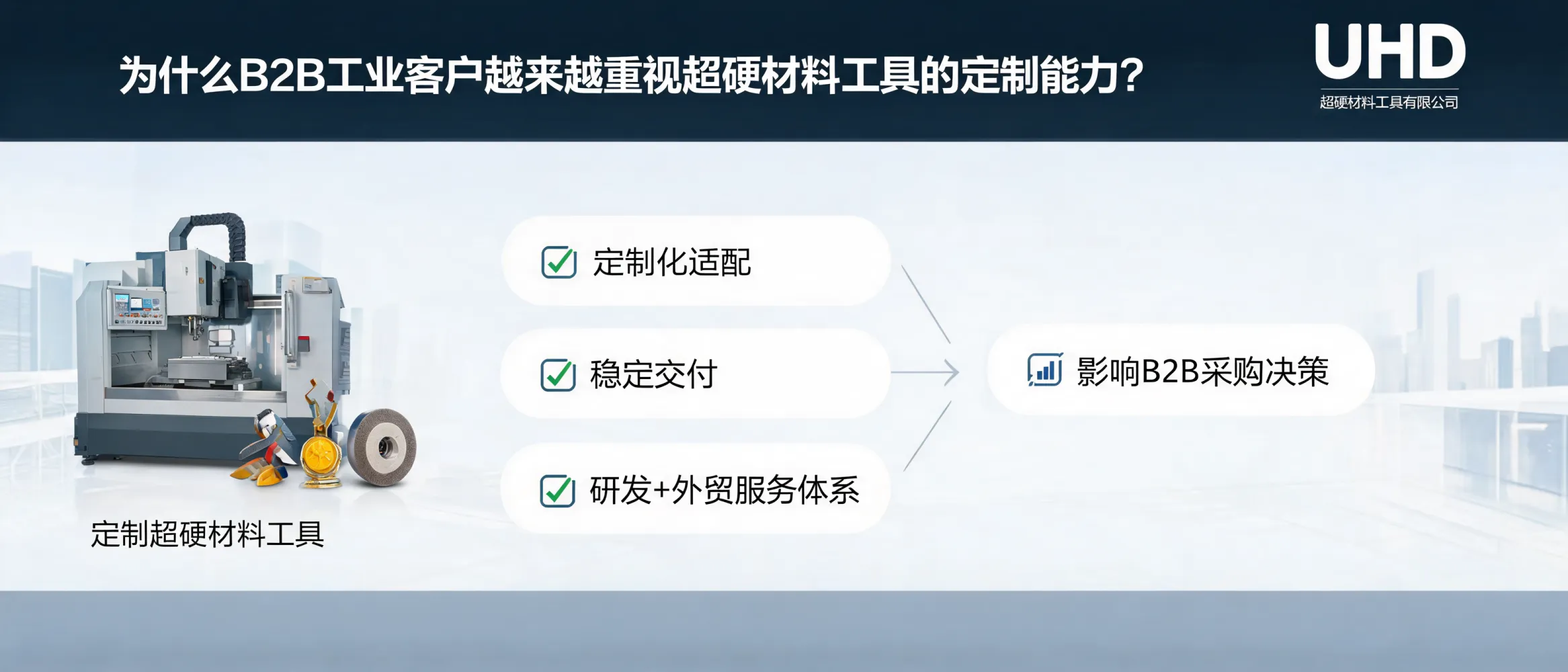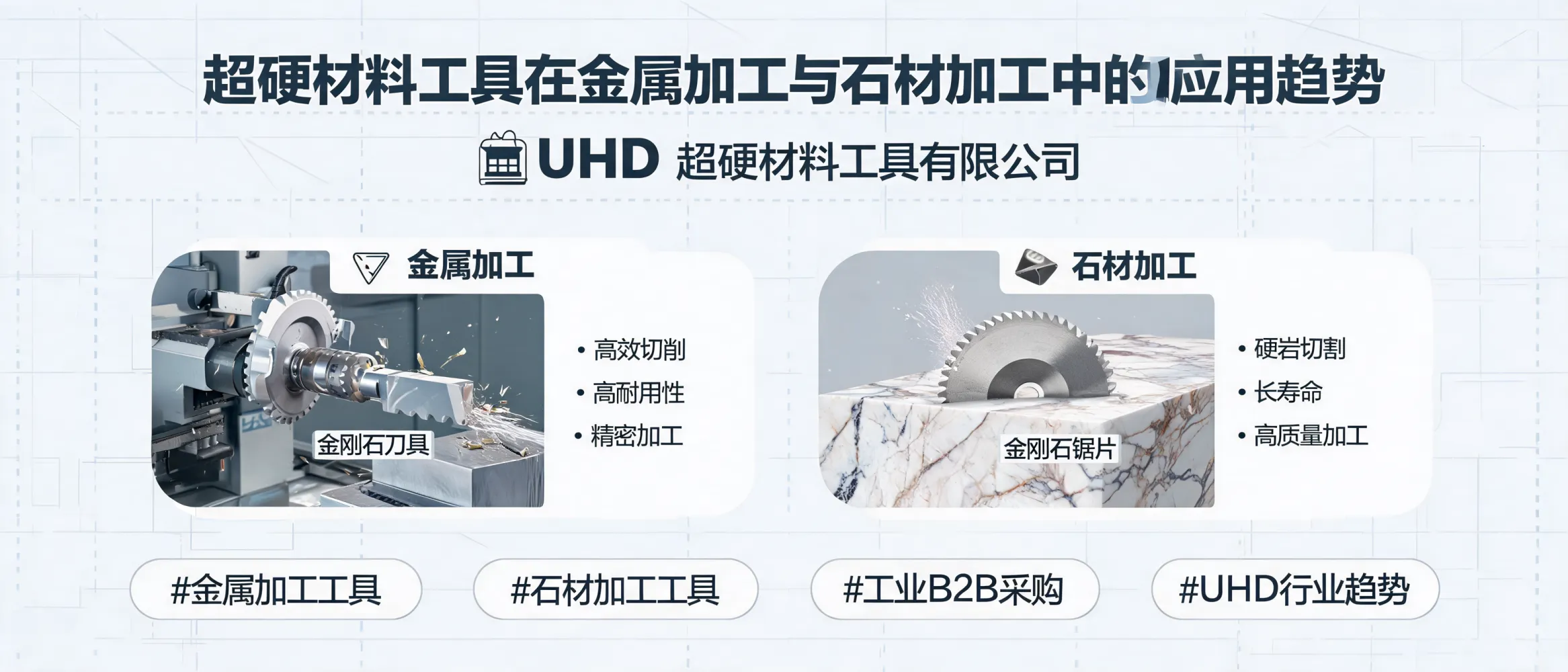
In metalworking and stone processing, ultrahard tools are increasingly selected not only by “material type”, but by measurable production targets: higher throughput, longer tool life, stable surface quality, and predictable cost per part. UHD Ultrahard Tools Co., Ltd (UHD Ultrahard Tools Co., Ltd / 河南优德超硬工具有限公司) tracks these application trends across industrial use cases—covering diamond tools, abrasives, and vacuum brazed diamond products designed around specific process requirements.
Focus areas buyers care about
Productivity • Tool life • Surface finish • Process stability • Customization • B2B sourcing reliability
UHD capability context
R&D-driven manufacturing, process-oriented tool selection, and technical support for industrial customers.
The trend is clear: end users no longer accept one-size-fits-all tooling. Instead, tools are chosen and optimized based on workpiece material, machining method, cooling strategy, required surface quality, and production rhythm. This is especially true for diamond tools and vacuum brazed diamond products, where bond design and abrasive exposure can strongly affect cutting/ grinding behavior.
| Application goal | How it translates to tooling decisions | Common evaluation metrics |
|---|---|---|
| Higher throughput | Tool geometry, grit selection, exposure control, and stable brazing/bonding that supports higher feeds or longer contact time. | Cycle time, line speed, scrap rate |
| Longer tool life | Heat management, wear-resistant structures, consistent abrasive quality, and process-matched tool design. | Parts per tool, dressing interval (if applicable), downtime |
| Better surface quality | Appropriate grit range, controlled cutting action, and minimized vibration/thermal damage. | Surface finish targets, edge chipping, burn marks |
| Customization | Tool form factor, segment layout, abrasive density, and interface features aligned with customer machines and fixtures. | First-pass yield, repeatability, implementation lead time |
In metalworking, ultrahard tools are often evaluated by how consistently they hold performance across long runs. Industrial buyers increasingly expect tools to support repeatable output and predictable wear, so production planning can be more reliable.
Selection increasingly starts from the actual process window (machine type, contact mode, coolant, and target finish). This supports the right balance between cutting aggressiveness and stability.
Surface quality expectations are rising. Tooling choices increasingly aim to reduce thermal impact, vibration marks, and edge defects—especially when downstream steps depend on surface integrity.
Buyers prioritize stable material quality and controlled manufacturing to reduce variability between batches, which is critical for large-volume production environments.
For stone processing, ultrahard tooling is often judged by the combination of tool durability and finish consistency across variable stone hardness and structure. Application trends show stronger demand for tools that maintain stable cutting/ grinding performance while helping reduce rework.
Vacuum brazed diamond tools and abrasives are increasingly adopted where users need strong abrasive retention and process-oriented performance. The practical trend is moving toward custom specifications that align with the customer’s machines, workpiece geometry, and workflow.
UHD focuses on developing ultrahard material tools around specific process requirements, supported by R&D collaboration with universities (e.g., Henan University of Technology) and a quality-first manufacturing mindset.
As sourcing becomes more global, evaluation criteria are shifting from unit price alone to total supply reliability. For ultrahard tools used in metalworking and stone processing, buyers commonly look for suppliers that can support technical communication, consistent quality control, and repeatable delivery.
| Buyer evaluation point | Why it matters for ultrahard tools | What to prepare during RFQ |
|---|---|---|
| R&D capability | Helps translate process requirements into workable specifications and iterations. | Drawings/usage details, expected output, constraints |
| Quality control consistency | Reduces batch-to-batch variability that impacts tool life and surface quality. | Inspection requirements, acceptance criteria, sampling plan |
| Technical support | Shortens the time to stable production by clarifying parameters and usage methods. | Machine info, operation steps, pain points, photos/videos |
| B2B service readiness | Improves communication and coordination for international procurement cycles. | Incoterms, documentation needs, lead-time expectations |
UHD supports global industrial buyers through established B2B trade workflows and product lines covering diamond tools, abrasives, and vacuum brazed diamond products—aiming to match tools to real process requirements rather than generic catalog selection.
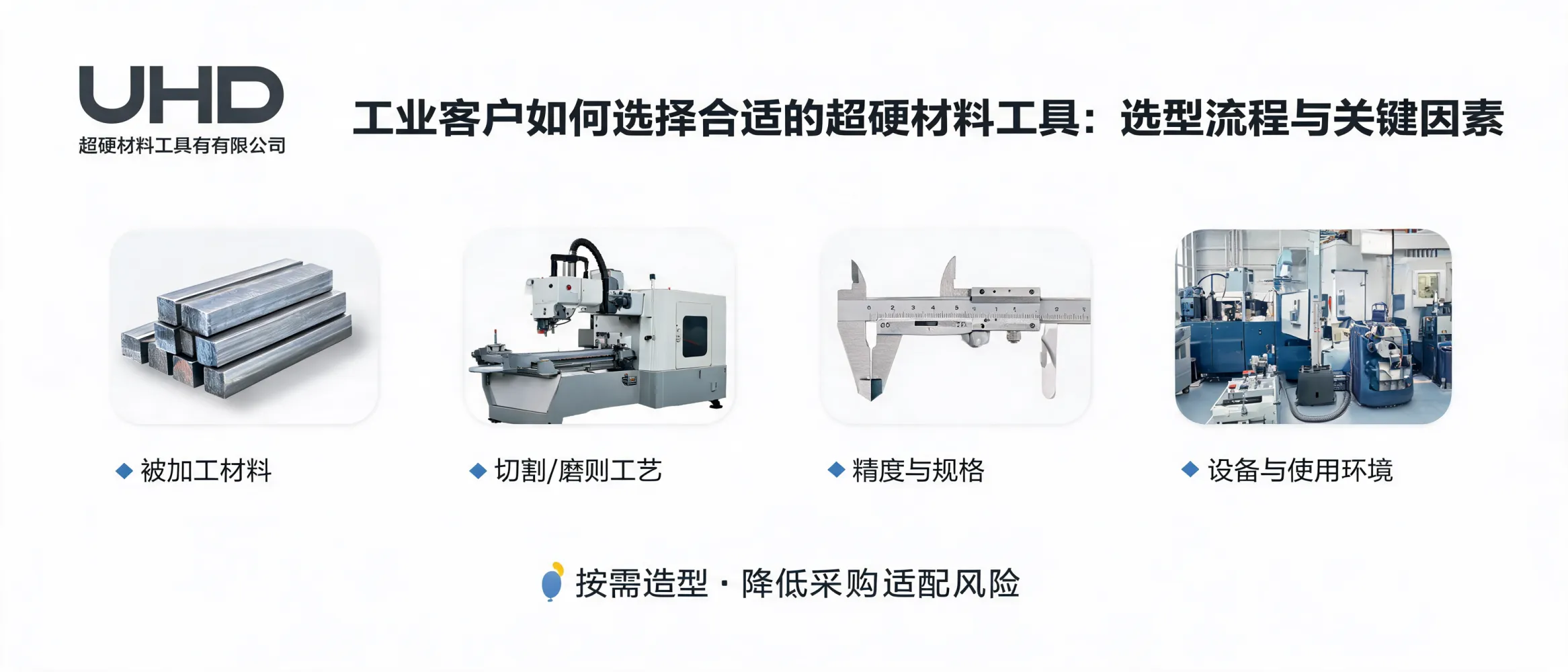
To improve sourcing efficiency and reduce iteration time, industrial buyers typically provide clear application information. The following checklist helps align expectations for metalworking and stone processing tools:
If you are evaluating ultrahard tool options for metalworking or stone processing, UHD can support a requirement-based discussion—so that diamond tools, abrasives, or vacuum brazed diamond products are aligned with your process window and sourcing expectations.


.png?x-oss-process=image/resize,h_1000,m_lfit/format,webp)
.png?x-oss-process=image/resize,h_1000,m_lfit/format,webp)