Industrial Project Experience: How Ultrahard Material Tools Move from Requirements to Stable Production Delivery
19 06,2026
UHD Ultrahard Tools Co., Ltd
Project Experience
UHD Ultrahard Tools Co., Ltd shares practical project experience on how ultrahard material tools are applied in industrial customer projects—from requirement alignment and solution confirmation to sample testing and batch delivery—highlighting customization, process stability, and delivery coordination.

Industrial projects involving ultrahard material tools succeed or fail on the details: how requirements are clarified, how a solution is confirmed, how trials are validated, and how batch delivery is coordinated for stable production.
This page shares a practical, project-oriented workflow used by UHD Ultrahard Tools Co., Ltd (河南优德超硬工具有限公司, UHD) to support industrial buyers—from requirement alignment to sample testing and batch delivery—with a focus on customization, process stability, and delivery coordination.
Who this workflow is for
- Manufacturing teams evaluating custom tooling delivery for new parts, new materials, or new process routes
- Industrial buyers who need predictable machining stability and repeatable performance across batches
- Project owners coordinating engineering, procurement, and production planning under tight timelines
What “stable delivery” means in practice
- A confirmed solution that fits the customer’s process goals and constraints
- A validated trial path (sample testing) that reduces production risk before scale-up
- Coordinated batch supply that supports consistent results on the shop floor
From requirement to delivery: a project-based workflow
UHD’s industrial application experience centers on a repeatable sequence. Each step is designed to make the tooling decision traceable and reduce uncertainty between engineering intent and production reality.
Step 1 — Requirement clarification (align early)
- Application context: target operation, material category, and where the tool sits in the process
- Stability targets: what “consistent machining” means for the line (e.g., repeatability expectations and production rhythm)
- Constraints: equipment conditions, changeover limits, and acceptance boundaries used by the customer
Practical tip: define what must remain stable first, then discuss what can be optimized—this prevents “trial-and-error drift” during validation.
Step 2 — Solution confirmation (fit-for-process, not just fit-for-spec)
Based on the clarified requirements, UHD confirms a tooling approach that matches the customer’s process objectives and validation criteria. For industrial projects, this step focuses on whether the solution can remain stable across real production conditions.
- Customization boundary: define what will be customized and what will follow standard control logic
- Risk checkpoints: identify where instability could occur and how the trial will verify it
- Confirmation deliverables: ensure both sides agree on the trial purpose, acceptance method, and next-step decision rule
Step 3 — Sample testing (validate before scaling)
Sample testing is used to validate the confirmed solution under the customer’s actual process conditions. The goal is to confirm feasibility and reduce risk prior to batch production.
- Trial plan alignment: what to test, how to evaluate, and how to document outcomes
- Iterative refinement: if adjustment is needed, changes remain traceable to the requirement and acceptance criteria
- Decision point: proceed to batch delivery only after the customer confirms the trial outcome
For industrial buyers, the most valuable trial output is not a single result—it is a repeatable evaluation method that can be reused for future projects.
Step 4 — Batch delivery & coordination (keep production steady)
Once the solution is verified, UHD supports the transition into stable production delivery. This stage emphasizes coordination to reduce supply-side and changeover risk for the customer.
- Delivery coordination: align order planning and shipment rhythm with the customer’s production schedule
- Consistency focus: keep key agreed parameters consistent across batches to support machining stability
- Feedback loop: collect production feedback to support continuous optimization within the confirmed boundary
What to align early (to avoid rework)
- Process goal vs. acceptance rule: confirm how success will be judged before running trials
- Customization expectations: clarify which elements are negotiable and which are fixed for stability
- Timeline dependencies: align sample lead time, evaluation window, and scale-up schedule to avoid idle time on the line
- Communication owner: define a single point of contact for requirement changes to prevent version confusion
A clear view of responsibilities
Industrial projects move faster when both sides understand what needs to be provided and confirmed at each phase.
| Project phase |
Customer typically confirms |
UHD typically supports |
| Requirement clarification |
Goals, constraints, evaluation method |
Structured requirement review and alignment for ultrahard material tools |
| Solution confirmation |
Proposed approach and trial acceptance criteria |
Customization planning, stability checkpoints, confirmation deliverables |
| Sample testing |
Trial results and go/no-go decision for scaling |
Trial coordination and iterative refinement within agreed boundaries |
| Batch delivery |
Delivery schedule and ongoing feedback |
Delivery coordination to support stable production and consistent machining |
Why UHD: engineering-driven, B2B-ready
Focus on ultrahard tooling solutions
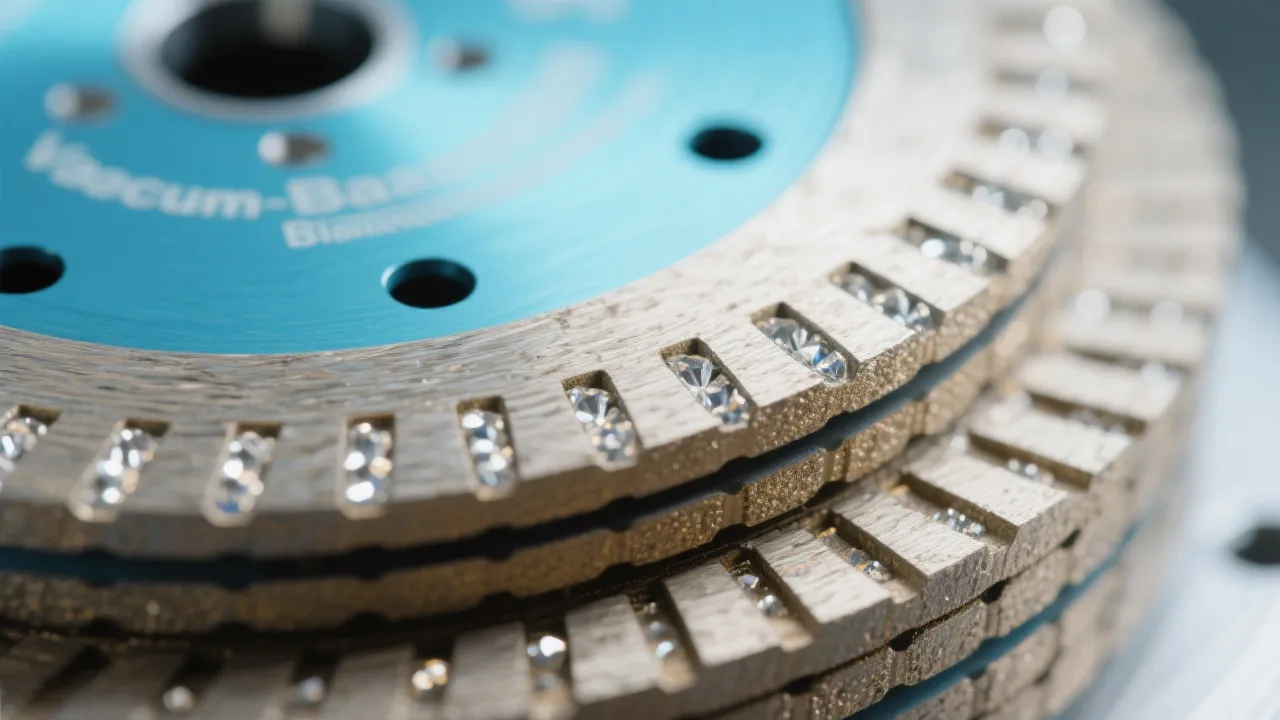
UHD develops and supplies ultrahard material tools, including diamond tooling, abrasives, and customized brazed diamond abrasives, supporting industrial machining and processing applications.
R&D collaboration mindset
UHD emphasizes R&D and works with academic partners such as Henan University of Technology to support ongoing development of ultrahard material cutting tools.
Global B2B delivery support
With an established B2B export service system and experience on international trade platforms, UHD supports communication and delivery coordination for buyers across different markets.
Start a requirement review
If you are evaluating ultrahard material tools for an industrial project, UHD can support a structured requirement review to help confirm the solution path, sample testing plan, and a batch delivery rhythm aligned with your production needs.
To accelerate alignment, prepare: application context, process goals, stability expectations, constraints, and your preferred evaluation method for sample testing.


.png?x-oss-process=image/resize,h_1000,m_lfit/format,webp)