Selecting an ultrahard tool is most reliable when it starts from the real machining scenario—what material you process, how you remove stock, and what stability you need at the spindle. This page from UHD Ultrahard Tools Co., Ltd compares key selection factors for metalworking and stone processing, focusing on hardness demands, abrasive behavior, cutting method, tool structure, and operational stability—so buyers can match tools to process requirements with fewer trials.
Practical note: “Ultrahard tools” in this context typically include diamond-related and other superhard solutions used for cutting, grinding, and finishing. Final selection should be confirmed with your material grade, machine condition, and process targets.
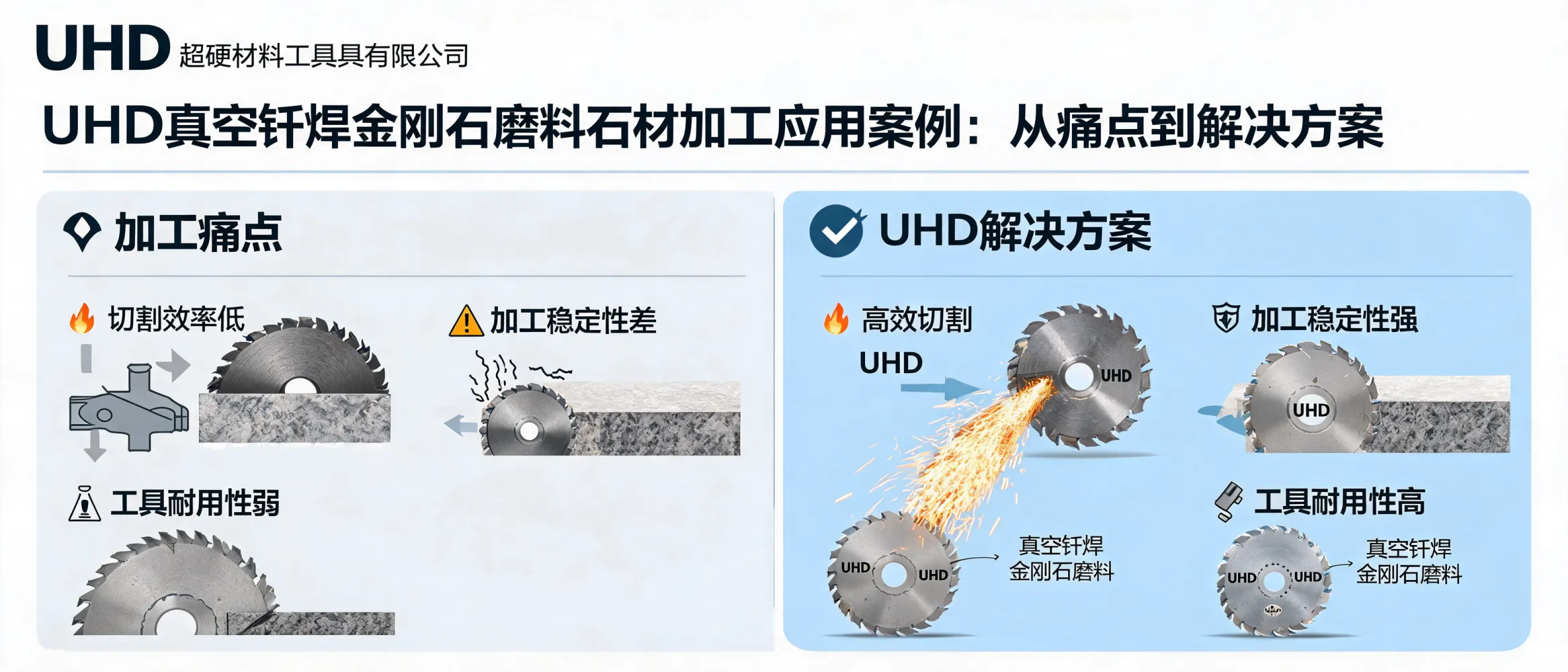
Metalworking and stone processing can both involve aggressive material removal, but the dominant failure modes differ. In metalworking, tool performance is often constrained by heat generation, chip evacuation, edge integrity, and process stability under varying loads. In stone processing, the dominant challenges tend to be abrasive wear, dust/particle impact, chipping risk, and surface integrity under brittle fracture behavior.
| Factor | Metalworking: what to focus on | Stone processing: what to focus on | Buyer questions to confirm |
|---|---|---|---|
| Hardness & wear mechanism | Balance hardness with toughness for stable edges under thermal/load cycling; avoid brittle behavior in interrupted cuts. | Maximize resistance to abrasive wear and micro-chipping; maintain steady cutting/grinding on brittle materials. | What is the workpiece material and condition? Continuous cut or frequent impacts? What surface quality is required? |
| Abrasive grain behavior | Look for controllable cutting action and consistent chip formation; avoid rapid dulling that increases heat. | Seek stable self-sharpening behavior and predictable wear; grain retention matters in heavy abrasive environments. | Which operation—cutting, grinding, profiling, finishing? What is the desired removal rate vs. finish? |
| Cutting method | Match tool form to milling/turning/grinding needs; consider coolant strategy and chip evacuation space. | Match to dry/wet cutting and dust control practices; consider wheel/disc type for brittle material removal. | Dry or wet? Handheld or CNC? What spindle power and speed range are available? |
| Tool structure | Rigidity and runout control are critical; geometry should support stable engagement and avoid chatter. | Structure should resist vibration and shock; bond/segment design should support wear uniformity. | What toolholder/adapter is used? Any runout constraints? What diameter/length limitations exist? |
| Operational stability | Monitor vibration, temperature, and consistency across batches; stable parameters reduce edge failure and scrap risk. | Aim for consistent cut/grind with manageable dust and heat; stability supports predictable wear life and finish. | What are current pain points—burning, chatter, chipping, short life, uneven wear? What is acceptable downtime? |
UHD develops and supplies ultrahard tooling solutions used in metal processing and stone processing, including diamond tools, abrasives & grinding tools, and custom brazed diamond abrasive solutions. Tool suitability depends on your specific material and operating window.
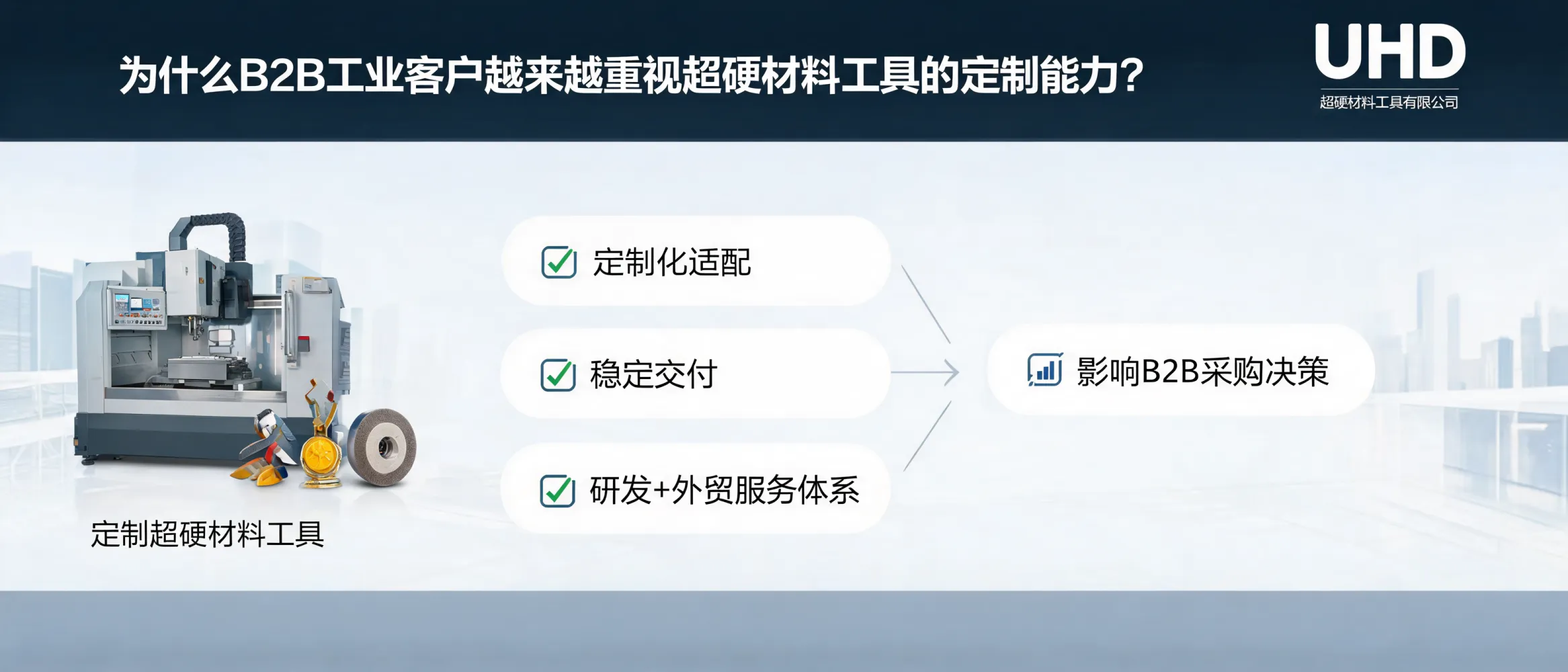
As a high-tech enterprise focused on ultrahard material tools, UHD Ultrahard Tools Co., Ltd provides B2B customers with product development and manufacturing capabilities and supports scenario-based selection through technical communication. UHD collaborates with academic partners (e.g., Henan University of Technology) to strengthen R&D in superhard tooling, and maintains an export-oriented service workflow suitable for international procurement.
To match an ultrahard tool to your machining scenario efficiently, it helps to provide a clear process snapshot:
UHD’s approach is to align tool structure and cutting/grinding behavior with your scenario requirements—whether your primary environment is metalworking or stone processing—so the selected tool fits the process rather than forcing the process to fit the tool.

.png?x-oss-process=image/resize,h_1000,m_lfit/format,webp)

.png?x-oss-process=image/resize,h_1000,m_lfit/format,webp)