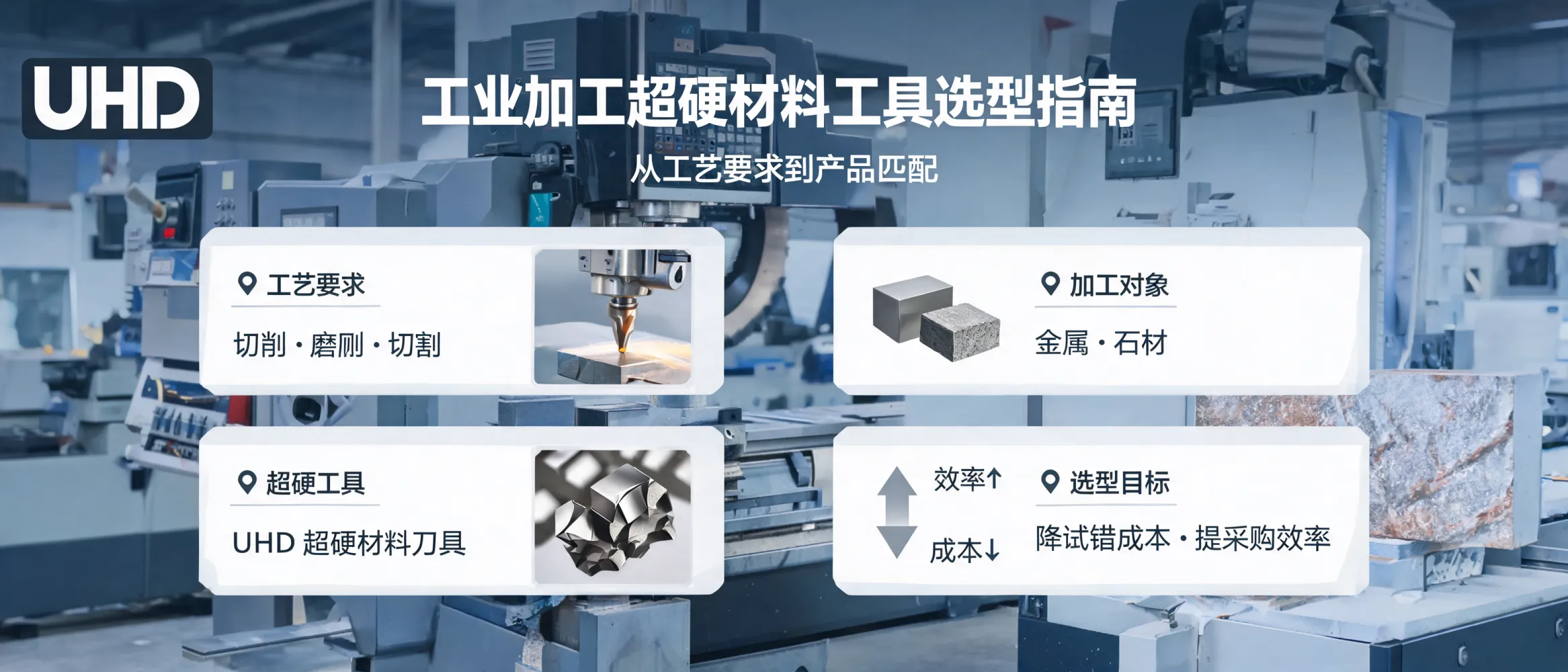
A Practical Selection Guide for Ultrahard Material Tools: Match Material, Process, and Precision
22 07,2026
UHD Ultrahard Tools Co., Ltd
Method Summary
UHD Ultrahard Tools Co., Ltd explains a practical selection method for ultrahard material tools based on workpiece material, cutting or grinding process requirements, accuracy targets, tool specs, machine conditions, and operating environment—helping industrial buyers reduce mismatch risk beyond price-driven purchasing.
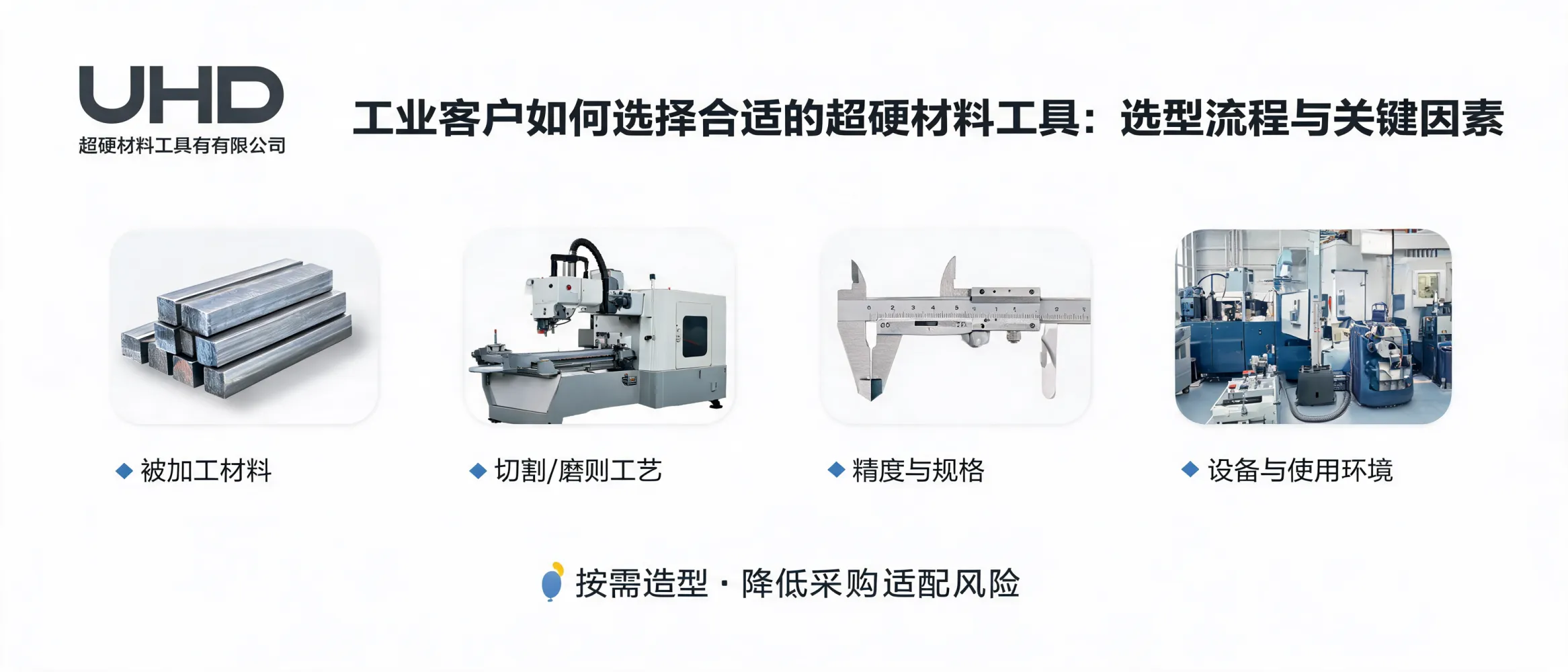
Choosing ultrahard material tools for industrial cutting and grinding is rarely a “best price” decision. A tool that does not match the workpiece material, process type, or machine conditions can cause premature wear, unstable cutting, inconsistent surface finish, or unnecessary downtime.
This page shares a requirement-driven selection method used by UHD Ultrahard Tools Co., Ltd (河南优德超硬工具有限公司) to help B2B buyers reduce mismatch risk when sourcing diamond tools, abrasives, and vacuum-brazed diamond products for industrial applications.
1) Start with the workpiece: material, hardness, and structure
Workpiece material is the first “anchor parameter” because it influences abrasive type, bond choice, and edge stability. Define the material clearly before comparing tool models.
- Base material type: metal processing vs. stone processing and other hard/brittle materials typically require different tool configurations.
- Hardness / toughness: affects wear mode and chip formation; selection should balance cutting ability and durability.
- Structure & inclusions: composites, welded parts, coatings, and embedded hard particles can increase chipping risk and should be disclosed in RFQs.
2) Define the process: cutting vs. grinding (and how you run it)
“Cutting” and “grinding” impose different contact mechanics, heat generation, and chip evacuation needs. Clarify the process type and operating mode to narrow down the tool category.
Process checklist (for selection accuracy)
- Operation type: slotting, profiling, surface grinding, edge chamfering, deburring, etc.
- Contact style: continuous vs. intermittent engagement (intermittent loads raise edge-chipping risk).
- Heat & swarf control: expected heat level and the feasibility of coolant/air assistance.
3) Set the target: accuracy, tolerance, and surface finish
Precision goals determine how aggressive the tool can be and what stability is required from the machine and clamping. Provide measurable targets whenever possible.
- Tolerance & repeatability: tighter requirements generally call for more stable specs and conservative parameters.
- Surface finish expectation: influences grain characteristics and process planning.
- Edge quality & micro-chipping control: important for brittle materials and finish-critical parts.
4) Confirm tool specifications: geometry, dimensions, and fit
Once material + process + precision are defined, tool geometry and dimensions become the primary matching work. This is where “almost the same” often becomes mismatch in production.
| Spec area |
What to verify before ordering |
| Tool type |
Diamond tool / abrasive / vacuum-brazed diamond configuration that matches the operation (cutting or grinding) and expected wear mode. |
| Dimensions |
Outer diameter/length, thickness, segment or working layer size, and clearance needs relative to the workpiece and fixture. |
| Mounting / interface |
Bore size, arbor fit, thread type, or shank interface; confirm compatibility with existing holders and spindles. |
| Application constraints |
Any limitation on vibration, noise, thermal load, or contamination control (e.g., dry vs. wet processing preference). |
| Customization needs |
If standard tools cannot meet the process window, clarify which parameters can be customized and what drawings/samples are available. |
5) Check machine conditions: power, speed, rigidity, and clamping
Even the right ultrahard tool can underperform if the machine cannot support stable operation. Ensure your tool choice aligns with the machine’s real operating window.
- Spindle speed range: determines whether the tool can run within suitable surface speed and maintain stability.
- Available power & torque: critical for avoiding stalls and excessive heat at the cutting zone.
- Rigidity & runout: directly affects chipping risk, tool life consistency, and surface finish.
- Clamping method: fixture stability, part support, and vibration control should be stated as part of the requirement.
6) Coolant, dust control, and operating environment
Operating environment can be a deciding factor for tool choice—especially where heat management, dust extraction, or corrosion control affect process stability.
- Wet vs. dry processing: confirm whether coolant is permitted and available at the tool-work interface.
- Dust collection: for stone and abrasive applications, extraction capability influences tool loading and site compliance.
- Ambient conditions: temperature swings, humidity, and shop contamination may impact storage and handling.
A structured selection flow (usable for RFQs)
- Workpiece definition: material type, hardness/toughness, structure (coatings, inclusions, welded zones).
- Process definition: cutting or grinding, operation type, engagement mode, heat/swarf expectations.
- Quality targets: tolerance, repeatability, surface finish, edge integrity requirements.
- Tool specs: tool category, dimensions, mounting interface, clearance constraints, customization options.
- Machine & setup: spindle speed range, power/torque, rigidity/runout, clamping method.
- Environment: wet/dry, coolant delivery, dust extraction, ambient conditions.
Buyer tip: If you can only provide one thing in the first message, send the workpiece material + process type + required tolerance/finish. This usually reduces back-and-forth and improves the first tool recommendation.
How UHD supports requirement-matched sourcing
As a high-tech enterprise focused on ultrahard material tools, UHD Ultrahard Tools Co., Ltd develops and supplies diamond tools, abrasives, and custom vacuum-brazed diamond products for industrial processing. UHD emphasizes application matching—helping buyers translate production requirements into a clear tool specification and selection path.
- Application-oriented positioning: tools are selected and discussed around specific process requirements rather than generic catalogs.
- R&D collaboration: UHD works with research platforms (e.g., cooperation with Henan University of Technology) to strengthen ultrahard tool development.
- B2B trade readiness: established foreign trade service workflow to support industrial buyers across different markets and compliance expectations.
Request information for a more accurate tool recommendation
To evaluate an ultrahard tool option efficiently, prepare the following information for your inquiry:
- Workpiece material description (and any special structure such as coating, welds, or embedded particles)
- Cutting or grinding process, operation type, and whether the cut is continuous or intermittent
- Required tolerance and surface finish expectation
- Tool size requirements and mounting interface details
- Machine spindle speed range, available power, and clamping/coolant conditions
UHD can then align tool category and specifications to your application context—supporting a purchasing decision that goes beyond single-parameter or price-only comparisons.


.png?x-oss-process=image/resize,h_1000,m_lfit/format,webp)