In industrial B2B purchasing of ultrahard material tools (including diamond tools for cutting and grinding), comparing only the unit price often leads to higher overall spending. The reason is simple: tool performance depends on material fit, process fit, machine parameters, and support—not just a quotation.
This page outlines common purchasing pitfalls and a practical evaluation checklist used by procurement, production, and engineering teams to reduce risk and improve total cost of ownership (TCO).
A lower price can hide higher downstream costs: frequent tool changes, unstable cut quality, scrap, rework, lower throughput, and unexpected machine downtime. For ultrahard tools, the purchasing decision should be tied to tool life, cutting/grinding efficiency, and quality stability.
“Ultrahard” is not one-size-fits-all. Different workpiece materials and processes require different tool structures and specifications. A mismatch can lead to premature wear, glazing, burn marks, chipping, poor surface finish, or low productivity.
Many failures are actually compatibility issues: spindle speed range, power, rigidity, runout, coolant mode, mounting interface, and operating stability. If parameters are not checked before ordering, even a good tool design may underperform.
For new suppliers, new materials, or new processes, a controlled trial is often the fastest way to confirm expected results and reduce scale-up risk. Without trials, teams may discover issues only after large-batch production starts.
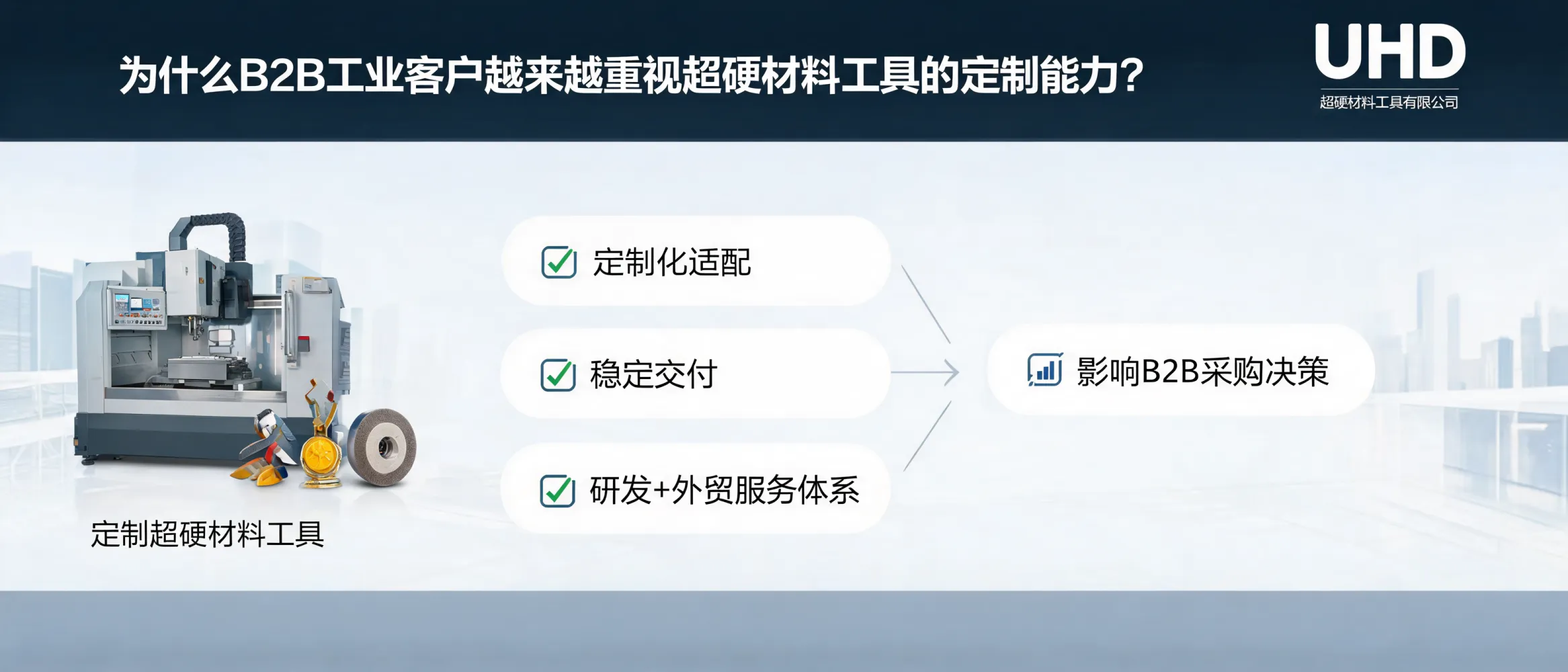
Ultrahard tools are highly application-driven. When abnormal wear or surface defects occur, responsive technical communication helps identify root causes (parameters, mounting, coolant, material variation) and stabilize production faster than repeated “trial-and-error” purchasing.
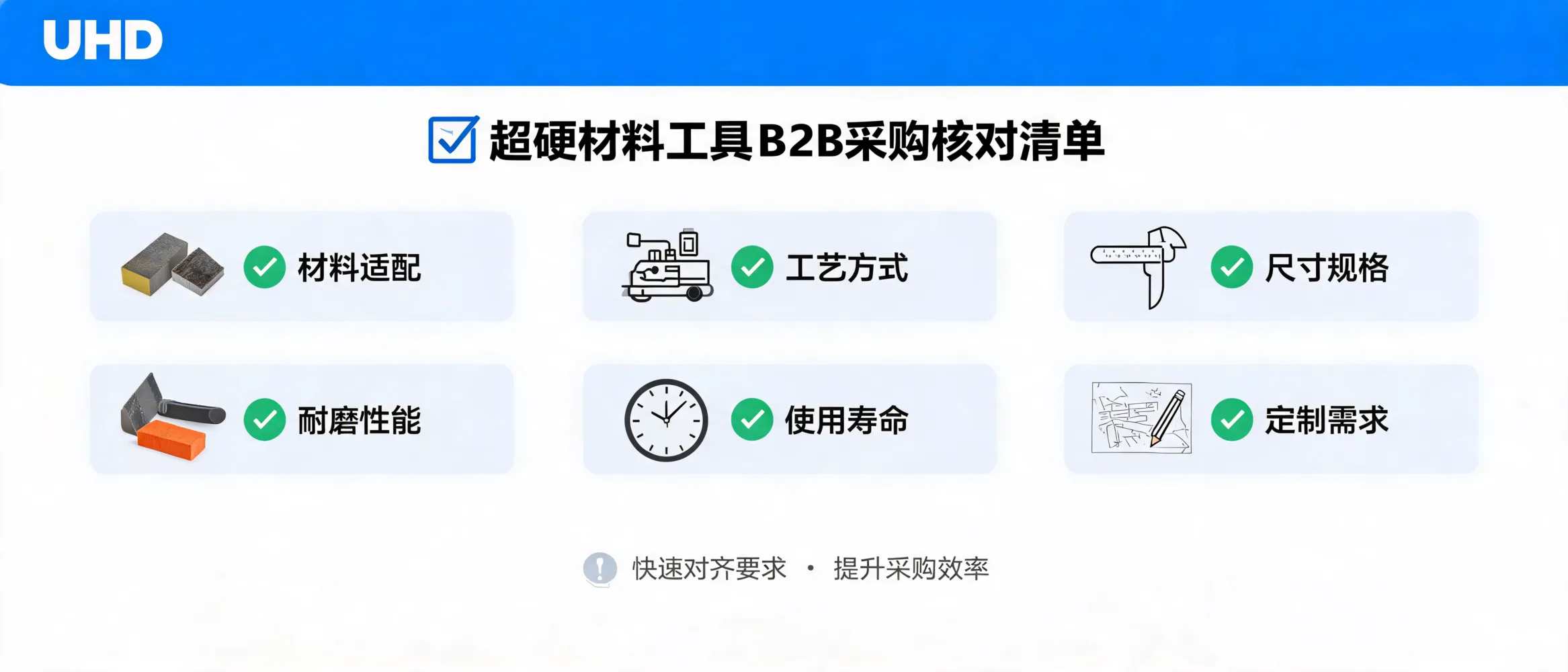
Use the checklist below to align procurement decisions with production outcomes. It focuses on cut quality, efficiency, tool lifespan, and TCO—not unit price alone.
| Evaluation Item | What to Confirm | Why It Matters |
|---|---|---|
| Workpiece material & process | Material type, hardness/structure (if available), cutting vs. grinding, dry vs. wet | Determines tool suitability and expected wear mechanisms |
| Machine/spindle constraints | Speed range, power, rigidity, runout, mounting interface, coolant mode | Prevents mismatch and reduces instability, chipping, and vibration-related defects |
| Target output | Desired surface finish, dimensional tolerance, edge quality, defect limits | Ensures the tool is evaluated on the same production KPIs |
| Trial plan | Test conditions, sample quantity, acceptance criteria, evaluation method | Reduces risk before scaling; improves comparison fairness |
| Service & technical communication | Response channel, parameter guidance, troubleshooting support, iteration ability | Shortens time to stable production and reduces hidden costs |
Procurement tip: Ask suppliers to quote with the same test conditions and clearly specify what is included (tool specification, recommended parameters, and support scope). This makes TCO comparison more reliable than unit price ranking.
UHD Ultrahard Tools Co., Ltd (Henan UHD Ultrahard Tools) focuses on R&D, manufacturing, and sales of ultrahard material tools, providing performance-oriented solutions for industrial applications such as metalworking and stone processing. Our product range includes diamond tools, abrasives, and custom brazed diamond abrasives.
We help teams align tool selection to the real production target: material type, process requirements, and quality expectations—so evaluation is based on performance and stability.
Before ordering at scale, verifying basic machine/spindle constraints and usage conditions helps reduce avoidable failures and improves first-pass success during trials.
UHD serves global industrial buyers through a structured B2B trade workflow, supporting clear specifications, consistent communication, and practical technical collaboration.
To evaluate ultrahard and diamond tools efficiently, it helps to share the following information with your supplier:
With these inputs, buyers can compare options by performance per cost and build a purchasing decision around total cost of ownership—the most practical way to avoid “cheap unit price, expensive production.”
.png?x-oss-process=image/resize,h_1000,m_lfit/format,webp)


.png?x-oss-process=image/resize,h_1000,m_lfit/format,webp)