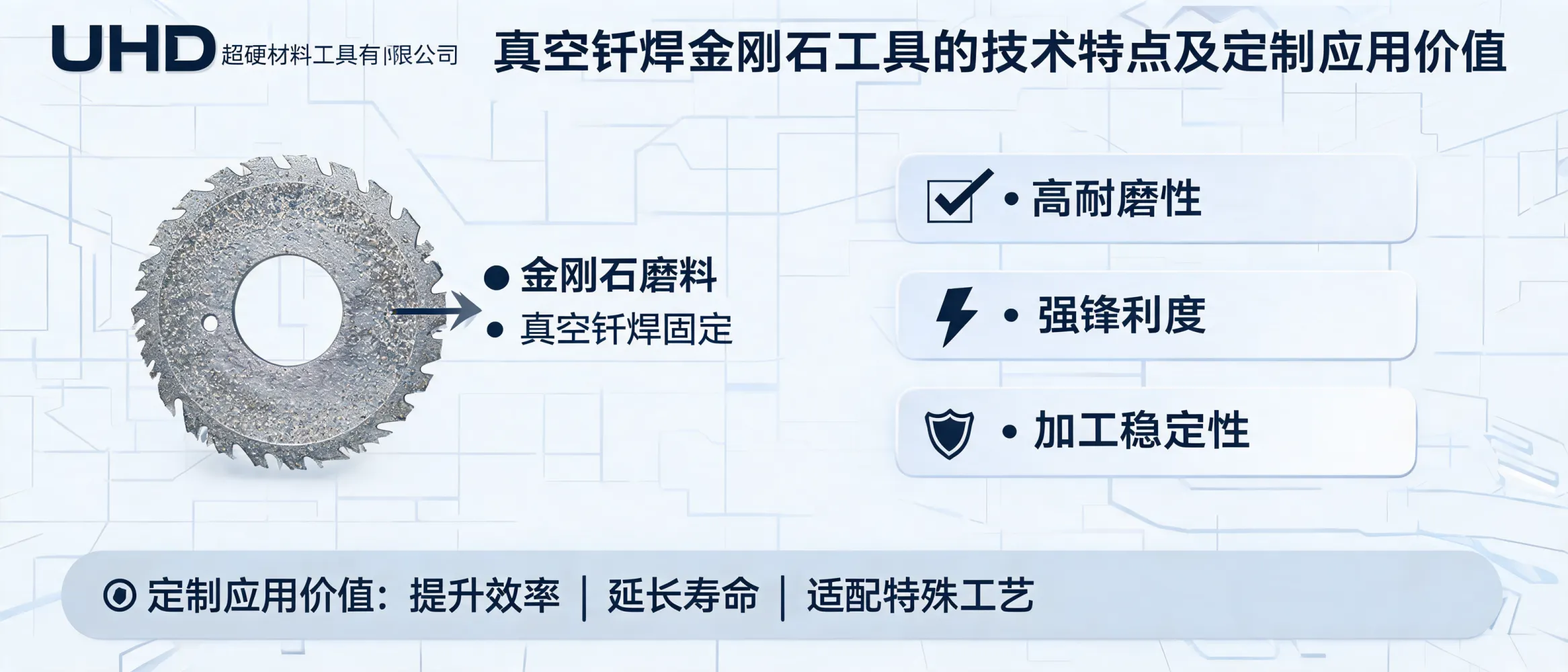
Ultrahard tools—especially diamond tools, abrasives, and vacuum-brazed diamond products—deliver high wear resistance and stable cutting/grinding performance when they are matched to the process, material, and operating conditions.
This page is an application & selection guide by UHD Ultrahard Tools Co., Ltd (UHD) for industrial buyers and engineers evaluating tools for metal machining and stone cutting/finishing. It focuses on process-fit selection, basic configuration logic, cooling conditions, efficiency considerations, and maintenance essentials—so you can define clear requirements and avoid misapplication.
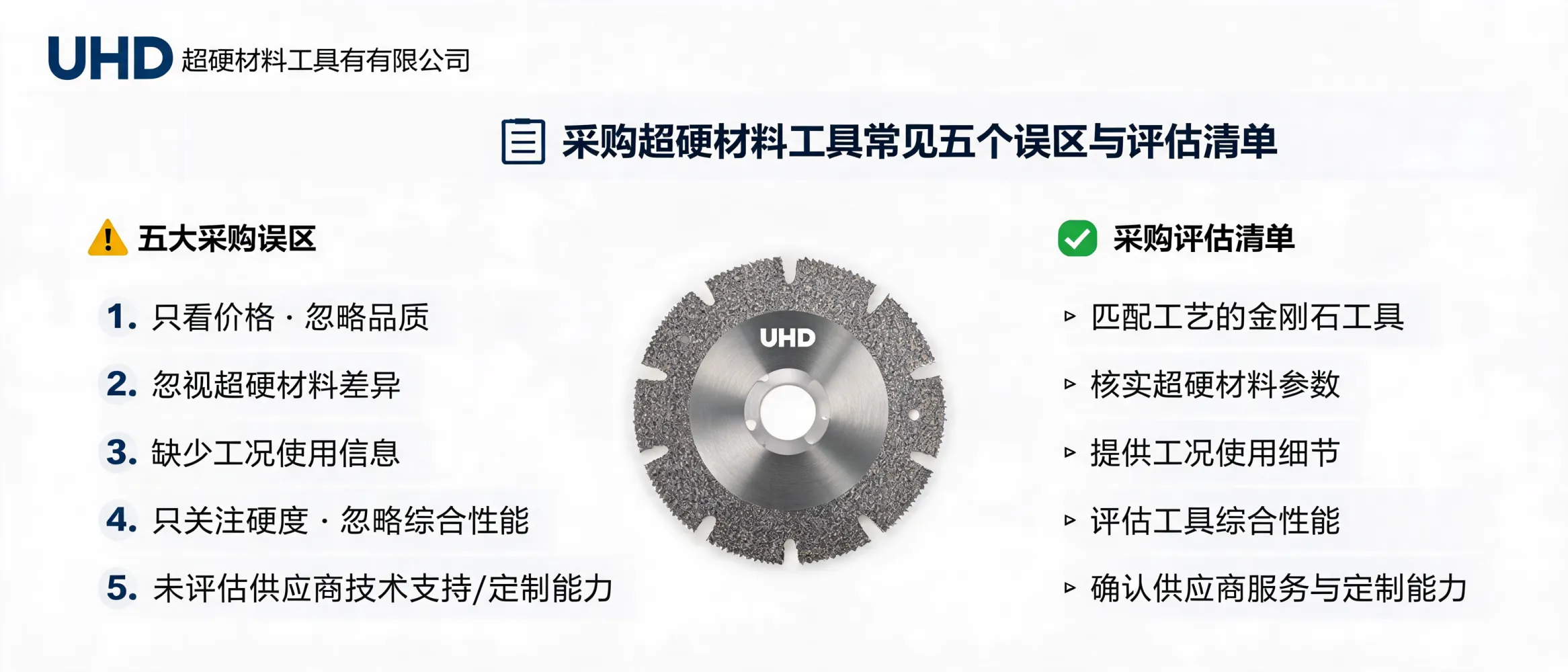
For ultrahard tool application, the most reliable selection path is: material → operation → surface/accuracy target → machine capability → coolant condition. This avoids “over-spec” (unnecessary cost) and “under-spec” (premature wear or unstable performance).
| Application scenario | Typical tool category (examples) | Key selection focus | Common boundary conditions |
|---|---|---|---|
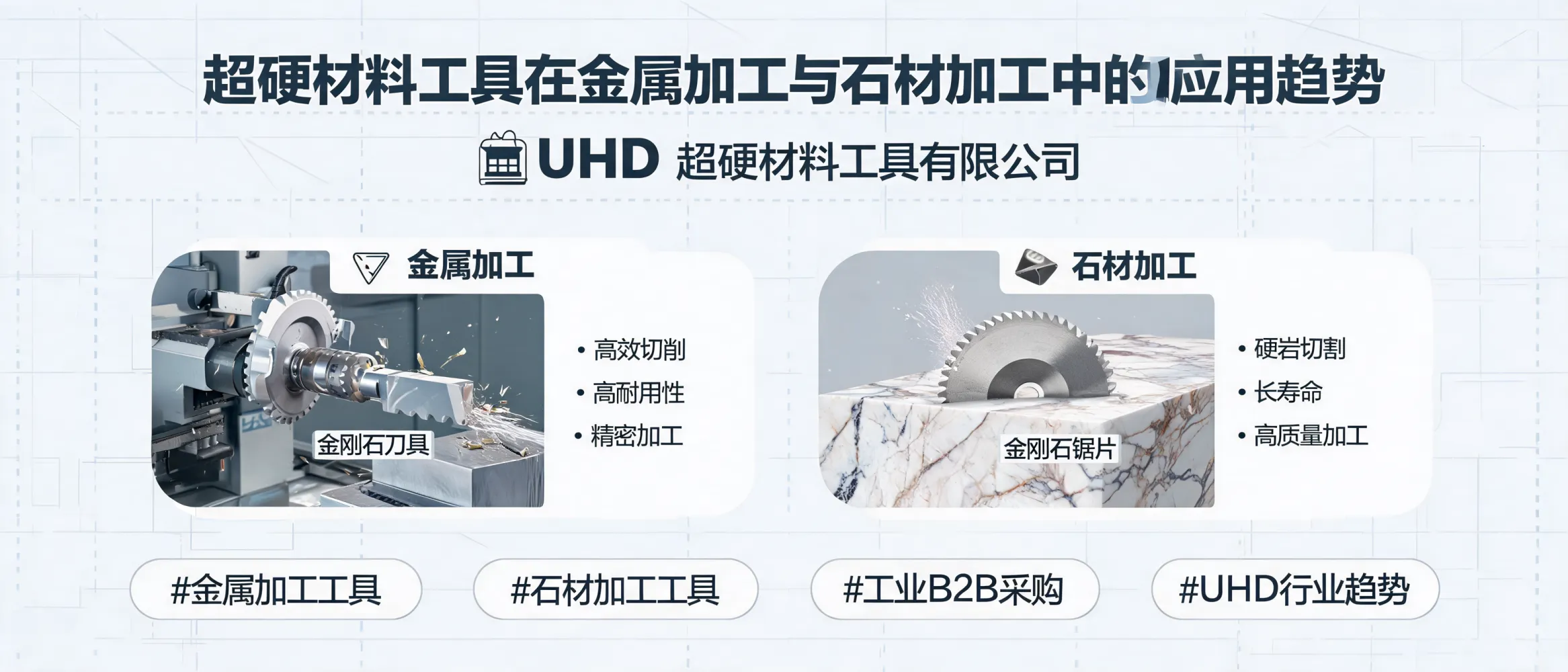
| Metal machining (cutting, profiling, grinding) | Diamond tools / ultrahard abrasives (process-dependent) | Wear mechanism, heat generation, chip/particle evacuation, rigidity | Machine power & spindle stability; coolant availability; vibration control |
| Stone cutting (slabs, tiles, edging) | Diamond cutting tools; vacuum-brazed diamond products for specific tasks | Cutting speed vs. edge quality; segment/working layer design; cooling | Wet/dry constraints; dust management; feed stability; stone hardness/structure |
| Stone finishing (grinding, polishing, surface conditioning) | Diamond abrasives & grinding tools; vacuum-brazed diamond abrasives (customizable) | Scratch pattern control; grit progression; heat management; consistency | Surface target (matte/gloss); machine speed range; operator repeatability |
Practical rule: If the process has high heat buildup or unstable rigidity, prioritize cooling strategy, tool geometry, and stable configuration before pursuing higher aggressiveness.
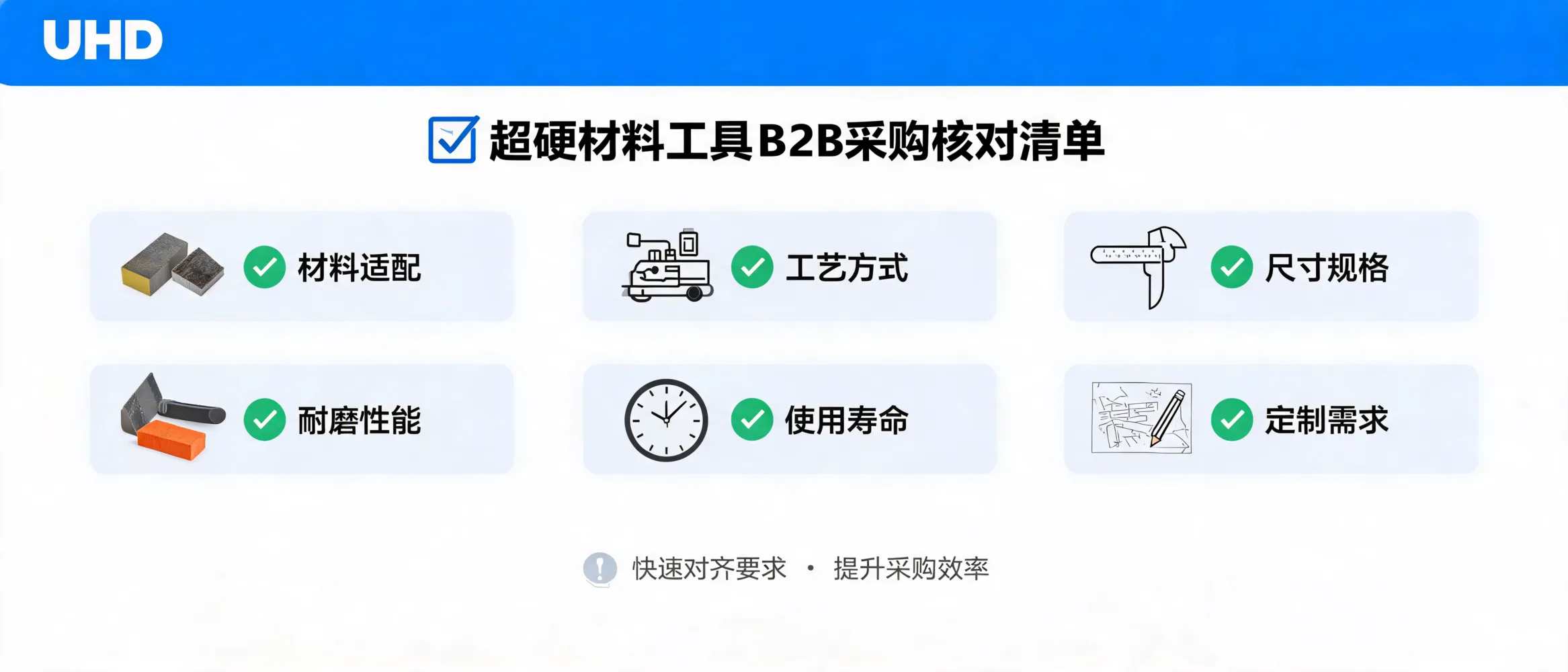
To form a practical purchasing specification for ultrahard tool application, define the parameters that directly control performance and compatibility. UHD typically recommends capturing the following items for evaluation and quotation alignment.
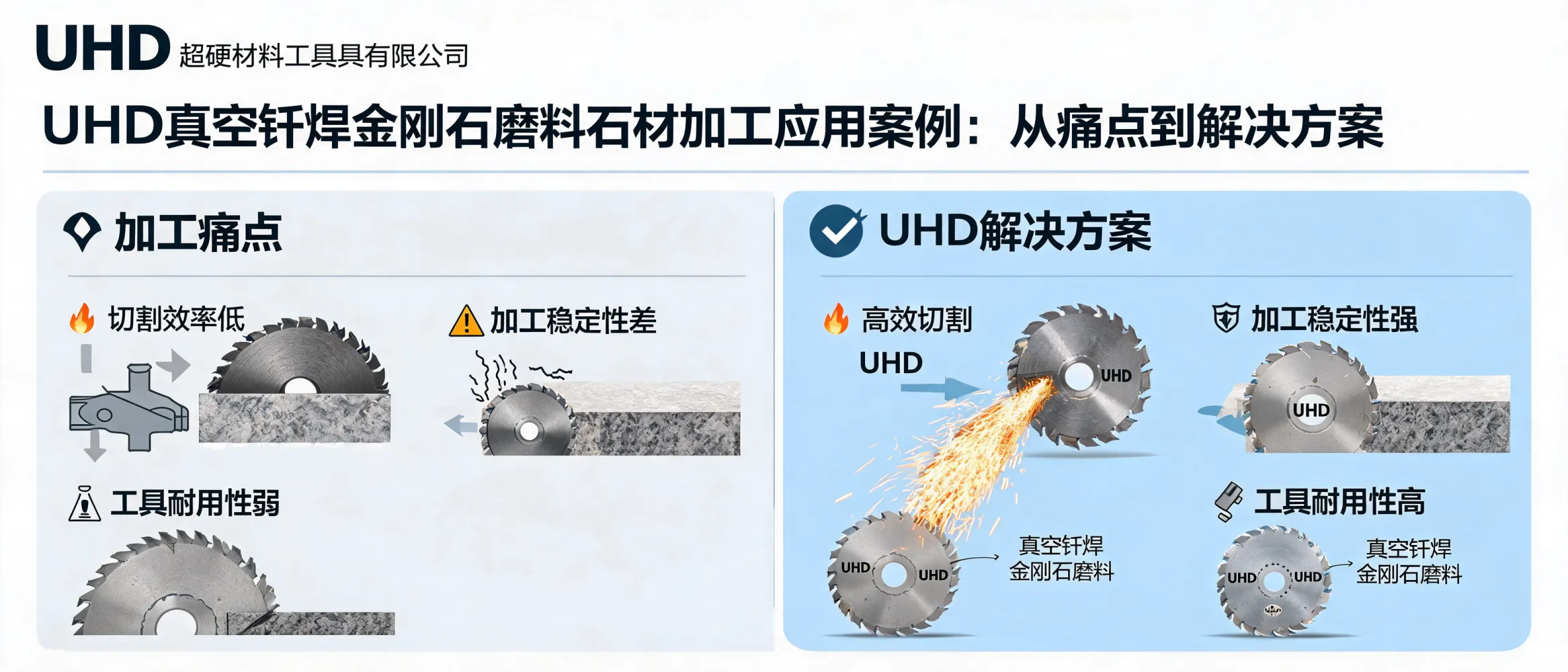
Vacuum brazing is often used to create diamond abrasive tools with strong grain retention and stable cutting action for specific operations. For custom vacuum-brazed diamond abrasives, align on the tool body, working area geometry, abrasive distribution, and intended cooling mode to ensure the product fits the real process boundary.
Cooling strongly affects tool wear, edge integrity, dust/particle evacuation, and process stability. In both metal machining and stone processing, misalignment between tool design and cooling conditions is a frequent cause of unpredictable results.
Buyer tip: If your workshop cannot guarantee consistent coolant delivery, specify the “cooling uncertainty” in the RFQ. This prevents selecting a configuration that only performs under ideal wet conditions.
Efficiency is not only about higher cutting or grinding speed. For ultrahard tool application, efficiency means stable throughput with controlled rework. Define what “efficiency” means in your process before optimizing parameters.
| Your priority | What to optimize first | What to watch |
|---|---|---|
| Higher throughput | Rigidity, debris evacuation, cooling consistency | Heat spikes, vibration marks, edge chipping |
| Longer tool life stability | Process-fit configuration, controlled parameters | Inconsistent cooling, misuse across materials |
| Better surface finish / less rework | Grit strategy, consistent feed, staged finishing approach | Over-aggressive steps, uneven contact, glazing/burning |
Proper maintenance helps preserve the working surface condition and improves repeatability. The checkpoints below are general essentials for diamond tools and abrasives in metal machining and stone processing.
UHD (Henan UHD Ultrahard Tools) focuses on R&D, manufacturing, and B2B supply of ultrahard material tools, including diamond tools, abrasives, and custom vacuum-brazed diamond abrasive products. Our approach is to align tool selection with your process requirements and application boundaries, helping you form clear specifications for sourcing and internal validation.
If you want UHD to help narrow down the suitable ultrahard tool application options, prepare the items below (photos and short videos are helpful when available).
With these inputs, you can clarify boundaries and create a practical purchasing specification for diamond tools, abrasives, and vacuum-brazed diamond products in your metal and stone processing scenarios.
.png?x-oss-process=image/resize,h_1000,m_lfit/format,webp)
.png?x-oss-process=image/resize,h_1000,m_lfit/format,webp)