Choosing Ultrahard Material Tools for Industrial Machining: From Process Requirements to Product Matching
21 06,2026
UHD Ultrahard Tools Co., Ltd
Industry Guide
UHD Ultrahard Tools Co., Ltd shares a practical selection guide for industrial machining: how to match ultrahard material tools to cutting, grinding, and cutting-off requirements across metalworking and stone processing—based on workpiece, environment, performance targets, and tool life goals.
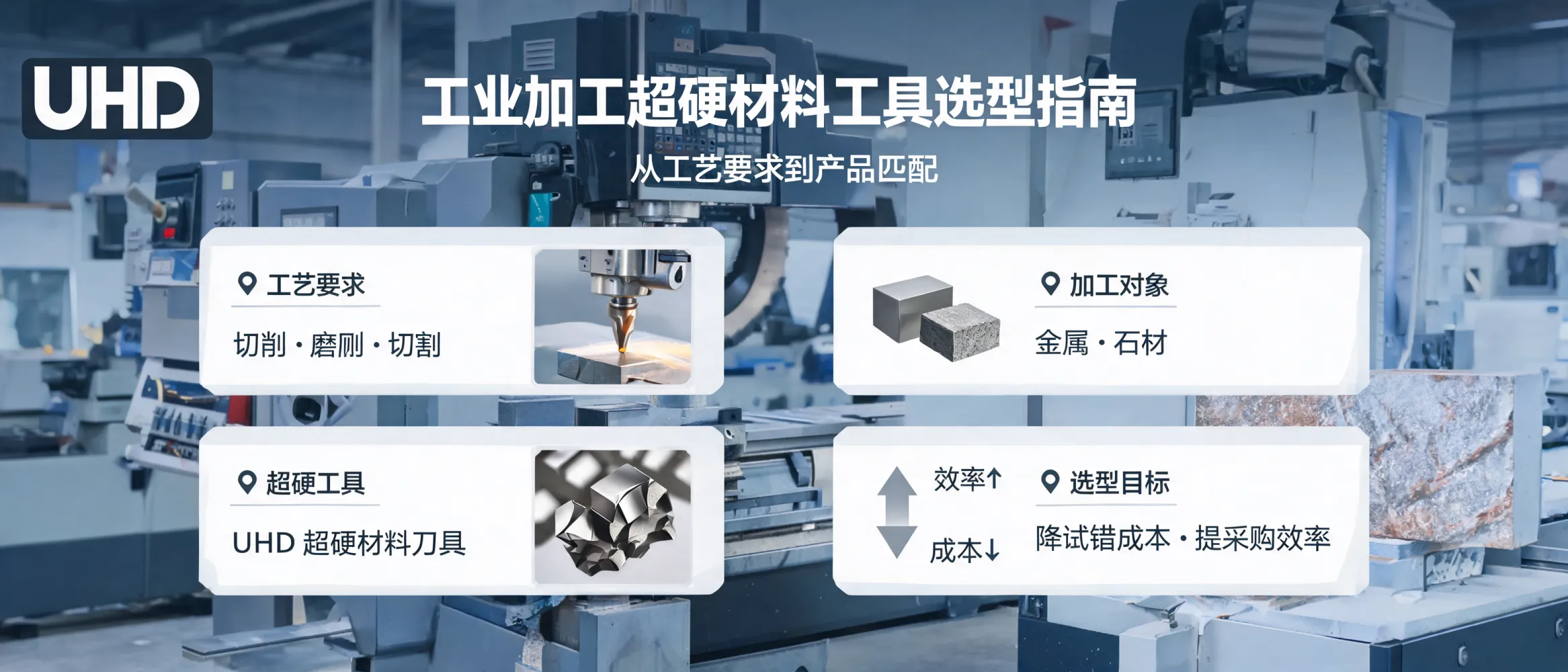
Selecting ultrahard material tools for industrial machining is less about “one best tool” and more about matching process requirements to the right product structure—so performance targets and tool life goals can be achieved with fewer trials.
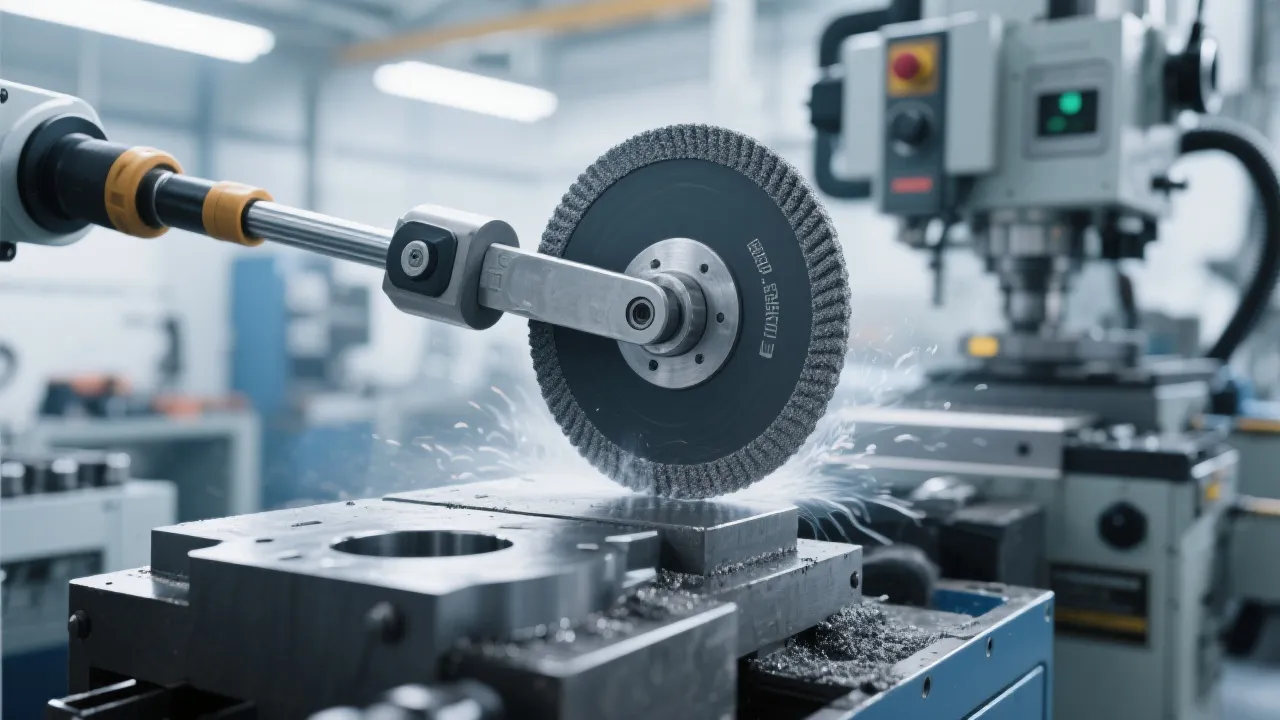
This guide from UHD Ultrahard Tools Co., Ltd focuses on common B2B use cases in metalworking and stone processing, covering how to specify tools for cutting, grinding, and cutting-off based on the workpiece, operating conditions, and expected results.
Who this page is for
- Purchasing teams preparing RFQs and comparing suppliers
- Process engineers defining machining parameters and tooling specs
- B2B buyers reducing trial-and-error and improving communication
What UHD provides
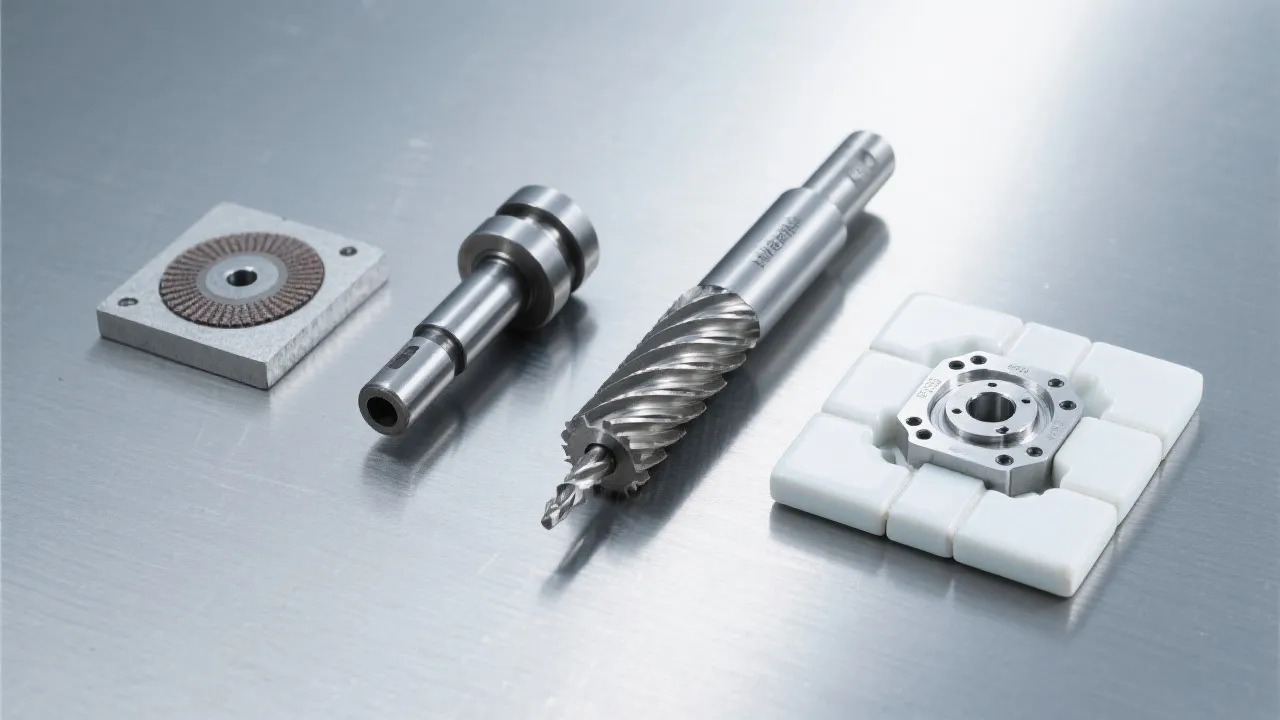
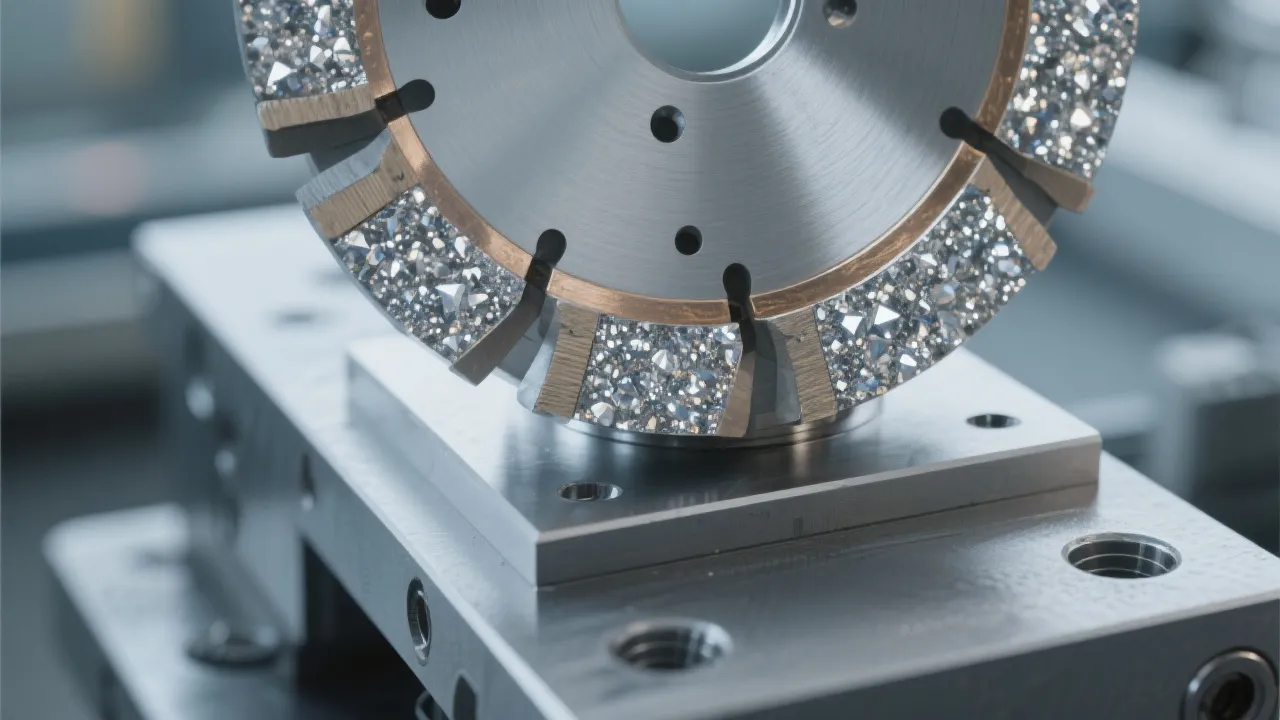
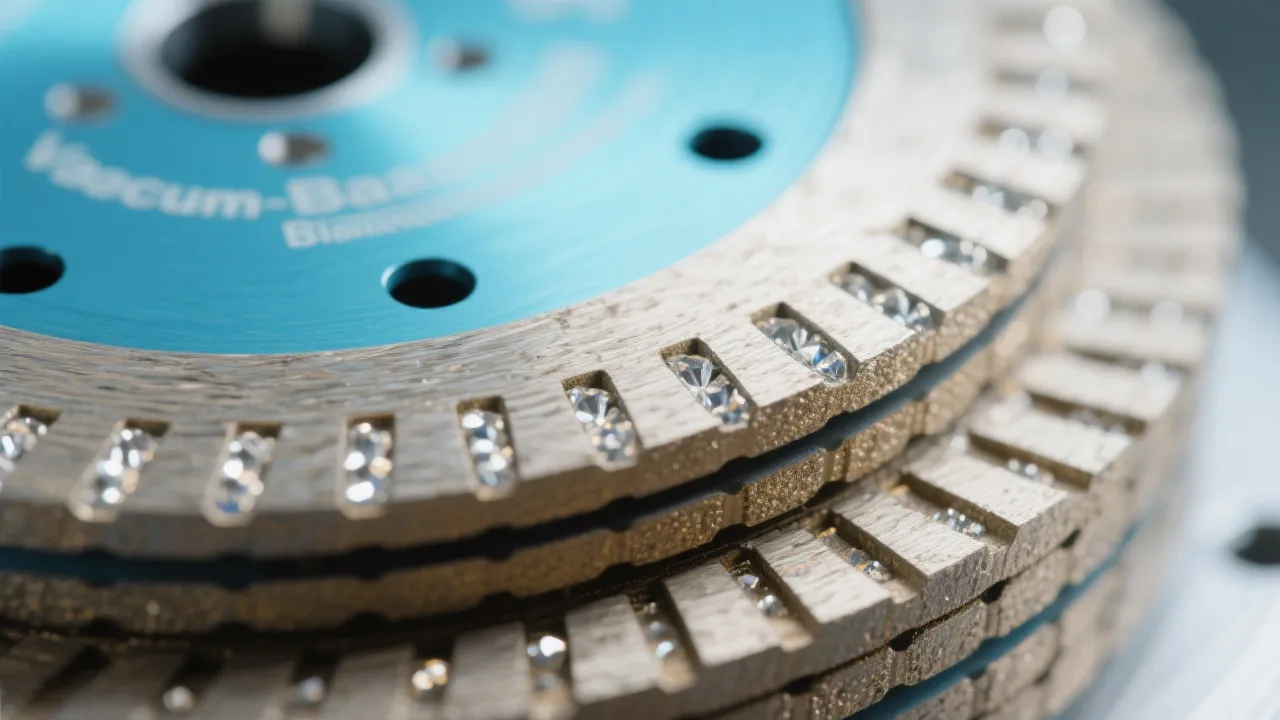
UHD is a high-tech enterprise specializing in R&D, production, and sales of ultrahard tools. Our portfolio includes diamond tools, abrasives, and custom vacuum-brazed diamond abrasives for industrial applications.
We aim to support customers with performance-oriented product matching and clear specifications aligned with the actual process.
A practical selection logic: from requirements to product matching
Use the following sequence to structure your selection. It helps keep specifications complete and consistent across teams and suppliers.
-
Define the process type: cutting, grinding, or cutting-off. The same workpiece material can require different tool builds depending on the operation.
-
Confirm workpiece characteristics: base material category (e.g., metal vs. stone), hardness/abrasiveness, surface condition, and geometry.
-
Map operating conditions: dry/wet, coolant type, dust control, temperature sensitivity, machine stability, and available power.
-
Set performance targets: removal rate, edge/finish quality, dimensional control, vibration/noise constraints, and heat management priorities.
-
Set tool life goals and acceptance criteria: what “end-of-life” means in your line (e.g., finish out of tolerance, burn marks, chipping, reduced efficiency).
-
Translate into a specification package: tool type + size + mounting interface + process parameters + inspection/acceptance method.
Procurement tip:
When comparing quotations, ensure all suppliers are quoting against the same operating conditions (dry/wet, machine power, RPM range, feed style). Otherwise, tool life and performance comparisons can be misleading.
Matching by operation: what to clarify for cutting, grinding, and cutting-off
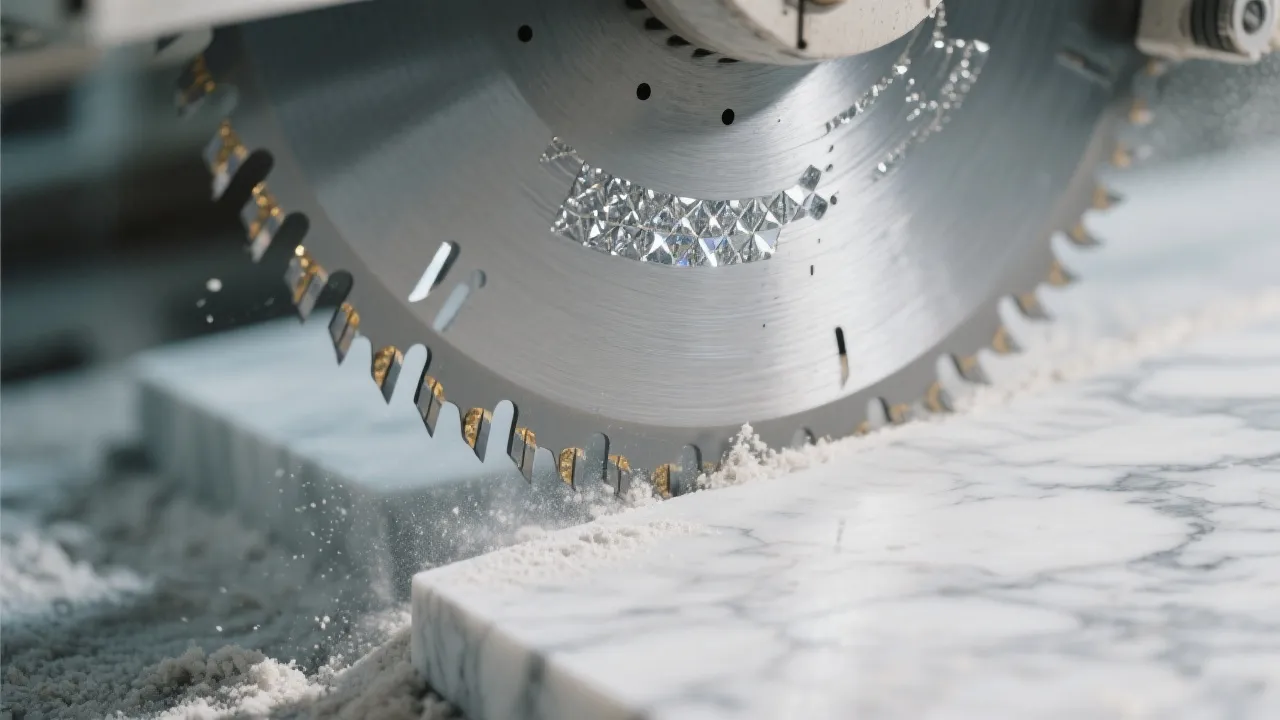
1) Cutting
- Primary goal: stable cutting with controlled heat and edge quality
- Key inputs: workpiece material category, thickness/section, kerf tolerance, and burr/chipping sensitivity
- Operating environment: dry vs. wet cutting; dust extraction requirements (especially in stone processing)
- Decision focus: choose a tool design that matches the required balance between speed, finish, and longevity
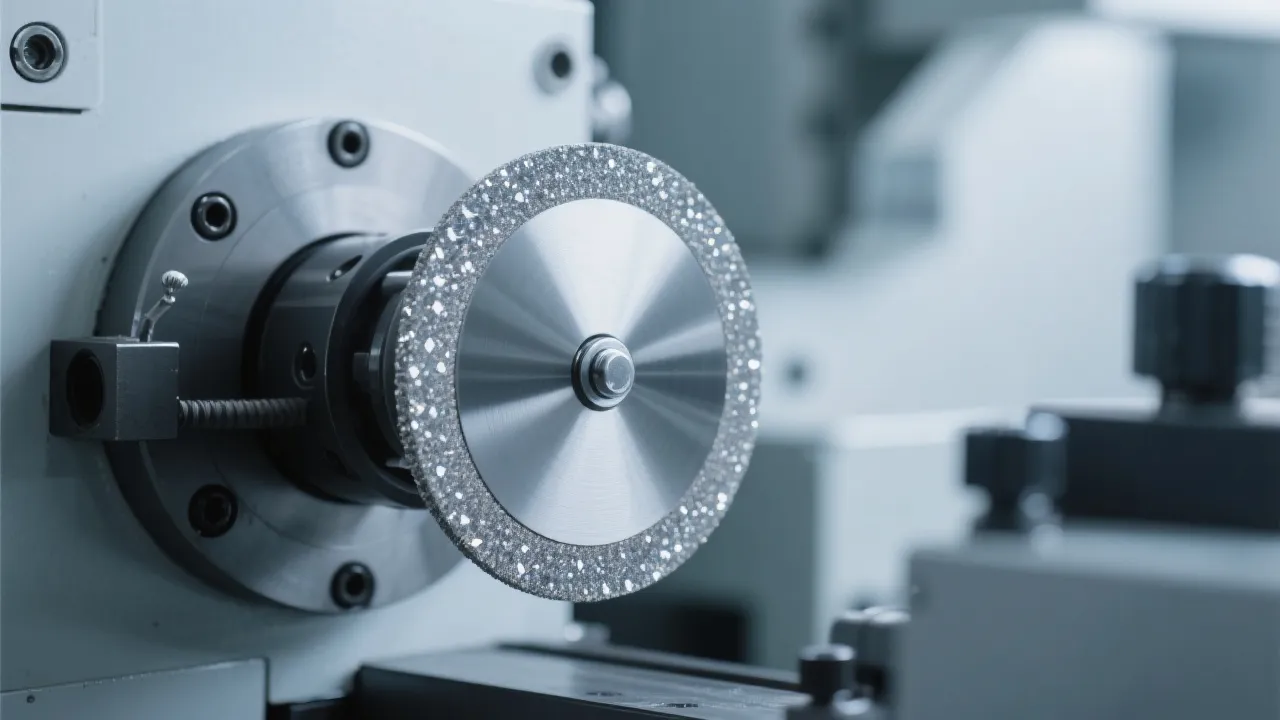
2) Grinding
- Primary goal: efficient material removal or controlled surface finishing
- Key inputs: target roughness/finish, flatness/geometry needs, and risk of burn or glazing
- Operating environment: coolant availability, contact pressure stability, and machine rigidity
- Decision focus: align abrasive/tool build with your removal rate vs. surface quality trade-off
3) Cutting-off
- Primary goal: predictable separation with minimal deformation, burn, or edge damage
- Key inputs: slot width/kerf constraints, part integrity, and throughput requirements
- Operating environment: fixture stability, vibration control, and safety constraints
- Decision focus: ensure tool selection is compatible with spindle speed range and guarding standards
Metalworking vs. stone processing: selection priorities at a glance
| Selection dimension |
Metalworking (typical focus) |
Stone processing (typical focus) |
| Primary risk |
Heat, burrs, dimensional control issues |
Chipping, excessive dust, rapid abrasive wear |
| Operating conditions |
Coolant strategy, machine rigidity, stable feed |
Dry/wet choice, dust extraction, site conditions |
| Tool life definition |
Tolerance/finish drift, edge integrity degradation |
Speed drop, increased chipping, poor edge quality |
| Specification clarity |
RPM range, feed method, coolant availability |
Material type, dryness, dust control requirements |
Note: priorities vary by equipment and part requirements. The table is a practical checklist rather than a universal rule.
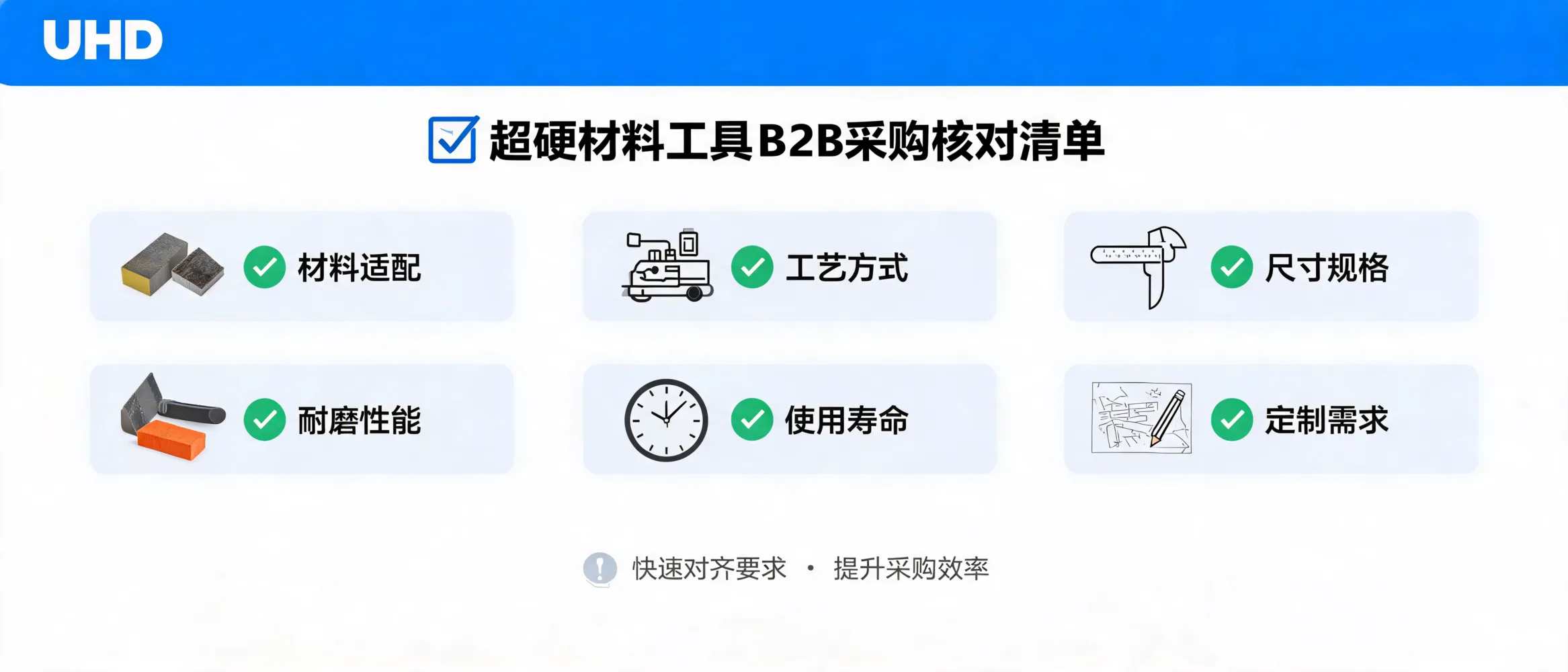
What to include in an RFQ (recommended spec checklist)
To improve quotation accuracy and reduce iteration cycles, provide suppliers with a consistent information set:
Workpiece & quality targets
- Material category and key characteristics (hardness/abrasiveness if known)
- Drawing or photos; critical dimensions and tolerances
- Target finish/edge requirements; defect limits (burn, chips, burrs)
Process & equipment conditions
- Operation type: cutting / grinding / cutting-off
- Machine model or capability: spindle speed range, power, rigidity constraints
- Dry/wet, coolant type, dust control, and safety/guarding constraints
Tool life & evaluation method
- Target tool life definition (how you judge end-of-life)
- Trial plan: batch size, cycle time, inspection points
- Acceptance criteria for performance stability and repeatability
How UHD supports industrial buyers
UHD Ultrahard Tools Co., Ltd serves industrial markets with a focus on quality-first manufacturing and application-oriented tooling. For projects involving diamond tools, abrasives, or custom vacuum-brazed diamond abrasives, we help customers clarify specifications and align tool choice with process conditions.
Collaboration approach (typical)
- Requirement review: process goals, workpiece, constraints, and evaluation method
- Tool matching: propose suitable ultrahard tool categories and configuration direction
- Specification confirmation: finalize dimensions, interface, and operating assumptions for RFQ/PO
- B2B service readiness: structured communication for international buyers and consistent documentation
UHD maintains close collaboration with academic partners to support ongoing R&D in ultrahard tooling, aiming to improve product fit for evolving machining requirements.
Ready to align your process requirements with the right tool?
If you are evaluating ultrahard material tools for cutting, grinding, or cutting-off in metalworking or stone processing, prepare your workpiece details and operating conditions. A clear specification package helps shorten the sourcing cycle and improves tool matching accuracy.
Contact UHD Ultrahard Tools Co., Ltd with your application information to discuss suitable tool options and quotation requirements.

.png?x-oss-process=image/resize,h_1000,m_lfit/format,webp)