Ultrahard Material Tools Explained: The Role and Advantages of Diamond Tools in Industrial Processing
31 07,2026
UHD Ultrahard Tools Co., Ltd
Concept Explanation
UHD Ultrahard Tools Co., Ltd explains what ultrahard material tools are, their main types and performance characteristics, and how diamond tools and vacuum brazed diamond cutting abrasives improve wear resistance and efficiency in metalworking and stone processing.
UHD Ultrahard Tools Co., Ltd develops and supplies ultrahard material tools for industrial processing, with a focus on diamond tools and vacuum brazed diamond cutting abrasives. This page explains what these tools are, how they perform, and where they are typically used in metalworking and stone processing—to help B2B buyers evaluate process fit and selection logic.
Core focus
Diamond tools & vacuum brazed diamond solutions
Typical industries
Industrial machining, metalworking, stone processing
Value for buyers
Understand tool types, performance factors, selection basics
What Are Ultrahard Material Tools?
Ultrahard material tools are tools engineered with cutting or grinding elements made from materials with extremely high hardness and wear resistance—commonly used when conventional tool materials wear too quickly. In industrial environments, these tools are selected to support stable cutting/grinding, longer service life, and consistent process results.
Within this category, diamond tools are widely adopted for demanding applications because diamond offers very high hardness and strong abrasion resistance, helping maintain cutting efficiency over time when matched to the right workpiece and parameters.
Main Types: Diamond Tools & Vacuum Brazed Diamond Cutting Abrasives
Diamond tools (general)
- Role: Provide cutting/grinding capability for hard or abrasive materials under industrial conditions.
- Why used: Strong wear resistance can help maintain geometry and efficiency across production cycles.
- Common considerations: Workpiece material, required surface finish, tool form factor, and process parameters.
Vacuum brazed diamond cutting abrasives
- Role: Combine diamond abrasives with a brazed structure for industrial cutting and grinding tasks.
- Typical value: Designed to improve cutting action and durability in applications where abrasive retention and wear behavior matter.
- Fit: Often evaluated for throughput goals, wear resistance targets, and stability needs in metalworking and stone processing.
Key Performance Factors B2B Buyers Compare
Selection and evaluation of ultrahard material tools typically come down to measurable performance factors. For procurement and engineering teams, aligning these factors to the actual process is essential for a reliable outcome.
| Factor |
What it influences in practice |
Typical evaluation cues |
| Hardness |
Ability to cut/grind hard materials and maintain edge/abrasive action |
Process stability, tool wear pattern, consistency of results |
| Wear resistance |
Service life, replacement frequency, and downtime planning |
Observed wear rate, maintenance cycle, repeatability across batches |
| Cutting / grinding efficiency |
Throughput, cycle time, and energy usage tendencies |
Material removal rate behavior, heat management, finish outcomes |
| Process compatibility |
Whether tool design matches the workpiece, machine, and method |
Workpiece type, coolant/dry needs, geometry constraints, safety compliance |
Practical note: “Better” performance is context-dependent. The right diamond tool or vacuum brazed diamond abrasive is the one that fits your workpiece, machine capability, and target outcome (efficiency, finish, tool life) under your operating parameters.
Typical Industrial Applications
Metalworking
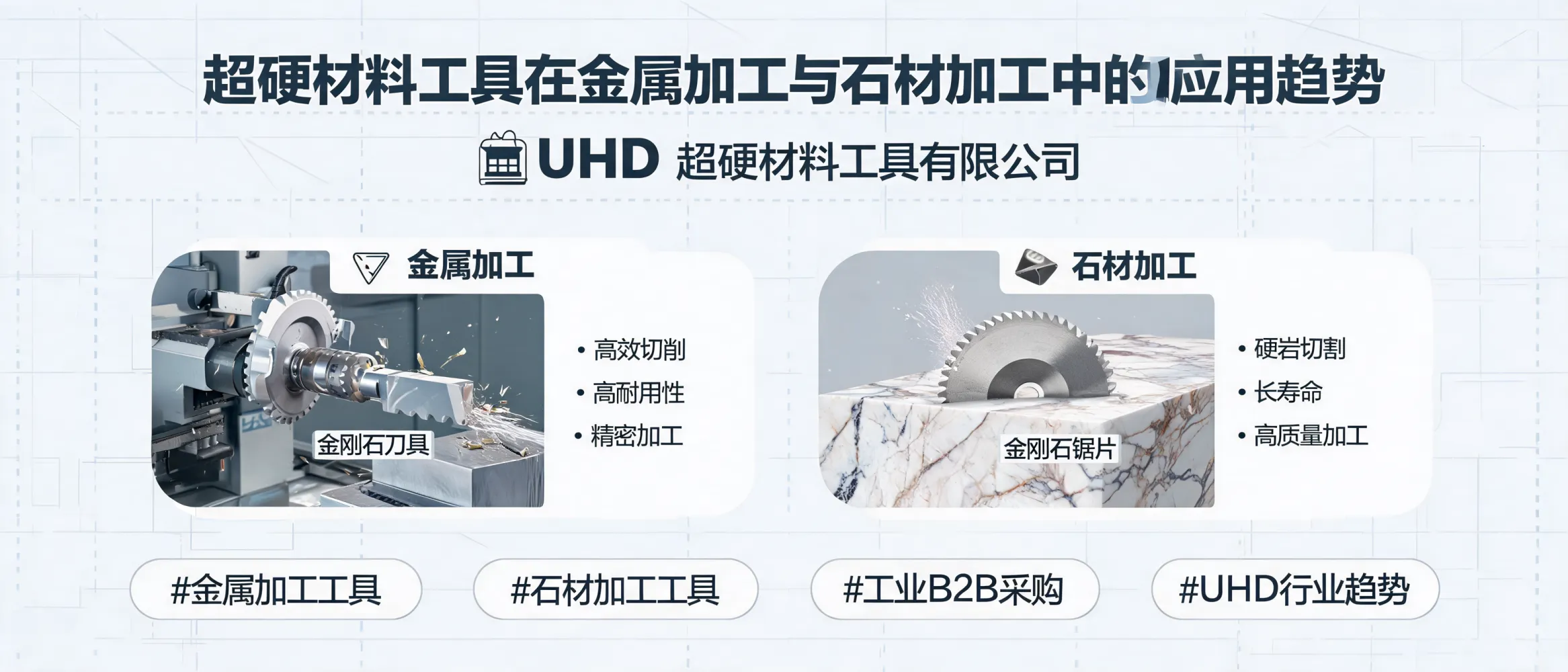
In metalworking environments, ultrahard material tools are considered when operations demand stable abrasion resistance and consistent cutting/grinding behavior over repeated runs.
- Cutting/grinding tasks requiring high wear resistance
- Processes where maintaining efficiency helps reduce rework risk
- Situations needing predictable tool change planning
Stone processing
In stone processing, diamond tools are commonly used due to the abrasive nature of stone materials, where tool wear and efficiency are key decision points.
- Cutting and shaping operations
- Grinding and finishing workflows
- Applications prioritizing durability and stable performance
A Simple Selection Checklist (For RFQs & Engineering Alignment)
When sourcing diamond tools or vacuum brazed diamond cutting abrasives, having consistent inputs improves communication and reduces sampling cycles.
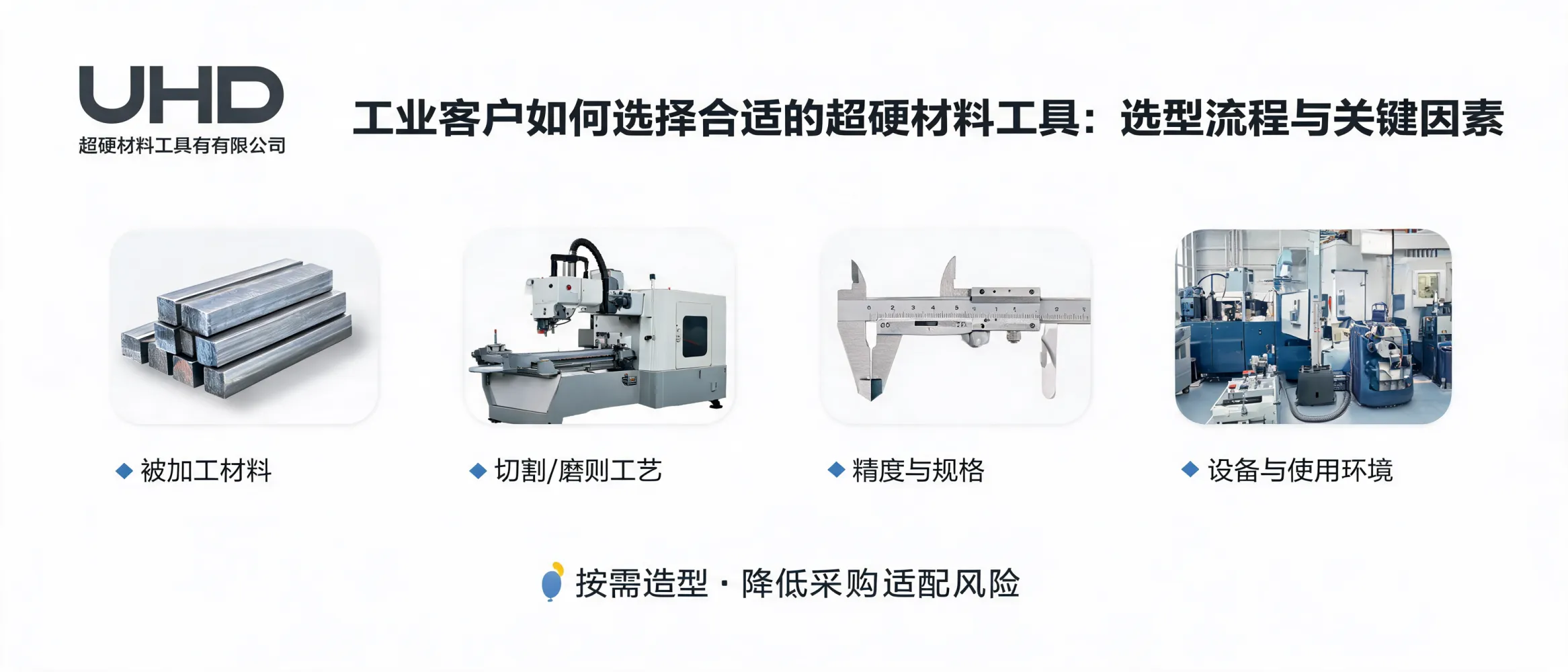
- Workpiece details: material type, hardness/abrasiveness characteristics, and target operation (cutting, grinding, finishing).
- Machine & method: equipment type, spindle speed range, feed approach, and whether wet/dry processing is required.
- Tool form needs: dimensions, mounting method, geometry constraints, and allowable tolerances.
- Performance priorities: focus on wear resistance, cutting efficiency, surface finish, or balance among them.
- Validation approach: expected evaluation criteria (wear pattern, stability, efficiency trend) and trial conditions.
How UHD Supports B2B Buyers
Engineering-driven development
UHD focuses on R&D, manufacturing, and sales of ultrahard material tools, and collaborates with academic partners such as Henan University of Technology to strengthen tool development capabilities and application understanding.
Product scope aligned to industrial processing
The product line includes diamond tools, abrasives, and custom vacuum brazed diamond abrasives, designed to match specific process requirements in metalworking and stone processing.
Export-ready B2B service
UHD maintains a structured B2B foreign trade workflow and communicates with global buyers through platforms such as Alibaba and Global Sources, with an emphasis on product quality consistency and requirement alignment across markets.
Discuss Your Application Requirements
If you are evaluating ultrahard material tools for industrial machining—especially diamond tools and vacuum brazed diamond cutting abrasives—UHD can support requirement clarification for your metalworking or stone processing workflow, including tool type fit, basic performance expectations, and RFQ inputs.
Recommended info to share
- Workpiece material & operation
- Tool dimensions / mounting
- Machine parameters (speed/feed range)
- Wet/dry and finish requirements


.png?x-oss-process=image/resize,h_1000,m_lfit/format,webp)

.png?x-oss-process=image/resize,h_1000,m_lfit/format,webp)