Superhard Material Tools Explained: Diamond Tools, Abrasives, and Carbide Solution Value
27 07,2026
UHD Ultrahard Tools Co., Ltd
Concept Explanation
UHD Ultrahard Tools Co., Ltd explains what superhard material tools are, covering diamond tools, abrasives and vacuum brazed diamond cutting abrasives, their key characteristics, and application value in metalworking and stone processing for better efficiency, tool life, and surface quality.

Superhard material tools are engineered cutting and grinding tools made with extremely wear-resistant materials—most commonly diamond-based tooling and carbide (hard alloy) solutions—to support demanding industrial processes where conventional tools struggle to maintain efficiency, tool life, and surface quality.
This page explains the definition, main categories, key performance characteristics, and typical use cases in metalworking and stone processing, helping industrial buyers and engineers evaluate the right superhard tooling approach for their process goals.
What “Superhard Material Tools” Means
In industrial tooling, “superhard” generally refers to tool materials that deliver high wear resistance and stable performance under heavy load, high speed, or abrasive conditions. Typical superhard tool systems include:
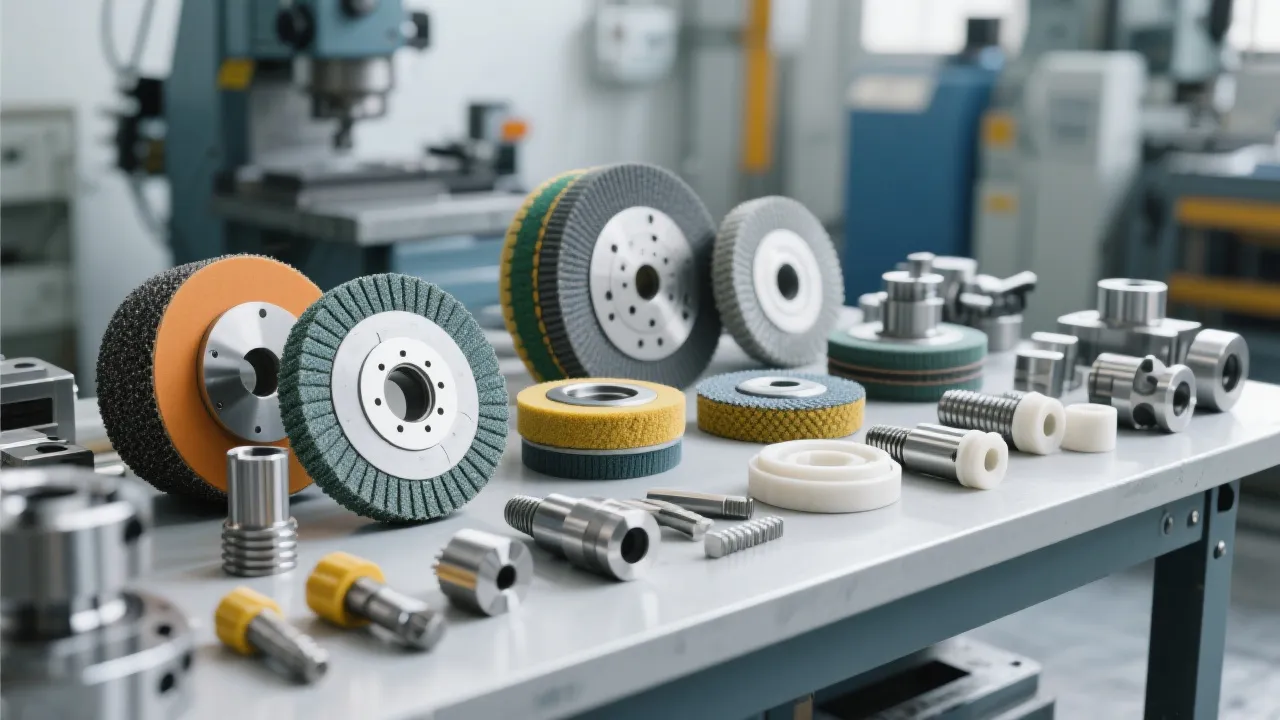
- Diamond tools for cutting, grinding, and finishing abrasive or hard-to-machine materials.
- Abrasives and grinding products built for controlled material removal and surface refinement.
- Vacuum brazed diamond cutting abrasives that use a brazing process to secure diamond grit for aggressive cutting/grinding tasks.
- Carbide (hard alloy) solutions for high-strength, wear-resistant tool bodies and cutting edges in many metalworking operations.
Why Industrial Teams Choose Superhard Tooling
- Higher wear resistance to help reduce frequent tool changeovers in abrasive applications.
- More stable cutting/grinding that supports consistent finished-part quality.
- Process efficiency by maintaining performance across longer production runs.
- Better control of surface finish through appropriate grit selection and tool design.
Note: Actual results depend on workpiece material, machine conditions, coolant use, and correct tool specification.
Main Categories: Diamond Tools, Abrasives, and Vacuum Brazed Diamond Cutting Abrasives
| Category |
Primary function |
Typical value |
Common considerations |
| Diamond tools |
Cutting, grinding, shaping, and finishing in hard/abrasive materials |
Supports wear resistance and surface consistency in demanding operations |
Tool form factor, diamond grit/bond selection, machine power and stability |
| Abrasives & grinding products |
Controlled material removal, deburring, and surface refinement |
Helps balance removal rate with finish quality for production stability |
Grit size, hardness, structure, feed/speed, and heat management |
| Vacuum brazed diamond cutting abrasives |
Aggressive cutting/grinding where strong diamond retention is needed |
Designed for robust grit holding and efficient cutting in tough conditions |
Workpiece type, heat generation, dust extraction, and correct operating window |
| Carbide (hard alloy) solutions |
Wear-resistant tool bodies and cutting edges for metalworking |
Supports strength and durability across a broad range of machining tasks |
Grade selection, geometry, coatings (if applicable), and application matching |
Applications in Metalworking
In metalworking, superhard tooling is often selected to address wear, productivity, and finish requirements—especially when machining conditions accelerate tool degradation or when stable quality is critical.
- Tool life management: choose wear-resistant materials and structures to suit abrasive or high-load processes.
- Surface quality control: align grit size, tool geometry, and process parameters to reduce variability.
- Process efficiency: reduce interruptions from frequent tool changes and rework where applicable.
Applications in Stone Processing
Stone processing typically involves highly abrasive materials and dust/heat considerations. Diamond tools and diamond abrasives are widely used to support cutting speed, edge quality, and stable grinding performance.
- Cutting & shaping: select tooling that maintains cutting ability while managing heat and wear.
- Grinding & finishing: use appropriate abrasive specifications to balance removal rate and finish.
- Quality outcomes: target reduced chipping and more consistent surface appearance through correct matching.
Key Performance Characteristics to Evaluate
- Wear resistance: impacts maintenance frequency and production continuity.
- Cutting/grinding efficiency: relates to throughput, energy load, and heat generation.
- Surface finish capability: driven by grit size, bond/structure, and tool design.
- Thermal behavior: heat affects both tool integrity and workpiece quality.
- Application matching: the right tool depends on the workpiece, machine, and operating parameters.
How to Select the Right Superhard Tooling (Practical Checklist)
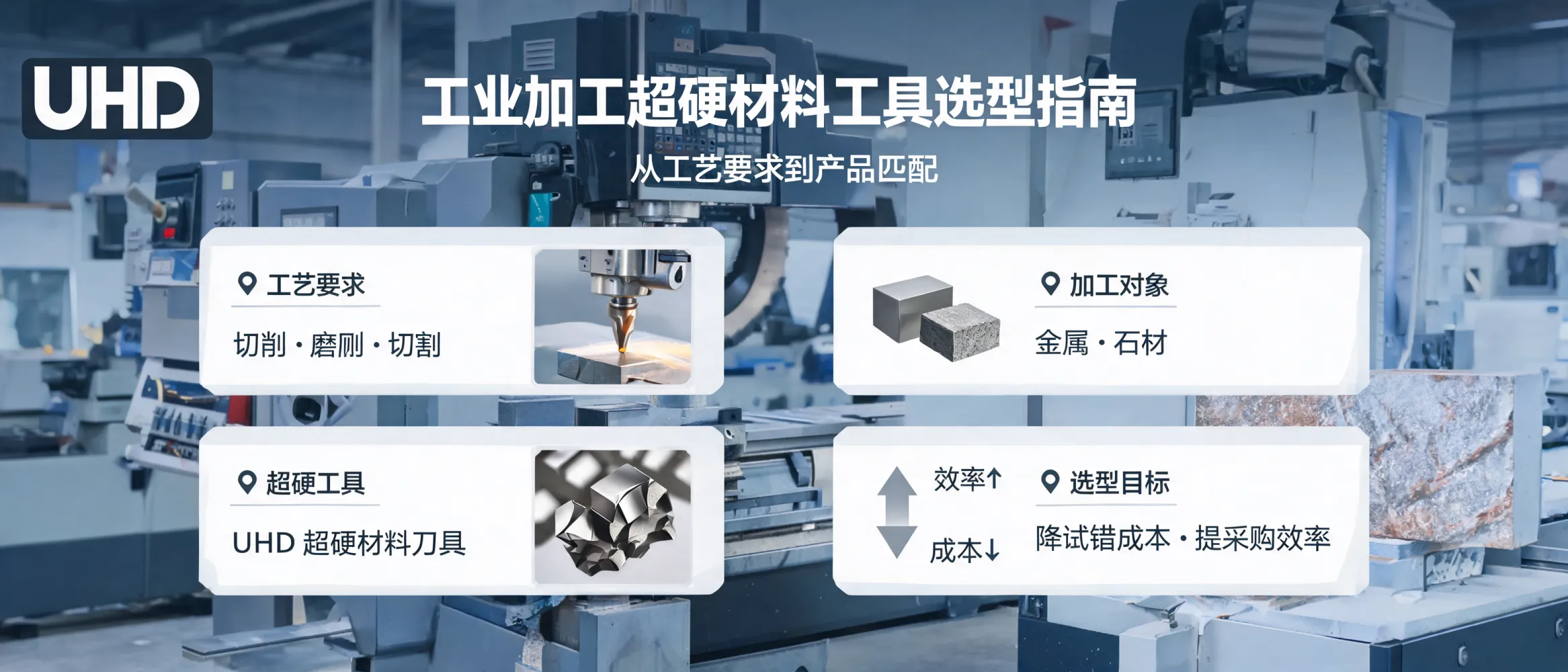
- Define the operation: cutting, grinding, deburring, shaping, or finishing—and the target quality level.
- Confirm the workpiece material: hardness/abrasiveness and any special characteristics (e.g., brittleness in stone).
- Choose the tooling category: diamond tool vs. abrasive product vs. vacuum brazed diamond cutting abrasive vs. carbide solution.
- Match specification to the process: grit size, structure/bond type (where applicable), and tool geometry.
- Validate operating conditions: machine power, speed/feed, cooling, dust extraction, and safety requirements.
- Plan for consistency: define acceptance criteria for finish, wear pattern, and replacement cycle based on real production feedback.
For industrial procurement and engineering reviews, it’s often useful to evaluate superhard material tools by process goal (efficiency / tool life / quality) rather than by tool name alone.
About UHD Ultrahard Tools Co., Ltd
UHD Ultrahard Tools Co., Ltd (Henan UHD) is a high-tech enterprise focused on the R&D, manufacturing, and sales of superhard material tools, providing performance-oriented solutions for industrial applications. UHD’s product scope includes diamond tools, abrasives, and custom vacuum brazed diamond cutting abrasives, serving metalworking and stone processing use cases.
With a quality-first approach and collaboration with academic institutions (including Henan University of Technology), UHD supports B2B buyers through structured international trade services and application-oriented communication—helping teams specify tooling aligned to real process requirements.
Best-fit for
- Industrial procurement teams sourcing superhard tooling
- Process engineers optimizing cutting/grinding stability
- Manufacturers balancing efficiency, tool life, and finish
Information to prepare
- Workpiece material and operation type
- Machine parameters (speed/feed, power)
- Target finish and current tool pain points


.png?x-oss-process=image/resize,h_1000,m_lfit/format,webp)
.png?x-oss-process=image/resize,h_1000,m_lfit/format,webp)