UHD Technical Insight · Gray Cast Iron Precision Grinding · Burn Prevention
Gray Iron Grinding Burn: How Diamond Grit Size & Concentration Reduce Heat and Stabilize Surface Quality
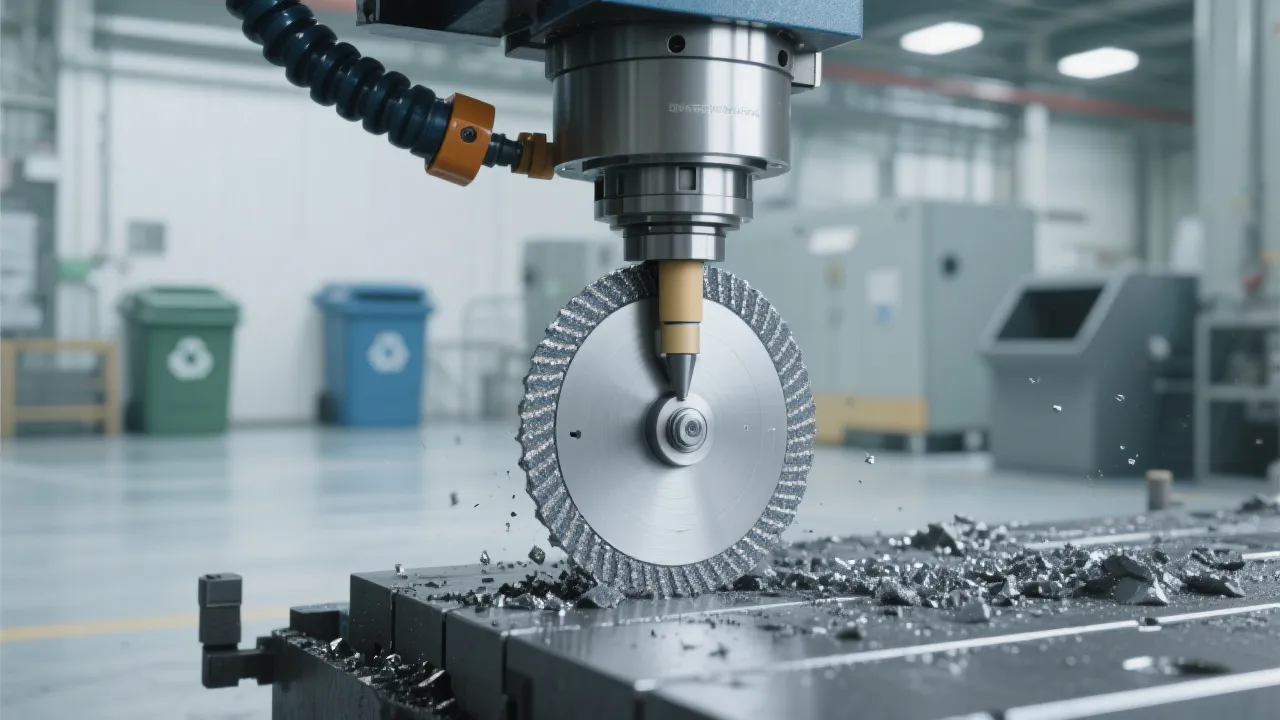
Grinding burn on gray cast iron often looks like a “mysterious” surface discoloration, but the root causes are measurable: excessive specific energy, insufficient chip space, glazing, unstable dressing, and cooling that fails to reach the contact zone. This article maps out a practical selection logic for diamond wheel grit size and concentration, then connects it to feed rate, depth of cut, and wheel speed so engineers can lower thermal load while maintaining throughput.
Why gray iron burns during fine grinding (and why it’s easy to misdiagnose)
Gray cast iron (typically 180–260 HB in many industrial components) has a graphite-flake structure that can help chip breakage, yet it still burns in fine grinding because finishing conditions push the process toward rubbing rather than cutting. When the abrasive points dull or chip space becomes restricted, friction rises sharply, and contact temperatures can exceed 550–700°C locally—high enough to alter surface integrity and cause a “burned” appearance, micro-cracking, or a soft/rehardened skin depending on local chemistry and cooling.
Field symptom pattern (common on production lines): burn marks appear intermittently after a wheel change or after several hours of stable output—often tied to dressing intervals drifting, coolant nozzle misalignment, or a “safe” parameter change that quietly increases specific energy.

Step 1 — Select diamond grit size for chip space, not just finish
For gray iron, engineers often chase Ra targets and pick very fine grits too early. In practice, overly fine grit reduces chip pockets, increases rubbing, and raises thermal risk—especially when the wheel begins to glaze. A more robust method is to select grit based on material removal mode (cutting vs plowing) and the stability of dressing.
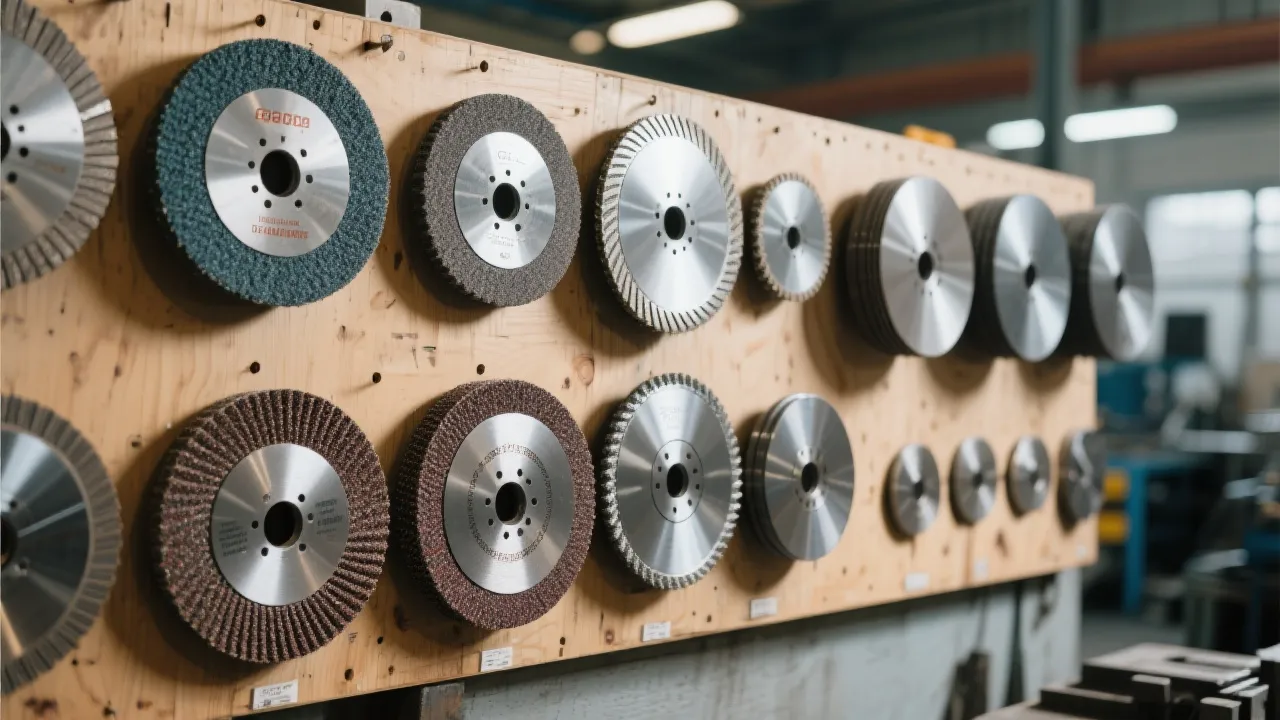
Recommended grit range (practical starting points)
| Grinding objective | Suggested diamond grit | Why it helps burn control | Typical risk if too fine |
|---|---|---|---|
| Semi-finish / stable stock removal | D91–D76 (≈ #170–#200) | More chip space, lower rubbing, forgiving to dressing drift | Thermal spikes reduced but finish may plateau |
| Fine grinding with tight geometry control | D64–D54 (≈ #230–#270) | Balance of finish and cutting; manageable chip pockets | Glazing appears quickly if coolant access is weak |
| Superfinish (only when process is already stable) | D46–D30 (≈ #325–#600) | Can achieve low Ra if wheel is sharp and coolant is on-point | High rubbing probability; burn risk rises sharply |
In many gray iron production cases, moving from D46 up to D64 (slightly coarser) reduces burn without sacrificing the final Ra, because the process becomes stable enough to keep the wheel cutting. The “best” grit is the one that maintains consistent chip formation at the dressing interval you can realistically hold on the shop floor.
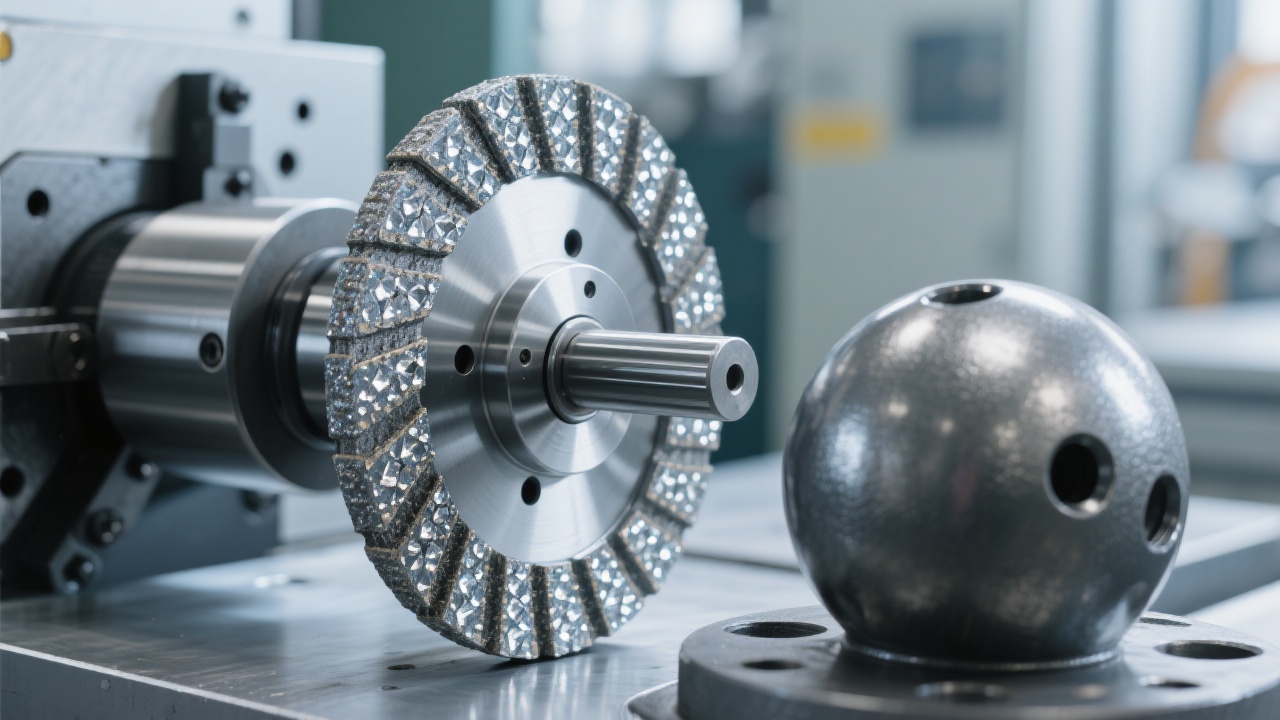
Step 2 — Set diamond concentration to prevent glazing and thermal runaway
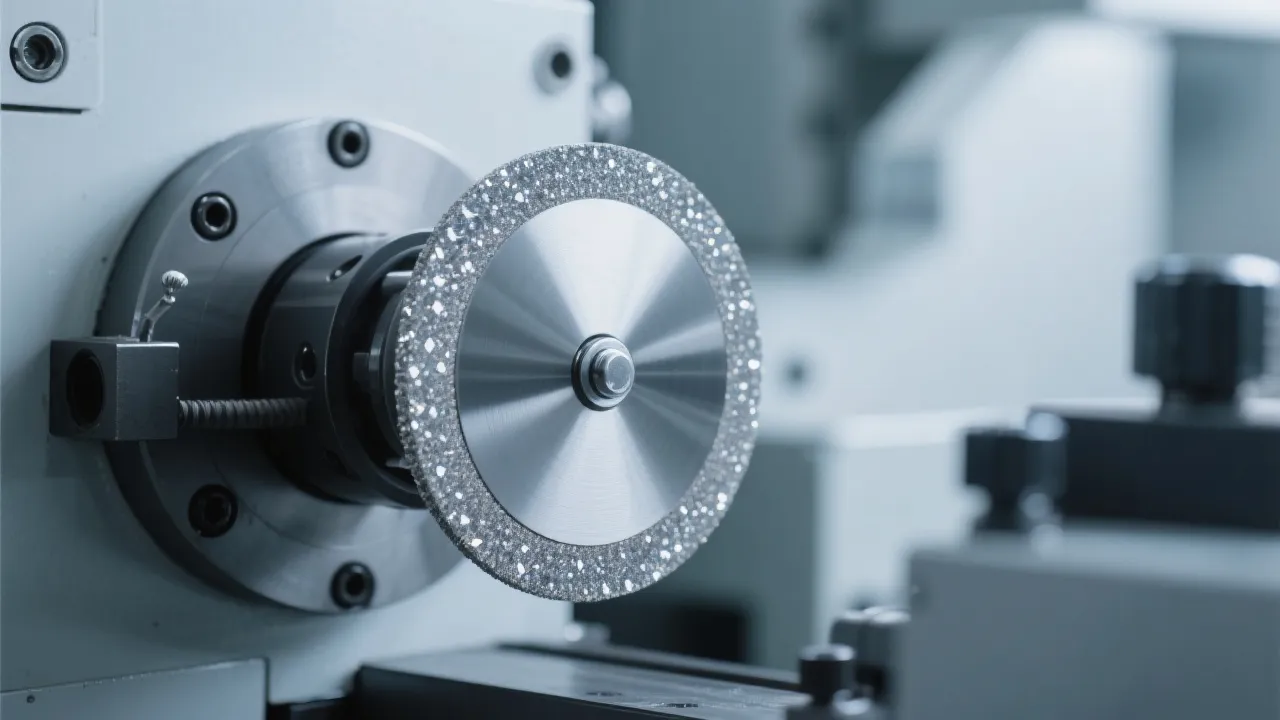
Concentration is not just “more diamond = better.” Higher concentration increases the number of cutting points, which can reduce point load, but it can also tighten chip space and promote glazing if the bond and dressing strategy are not aligned. For gray iron fine grinding, a concentration strategy that supports self-sharpening and coolant penetration is usually safer than maximum density.
Practical concentration bands
C75–C100: often a stable baseline for gray iron fine grinding—good balance of cutting points and chip clearance.
C100–C125: suitable when rigidity is high and dressing is consistent; monitor glazing and coolant access carefully.
C50–C75: can be effective for heat-sensitive conditions or limited coolant delivery; may require more frequent dressing to maintain form.
Decision shortcut (engineer-friendly)
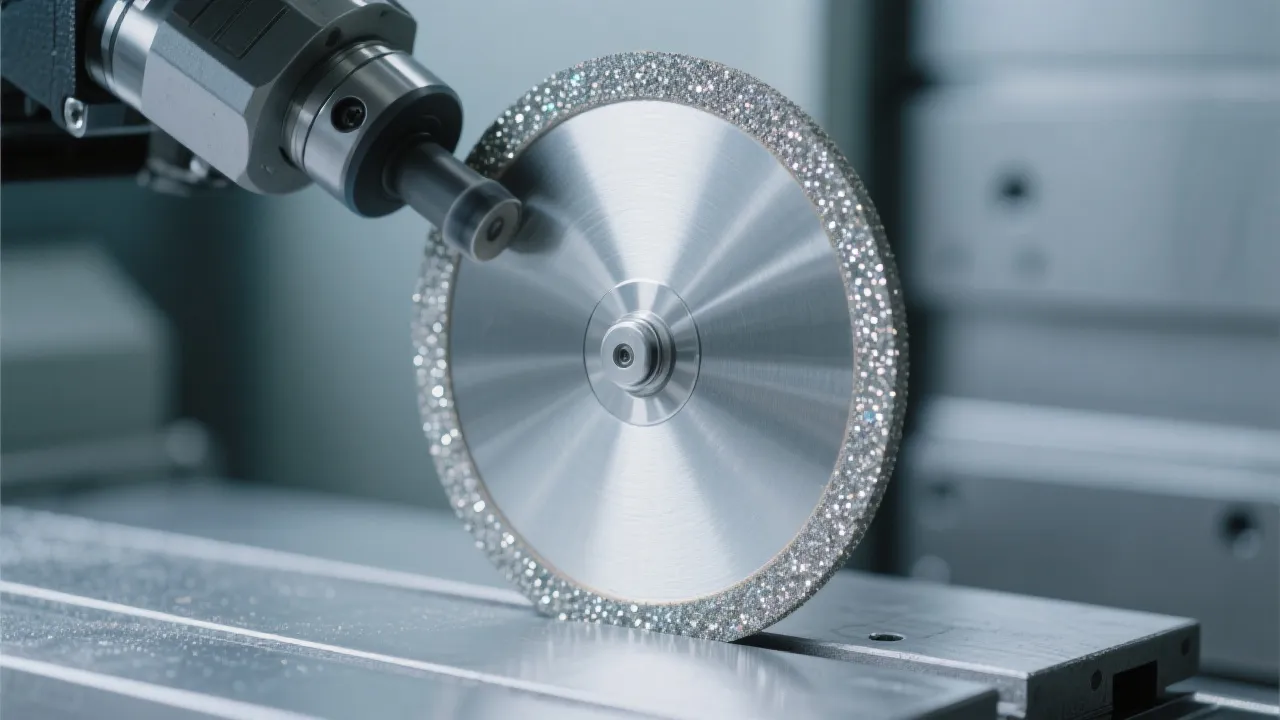
If burn appears after the wheel “looks shiny,” start by reducing glazing tendency: slightly lower concentration or choose a structure/bond that opens the wheel, then tighten dressing. If burn appears immediately after parameter increase, address specific energy first (feed, depth, speed).
Step 3 — Match feed, depth, and wheel speed to keep the wheel cutting
Burn prevention is mostly energy management. When removal rate is demanded but the wheel is not sharp enough (or coolant cannot reach the interface), heat accumulates in the surface layer. A practical way to plan adjustments is to treat the parameters as a triangle: change one, and verify the other two still keep the process in a cutting regime.
A workable “safe window” for gray iron fine grinding (starting reference)
| Parameter | Typical starting range | Burn-control logic | Watch-out sign |
|---|---|---|---|
| Wheel speed (Vs) | 25–35 m/s | Higher Vs can improve finish but can increase rubbing if the wheel is dull | Burn marks after speed increase without dressing change |
| Depth of cut (ae) | 0.005–0.020 mm/pass | Too small ae with dull wheel encourages rubbing; moderate ae can promote cutting if sharp | Surface darkening despite “light cuts” |
| Work feed / table speed | 3–12 m/min (varies by contact length) | Lower feed increases dwell time and heat; slightly higher feed may reduce burn if power allows | Localized burn at the ends / reversals (dwell) |
Shop-floor rule that prevents many burn incidents
When increasing output, avoid stacking risk: do not raise Vs, reduce ae, and extend dressing intervals at the same time. That combination often turns cutting into friction polishing—exactly the pathway to gray iron burn.
Step 4 — Coolant delivery: flow is not enough; impact and access decide
In fine grinding, “more liters” is less important than getting coolant into the wheel–work interface. Many burn problems persist even at high flow because the jet breaks up before reaching the contact zone, or the nozzle aims at the wheel periphery instead of the nip.
Reference targets that commonly improve burn stability
- Flow rate: 20–40 L/min for smaller contact areas; 40–80 L/min for wider wheels / larger contact length.
- Nozzle distance: typically 10–30 mm from the wheel, minimizing air barrier effects.
- Jet velocity: aim for a coherent jet; many lines see improvement when jet speed approaches wheel surface speed (practically, increase pressure and optimize nozzle slot geometry).
- Filtration: keep fines under control (often 10–25 μm filtration) to protect wheel sharpness and prevent loading.
If burn reduces immediately after cleaning nozzles or re-aiming, the root cause is often coolant access, not abrasive grade. If burn reduction lasts only briefly, dressing and wheel structure are usually the next constraint.
Step 5 — Dressing frequency: the hidden lever behind repeatability
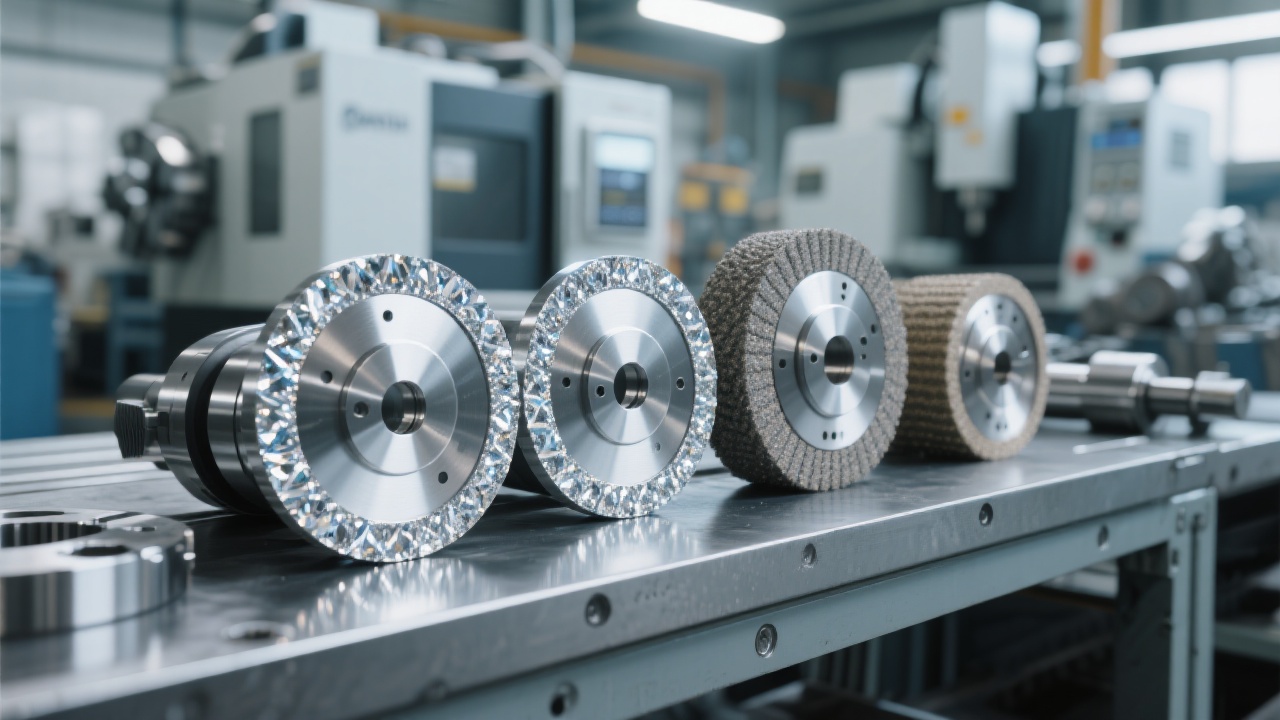
Dressing is where many gray iron lines lose stability. A wheel can deliver acceptable parts for hours, then suddenly start burning because the wheel face transitions from sharp to glazed while the recipe remains unchanged. The corrective action is not always “dress more,” but to dress on a repeatable trigger and verify the wheel remains open enough to cut.
Two dressing strategies that work well in production
1) Power-based trigger (highly practical)
Record spindle power when the wheel is freshly dressed and stable. If average power rises by 10–20% at the same parameters, schedule dressing before burn appears. This approach aligns with the reality that glazing shows up in energy signals earlier than visual inspection.
2) Part-count interval (simple, but needs validation)
Start with a conservative interval, then extend gradually while monitoring burn rate and surface roughness drift. If the line shows “good for 80 parts, burn at 90,” set the interval to 60–70 parts and evaluate again after stabilizing coolant and grit/concentration.
A real-world troubleshooting flow engineers can follow in 30 minutes
Below is a practical decision flow used on many shop floors to isolate the dominant burn driver without over-correcting the process.
Burn Troubleshooting Flow (text flowchart)
Start: Burn observed on gray iron after fine grinding
→ A. Does burn reduce immediately after re-aiming/cleaning coolant nozzles?
• Yes → prioritize nozzle geometry, jet coherence, filtration; then re-validate grit & concentration.
• No → go to B.
→ B. Does spindle power/force trend upward over time at fixed parameters?
• Yes → glazing/dressing issue; shorten dressing interval or choose a more open wheel structure (often paired with slightly coarser grit or adjusted concentration).
• No → go to C.
→ C. Did output changes recently occur (Vs↑, feed↓, ae↓, dressing interval↑)?
• Yes → revert the stacked change; re-balance the parameter triangle to restore cutting.
• No → go to D.
→ D. Wheel selection check
• If grit too fine for process stability → move one step coarser (e.g., D46 → D64). If concentration too high and loading/glazing occurs → reduce concentration band or adjust bond/structure.
What UHD typically configures for stable gray iron fine grinding
In gray iron applications where burn risk is high and consistency matters, UHD configurations usually emphasize a wheel that stays in a cutting regime: balanced grit (often D64–D76 as a robust baseline), concentration chosen to avoid chip-space collapse (commonly C75–C100), and a dressing plan tied to energy signals rather than operator intuition. Results depend on machine rigidity, contact length, coolant access, and target surface integrity.
Need a wheel setup that matches your exact burn pattern and machine conditions?
If you’re fighting intermittent burn, glazing, or unstable Ra on gray cast iron, the fastest fix is usually a targeted adjustment to diamond grit, concentration, dressing cadence, and coolant access—based on your contact length, wheel size, and stock removal. 如需适配您工况的砂轮配置方案,请联系我们的技术团队获取定制化建议.
Request a UHD Diamond Wheel Grit & Concentration Recommendation.png?x-oss-process=image/resize,h_1000,m_lfit/format,webp)