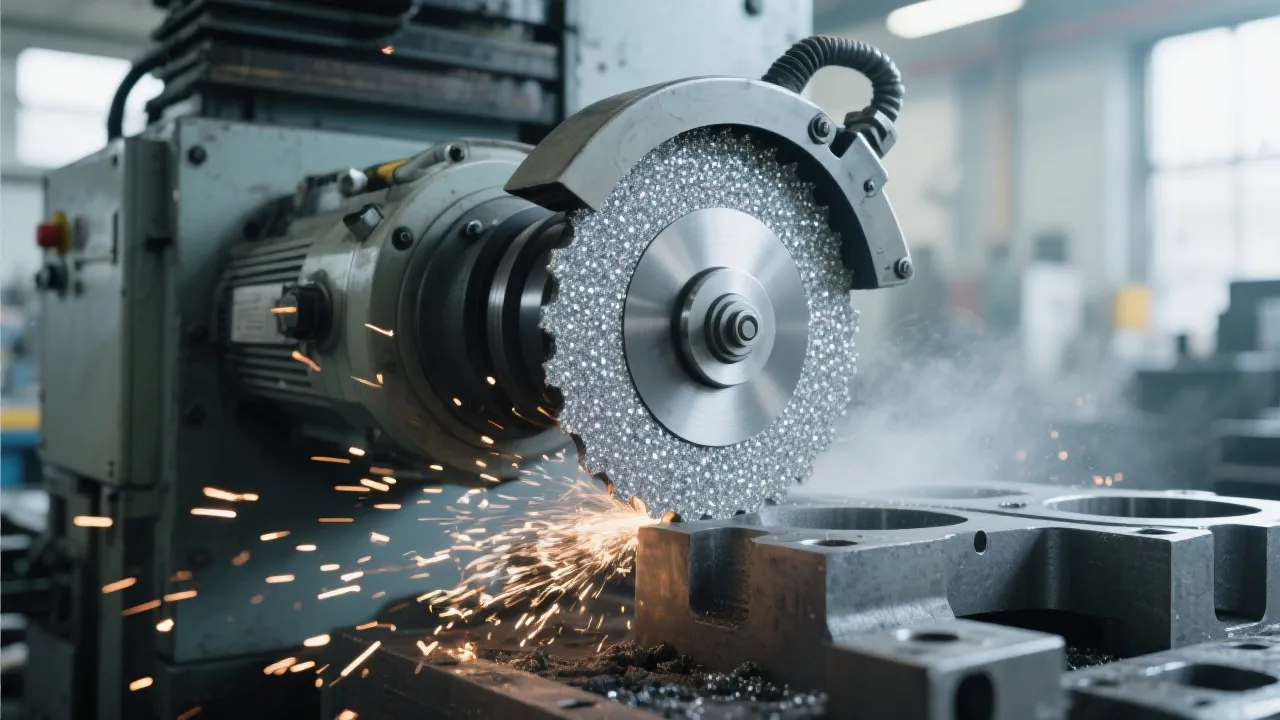
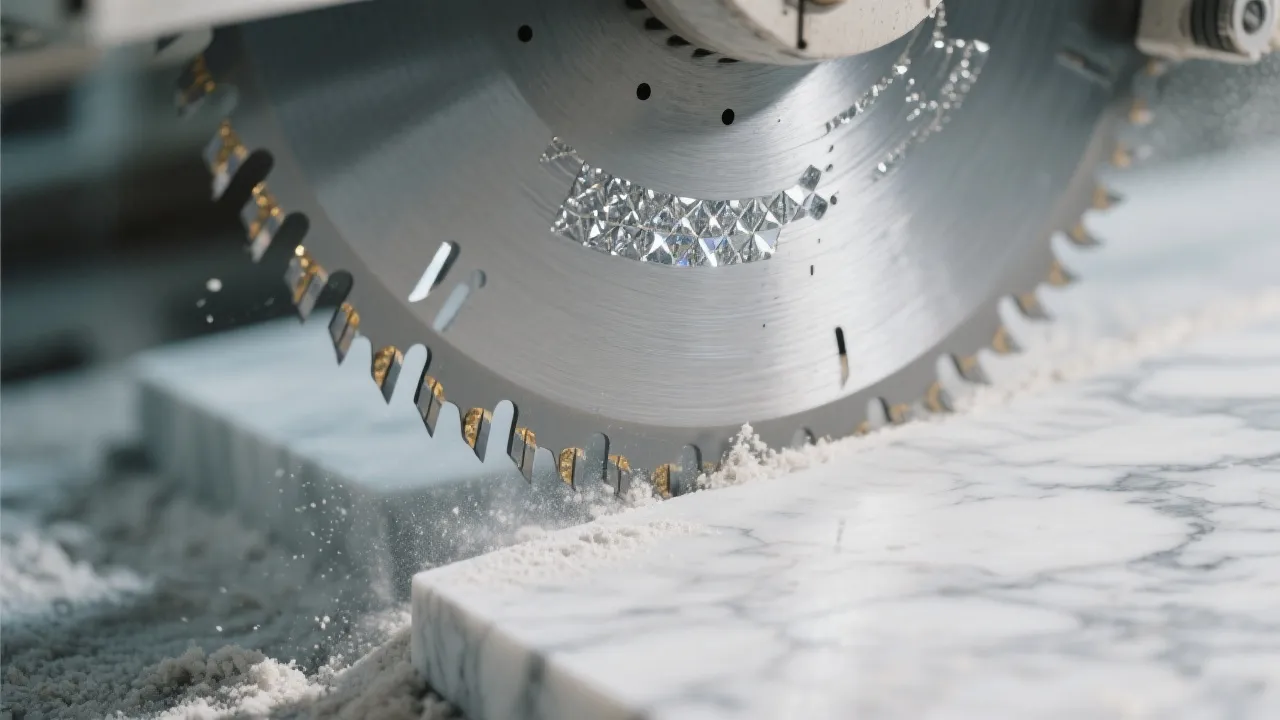
In B2B industrial purchasing, ultrahard tools are rarely “standard parts.” The same-looking diamond or carbide tool can behave very differently once it meets your actual material, machine, coolant, feed/speed, and operator routine. At UHD Ultrahard Tools Co., Ltd, we support global buyers of ultrahard tools (diamond tools, abrasives, and customized brazed diamond abrasives) with a practical goal: help you reduce performance mismatch risk and improve procurement decision quality—beyond simply comparing price and appearance.
Use this page as a buyer checklist
Evaluate operating-condition fit, realistic tool life, process stability, and supplier service capability before issuing a PO.
Scope
Applicable to industrial cutting and grinding applications in metalworking and stone processing where ultrahard tools are used.
A low unit price can hide a high total cost. In ultrahard tools, the real cost often comes from unplanned changeovers, scrap, downtime, and inconsistent output. Price-only selection commonly overlooks whether the tool is engineered for your material hardness/structure and your production rhythm.
Surface polish, coating color, or “neat” brazing lines can be misleading. Appearance does not guarantee correct abrasive selection, bond integrity, or geometry consistency—factors that directly impact cutting/grinding behavior.
A reliable evaluation focuses on fit to process and measurable performance criteria, not aesthetic cues.
“Operating-condition fit” is one of the most frequent mismatch sources in B2B procurement. Ultrahard tools must be selected with your actual conditions in mind: machine rigidity, spindle power, coolant method, clamping, part geometry, and whether the process is continuous or intermittent.
| Operating condition | Why it matters | What to provide to the supplier |
|---|---|---|
| Workpiece material & application | Determines abrasive type, bond approach, and geometry needs | Material grade, hardness range, and process goal (cut, grind, finish) |
| Machine capability | Impacts stability, heat, and achievable parameters | Spindle power, RPM range, rigidity notes, fixture/clamping method |
| Coolant / dry operation | Affects heat management and wear behavior | Coolant type, flow, nozzle direction, or dry constraints |
| Duty cycle & interruptions | Intermittent contact raises chipping and thermal shock risk | Cycle details, contact pattern, and typical batch size |
| Quality target | Defines acceptable surface finish and dimensional tolerance | Critical-to-quality specs and inspection method |
Tool life claims are only meaningful when the definition is aligned. In practice, “life” might mean: time to first defect, time to unacceptable surface quality, time to dimension drift, or time to catastrophic failure. Different definitions lead to different purchasing outcomes.
For industrial lines, stable output can be more valuable than a marginally longer life in a lab-like trial. Stability depends on consistent tool manufacturing and the supplier’s ability to support parameter optimization, feedback loops, and repeatability across batches.
UHD Ultrahard Tools Co., Ltd is a China-based high-tech enterprise focused on the R&D, manufacturing, and sales of ultrahard material tools. Our offering covers diamond tools, abrasives, and custom vacuum-brazed diamond abrasives used in metalworking and stone processing. We emphasize product-market fit—selecting the right tool design for the right process requirement—so procurement decisions are based on technical match rather than surface impressions.
Backed by ongoing technical development and collaboration with academic partners (including Henan University of Technology), UHD also supports international B2B purchasing workflows with structured communication and export-oriented service—helping buyers clarify operating conditions, define evaluation criteria, and iterate toward stable performance.
This information helps align operating-condition matching early—often the fastest way to avoid the five pitfalls above.

.png?x-oss-process=image/resize,h_1000,m_lfit/format,webp)
.png?x-oss-process=image/resize,h_1000,m_lfit/format,webp)