Design Differences Between Diamond Tools for Flat and Curved Ceramic Grinding: Choosing Angles and Edge Thickness
This technical note examines how diamond-bonded grinding tools are engineered differently for planar versus curved ceramic work—focusing on grinding angle, edge thickness, bore design and chip evacuation. The guidance is compiled from field data in ceramic manufacturing and electronic packaging, and is intended for engineers and process leads seeking measurable improvements in efficiency and surface quality.
Core design principles: why flat and curved demands differ
Flat-surface grinding emphasizes dimensional stability and high material removal rates with uniform contact. Curved-surface (spherical, toroidal, freeform) grinding prioritizes contact conformity, reduced local stresses and predictable profile transfer. These differences drive distinct choices in:
- Grinding (relief/clearance) angle and bevel geometry
- Working edge thickness and diamond grit distribution
- Bore and mounting tolerances to control runout
- Chip evacuation (slots, porosity) and coolant channels
Recommended grinding angles and edge geometry
Practical ranges (based on aggregated shop-floor results):
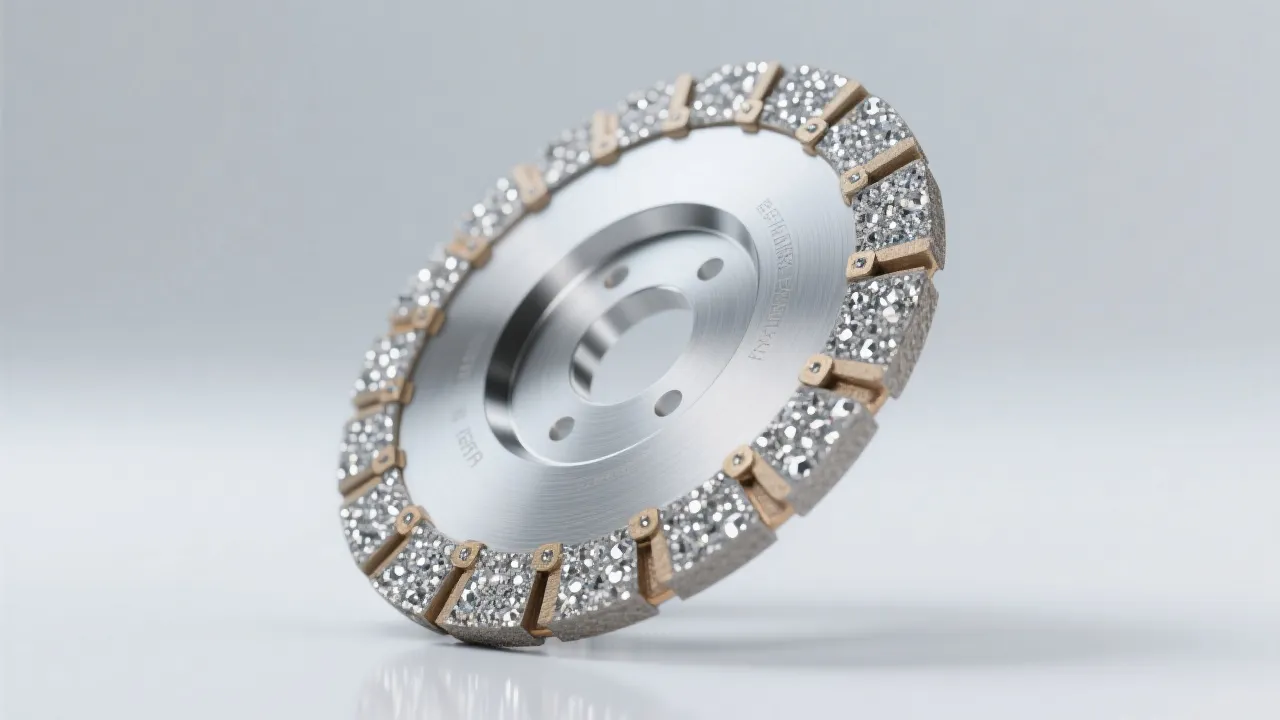
- Flat grinding tools: relief/clearance angle 8°–18°. A slightly larger clearance (12°–18°) reduces rubbing and heat generation during high-feed roughing. Bevel radii at the edge of 0.1–0.3 mm improve tool life for coarse cuts.
- Curved (spherical/arc) tools: clearance 4°–12°. Lower angles improve contact conformity and profile fidelity; micro-bevel 0.02–0.12 mm helps avoid localized fracturing on tight radii.
- Rake considerations: diamond grinding is mostly abrasive; neutral to slightly negative rake (0° to -5° equivalent geometry) reduces aggressive cutting forces on brittle ceramics.
Selecting angle within these bands should be coordinated with grit size, bond hardness and workpiece curvature radius.
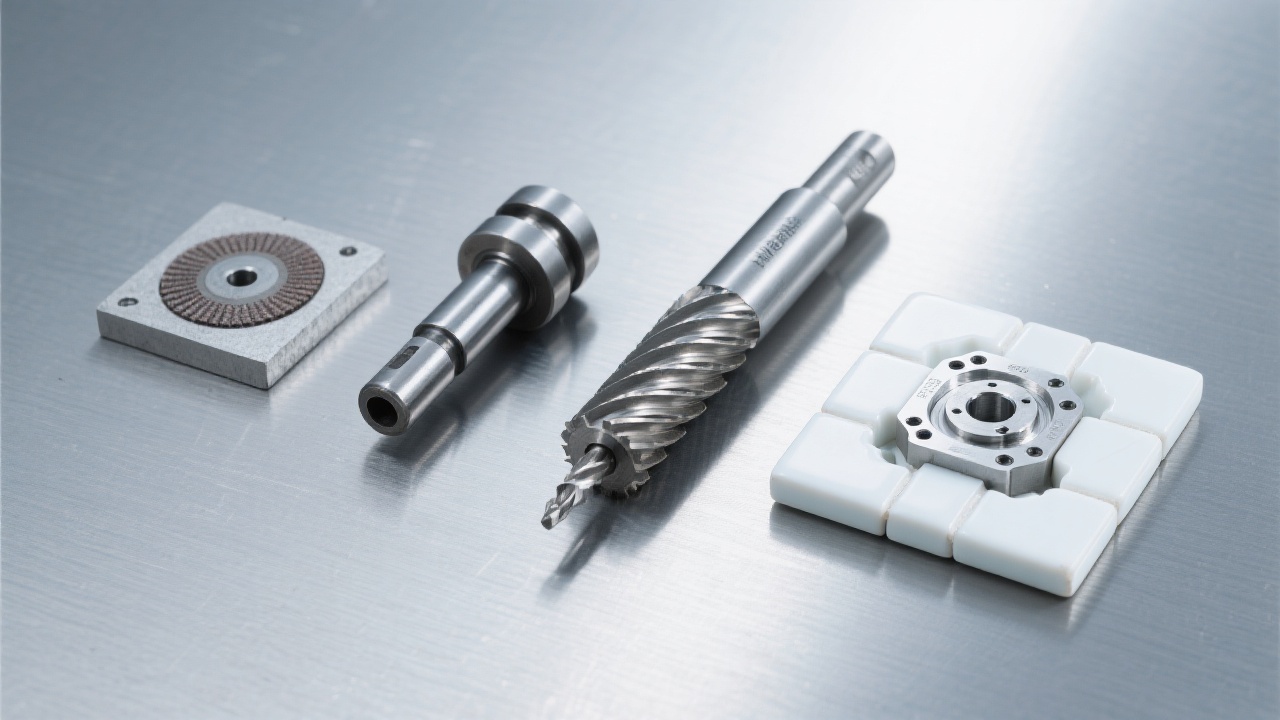
Edge thickness, grit selection and bond strategy
Edge thickness and diamond grit selection directly affect contact pressure and wear rate:
- Edge thickness
- Flat finishing wheels: 0.6–2.5 mm active edge (thicker edges for roughing, thinner for finishing control).
- Curved profile wheels: 0.15–1.0 mm active edge—thinner edges better maintain local conformity on small radii.
- Diamond grit ranges (practical shop categories): coarse 60–100 µm for rapid stock removal; medium 30–60 µm for semiprocessing; fine 6–30 µm for final finishing; submicron (<6 µm) for optical-grade surfaces.
- Bond hardness: harder bonds retain coarse grits under high grinding forces (useful for roughing alumina); softer bonds expose fresh grit for fine finishing on zirconia or multi-layer ceramics.
Bore tolerances, mount runout and chip evacuation design
Mounting precision and chip removal are often underestimated but decisive:
- Bore accuracy: target bores with runout <0.01 mm at the finished wheel face; concentricity directly correlates with achievable surface roughness and dimensional repeatability.
- Mount designs: use locating shoulders and clamping flanges rather than relying solely on bore friction—this reduces thermal growth effects in long cycles.
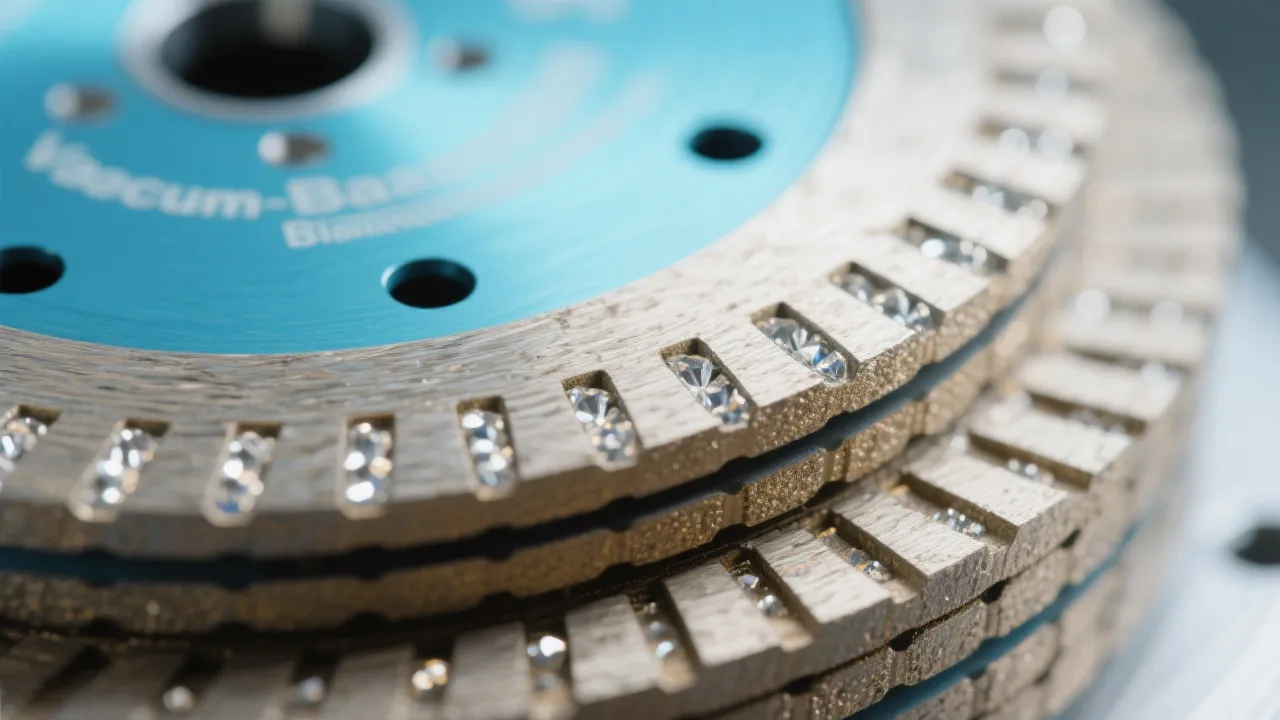
- Chip evacuation: combine radial slots, segmented designs or engineered porosity to keep open-area between 8%–25% of the contact surface. For high-depth roughing, prioritize larger slots; for finishing, prioritize smaller, evenly distributed channels to stabilize coolant film.
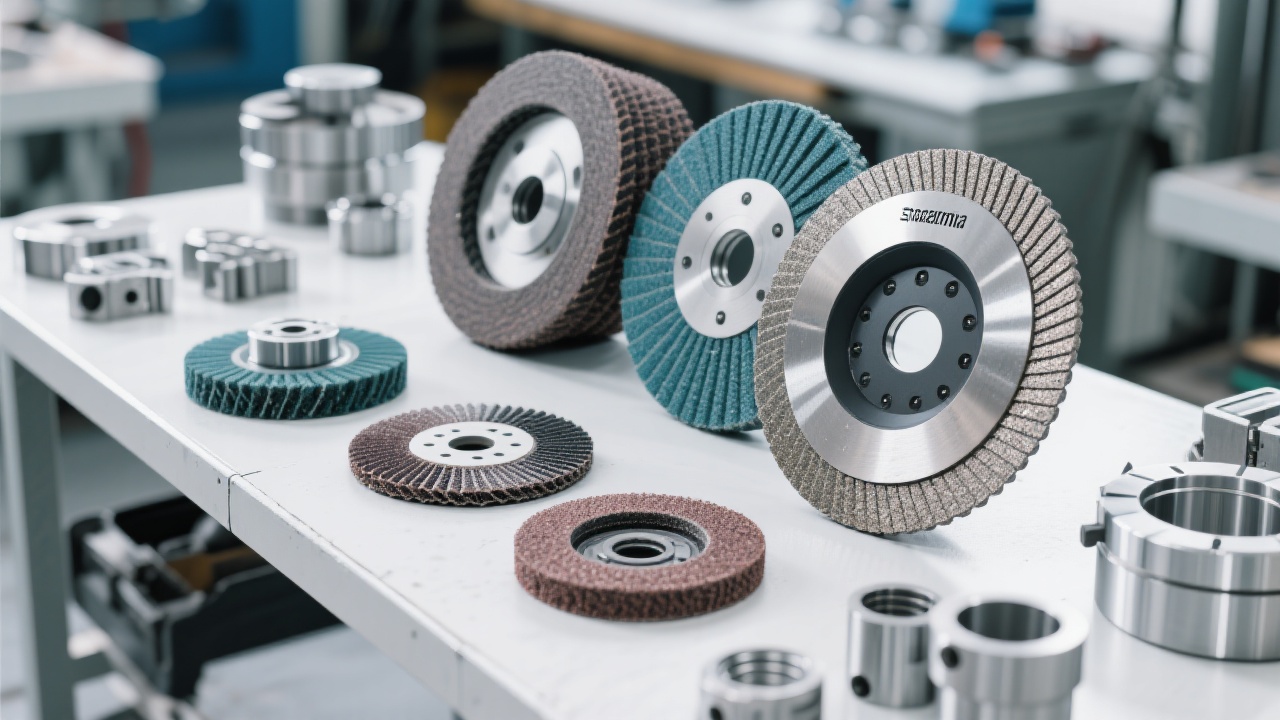
Process parameters: speeds, feeds, coolant, dressing
Example baseline parameters for common ceramic substrates (alumina, zirconia) — adjust based on in-house trials:
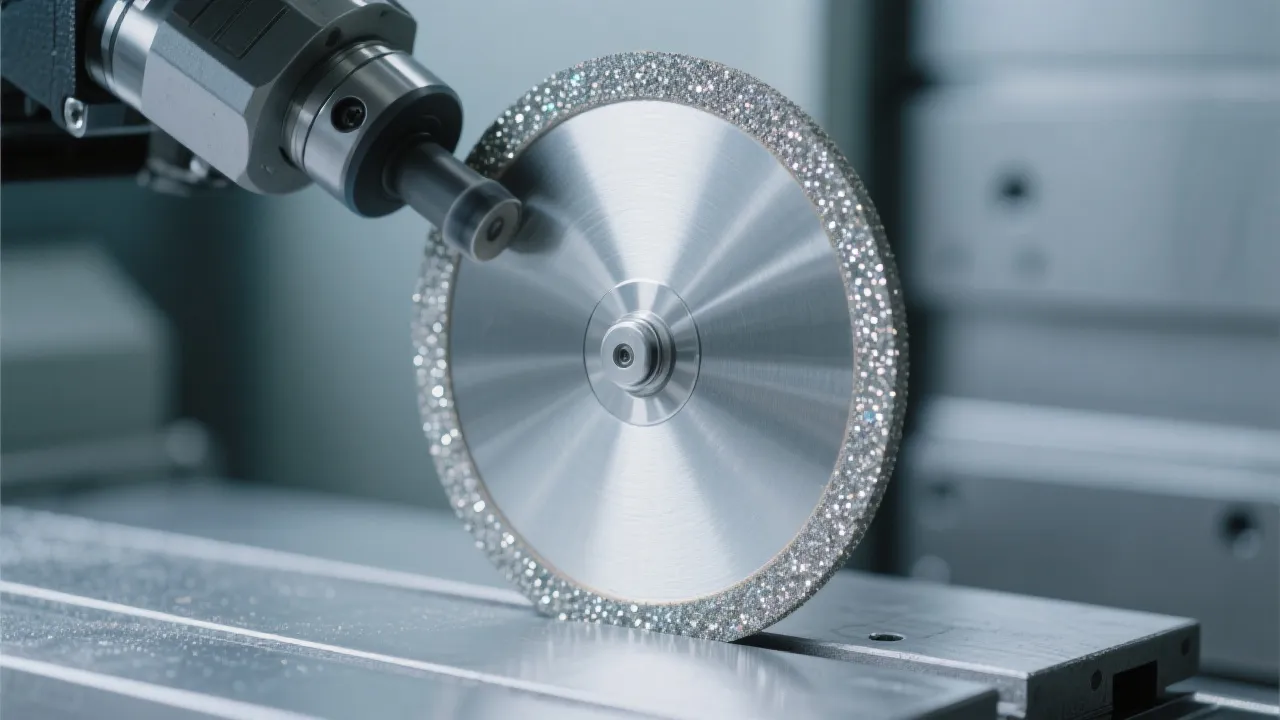
- Peripheral speed (diamond wheel): 18–35 m/s for profile wheels; 25–40 m/s for through-feed fine finishing.
- Depth of cut (per pass): roughing 20–100 µm; semiprocess 5–30 µm; finishing 0.5–8 µm.
- Feed rate: depends on contact width — typical planar feeds 100–1200 mm/min; low-profile curved passes 20–200 mm/min for high-precision optics.
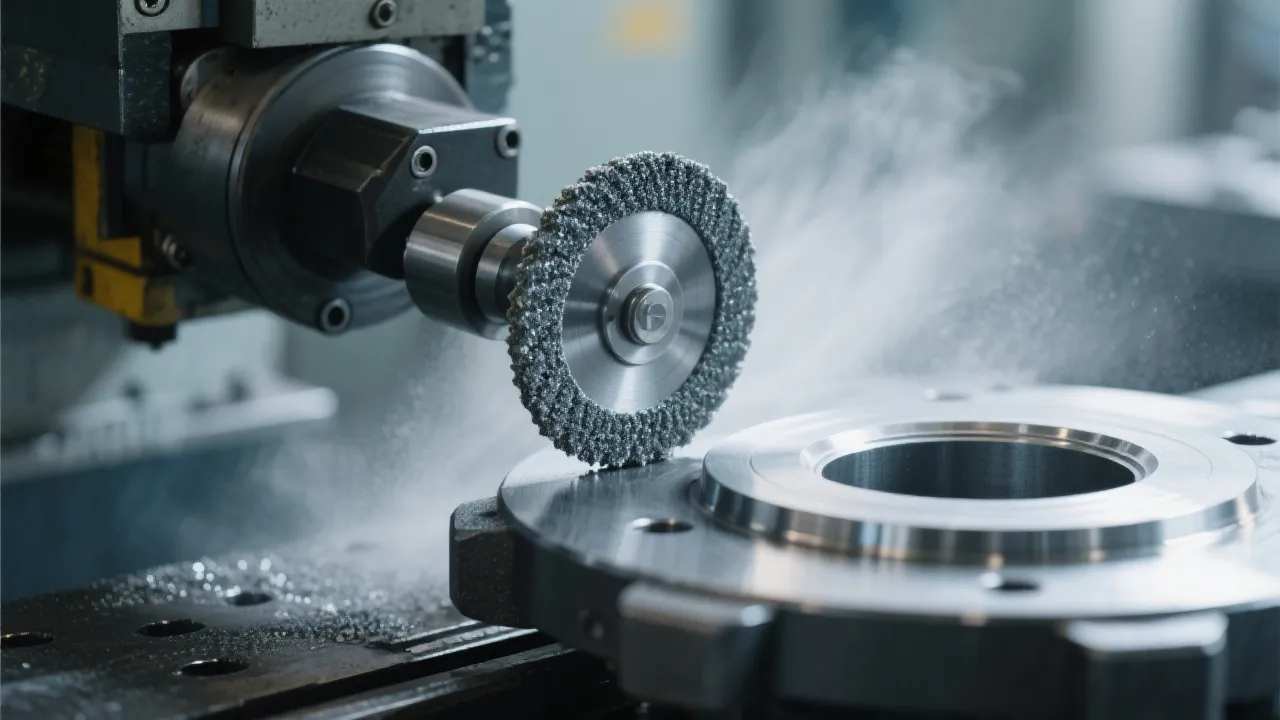
- Coolant: water-soluble oils or synthetics with 3%–10% concentration; maintain 1–4 bar nozzle pressure and 3–8 L/min local flow per critical zone to avoid glazing and thermal microcracks.
- Dressing: interval 20–120 minutes depending on grit/bond and stock removal; automatic diamond dressing systems commonly used for profile maintenance.

Installation tips and troubleshooting (practical)
Common issues and targeted responses:
- Chatter / vibration: reduce depth per pass, improve bore runout, increase wheel support span, or switch to a stiffer bond.
- Rapid glazing (wheel loading): increase coolant flow/pressure, select coarser grit or softer bond to expose fresh diamonds.
- Edge breakage on tight radii: reduce entry angle, lower feed, and use micro-beveled edges tailored to radius.
- Surface roughness above target: check wheel concentricity, reduce DOC, move to finer grit (≤6–20 µm), and verify dressing condition.
Field case: ceramic substrate for electronic packaging
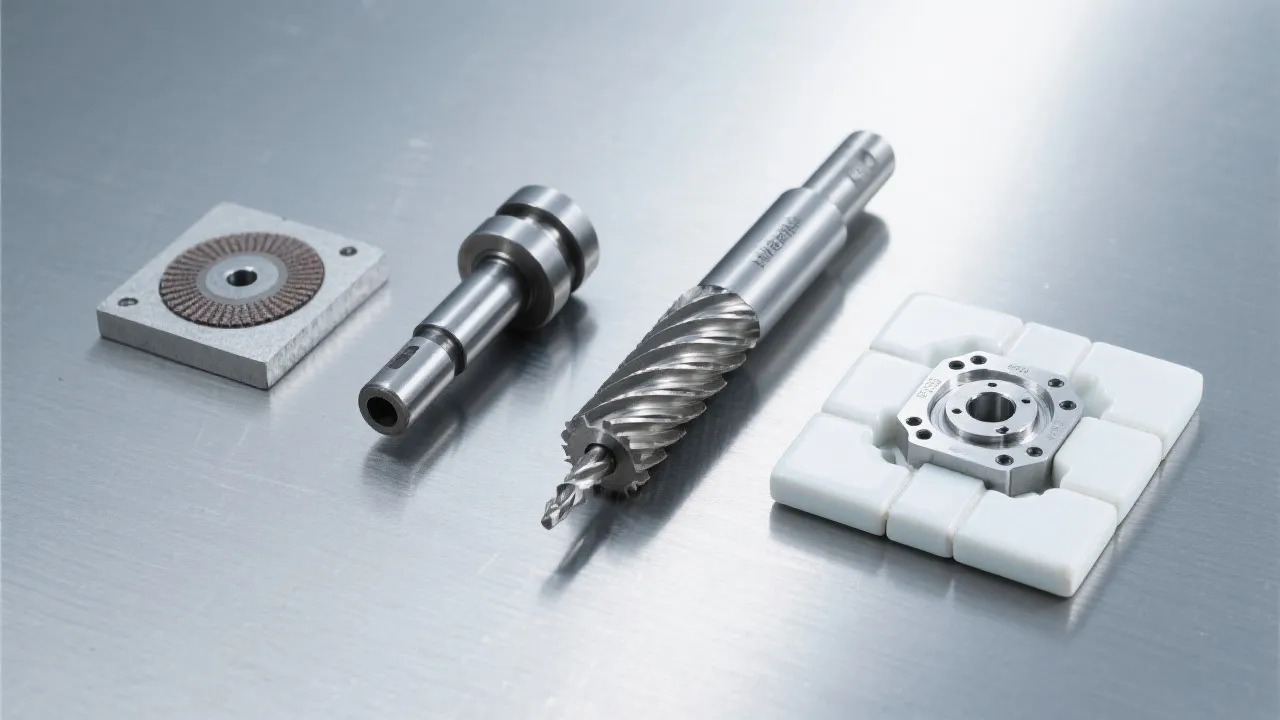
A medium-sized Asian electronics supplier moved from a generic segmented diamond wheel to a profile-optimized tool with 8° clearance and 0.25 mm active edge for arc features. Outcomes in pilot lines:
- Cycle time reduced by ~18% on medium-complexity parts (better material removal per pass).
- Surface roughness improved from Ra 0.75 µm to Ra 0.28 µm after switching to fine diamond grit (8–15 µm) and optimized coolant jets.
- Tool life extended by ~22% due to correct bond hardness and slot pattern improving chip evacuation.
These results illustrate the compound effect of geometry, grit, bond and coolant tuned to the part’s curvature and process stage.
Request samples and process-matching consultation to verify optimal angle, edge thickness and slot design for your ceramic product.


.png?x-oss-process=image/resize,h_1000,m_lfit/format,webp)
.png?x-oss-process=image/resize,h_1000,m_lfit/format,webp)